 By admin
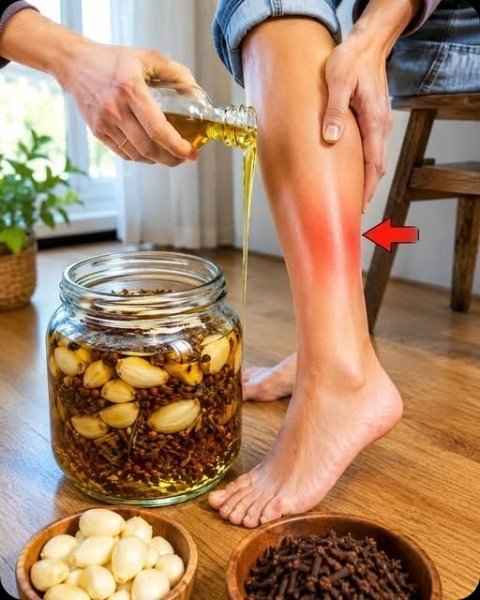
 Imagine feeling that familiar ache creep into your legs after just a short walk, or the stiffness that makes standing for dinner a chore. You’re not alone. Millions are quietly struggling with leg discomfort, stiffness, and fatigue, and the internet is buzzing with a seemingly simple solution: homemade garlic and clove oil.
It’s a common scenario: social media feeds are flooded with enticing images of garlic, cloves, and DIY oils, all promising to magically banish leg discomfort, joint stiffness, or even improve the appearance of visible veins. While the struggle with leg discomfort is undeniably real, the viral information surrounding these quick-fix remedies is often incomplete, leaving out crucial scientific context.
The truly empowering news is that by understanding the actual science, you can make far safer and more effective choices for your well-being. And before you finish reading this article, you’ll uncover the straightforward daily habits that leading healthcare professionals consistently recommend, long before any trendy home remedies.
Why Garlic and Clove Remedies Become So Popular Online
The allure of social media posts promoting these remedies often follows a compelling, predictable script. They typically begin with a heartfelt personal story, display eye-catching, dramatic visuals, and then suggest that a common, everyday kitchen ingredient holds a profound, hidden secret for better health.
Both garlic and cloves have been integral to culinary traditions and various wellness practices for centuries. Because these ingredients are readily available, affordable, and familiar, it’s perfectly natural for people to become intrigued when they encounter claims about their supposed health benefits, especially for common issues like leg discomfort.
However, it’s absolutely vital to recognize a critical distinction here:
A history of traditional use does not automatically equate to scientifically proven health outcomes.
While research has indeed investigated compounds found within garlic and cloves for a range of biological effects, with some studies indicating they possess antioxidants and other beneficial plant compounds that support general health as part of a balanced diet, there is a significant gap. Crucially, scientific evidence currently does not support the widespread claims that a homemade garlic and clove oil can effectively resolve complex conditions impacting joints, circulation, or overall mobility.
This is precisely where many viral posts fall short, omitting essential information that could guide individuals toward more effective solutions.
Common Reasons People Try These Remedies
Many adults are actively seeking effective solutions because they frequently experience:
• Aching legs, particularly after extended periods of standing
• Age-related stiffness in their joints
• Persistent feelings of heaviness in the legs
• Noticeable reductions in their overall mobility
• Concerns regarding the appearance of visible veins
• Muscle fatigue that sets in after routine daily activities
And frankly, this widespread search for meaningful relief is entirely understandable.
Yet, there’s a much bigger picture to consider beyond these simple remedies.
Understanding the Different Causes of Leg Discomfort
One of the most significant pitfalls people encounter is the assumption that all forms of leg discomfort stem from the exact same underlying cause.
In reality, a multitude of diverse factors can contribute to these uncomfortable sensations.
Joint-Related Changes
As individuals advance in age, the natural process of wear and tear can profoundly impact their joints. This cumulative effect often results in increased stiffness, diminished flexibility, and noticeable discomfort during everyday movements.
Muscle Weakness
Muscles inherently experience a decline in strength over time if they are not consistently engaged and challenged. Weakened muscles can, in turn, place undue strain on the surrounding joints, exacerbating feelings of discomfort.
Circulation Concerns
Some individuals frequently report sensations of leg heaviness or experience swelling, which can be directly linked to underlying changes in their circulatory system. Such situations demand a personalized, professional assessment, rather than relying on generic, one-size-fits-all home remedies.
Lifestyle Factors
Prolonged periods of inactivity, carrying excess body weight, insufficient sleep, and consistently low levels of physical activity are all significant lifestyle elements that can contribute substantially to persistent leg discomfort.
Here is a concise comparison to illustrate these points:
| Possible Factor | Common Signs | Helpful First Step |
|---|---|---|
| Joint stiffness | Reduced flexibility | Gentle movement |
| Muscle weakness | Fatigue during activity | Strength exercises |
| Circulation changes | Heavy or swollen feeling | Movement and medical evaluation |
| Sedentary lifestyle | General discomfort | Daily walking routine |
The crucial message to grasp here is quite straightforward:
Different underlying causes almost always necessitate distinct and tailored approaches.
What Science Says About Garlic and Cloves
It’s time to meticulously separate established facts from mere assumptions and anecdotal claims.
Garlic is well-known for containing potent sulfur compounds, most notably allicin. Similarly, cloves are rich in beneficial compounds, including eugenol. Researchers have extensively studied these substances for their impressive antioxidant and various other biological properties.
Some scientific findings indeed suggest that these ingredients can contribute positively to overall wellness when they are thoughtfully incorporated into a healthy and balanced dietary pattern.
However, despite the buzz online, there is currently very limited robust evidence to support the viral claims that a homemade garlic and clove oil, applied topically or otherwise, can significantly improve mobility, enhance the appearance of visible veins, or independently address age-related joint concerns.
This distinction is incredibly important because many individuals, swayed by online remedies, often delay seeking professional medical advice. Such delays can sometimes allow underlying health issues to progress undetected and potentially worsen over time.
What Researchers Generally Agree On
Across the scientific community, research consistently and overwhelmingly supports the following fundamental principles for health and well-being:
• Consuming a diet generously rich in diverse plant foods
• Maintaining consistently healthy levels of physical activity
• Effectively managing body weight to a healthy range
• Prioritizing adequate and restful sleep
• Completely avoiding all forms of tobacco use
• Diligently following healthcare guidance for any ongoing health concerns
Do you notice an interesting pattern emerging here?
The most compelling and robust evidence consistently points towards comprehensive lifestyle habits as being far more impactful than relying on any single