 By admin
 Ever woken up at 3 AM drenched in sweat, heart racing, feeling like your room transformed into a furnace? This isn’t just a random occurrence. It’s often your body sending undeniable signals during menopause or perimenopause, a time when your internal control panel — governing temperature, sleep, mood, and even fat distribution — feels like it’s been completely hijacked and rewired without a moment’s notice.
While the infamous hot flash grabs all the attention, it’s merely the tip of the iceberg. The real story unfolds beneath the surface, as plummeting estrogen levels ignite a series of disruptions throughout your nervous system. This hormonal rollercoaster explains why one woman experiences a sudden surge of heat through her chest, while another feels an unsettling, fluttering sensation in her throat. Beyond these immediate sensations, you might also notice your skin becoming noticeably drier, your nights growing increasingly restless, and your brain struggling to retrieve words, almost as if they’ve vanished into thin air.
What’s truly perplexing is how these symptoms rarely present themselves all at once in a clear, cohesive picture. Instead, they often emerge subtly, one by one, gradually accumulating until you find yourself wide awake at 3 AM, gazing at the ceiling, utterly bewildered by a body that suddenly feels foreign and unpredictable.
But this is just the surface. To truly understand, we need to delve into the intricate mechanics of what’s unfolding beneath your skin.
The Hormone Shift That Unleashes a Cascade of Changes
As estrogen and progesterone levels begin their erratic decline and fluctuation, their impact extends far beyond just reproductive functions. These powerful hormones directly influence your brain’s delicate temperature regulation system, disrupt your natural sleep rhythms, amplify your body’s stress response, and even alter where fat is preferentially stored around your midsection.
Imagine your body as a complex house with a faulty electrical system: a subtle flicker in the basement quickly escalates to buzzing hallway lights, followed by a bedroom fan that inexplicably refuses to turn off, leaving the entire structure feeling profoundly unstable. This analogy perfectly captures the essence of menopause physiology – it’s not a single isolated malfunction, but rather a cascading series of interconnected effects.
What often sparks deep frustration for women is the common experience of being dismissed for years, told their symptoms are simply ‘stress’ or ‘just age,’ while the unmistakable pattern of hormonal shifts lies plainly visible. The broader wellness industry frequently favors ambiguous explanations, yet menopause offers a remarkably clear and specific answer to these bewildering changes.
However, this initial hormonal shift is merely the first domino to fall. The following section reveals how these initial changes manifest into symptoms that become utterly impossible to overlook.
Why Your Nights Suddenly Become a Battlefield
Hot flashes and night sweats are far more intense than just a mere sensation of warmth; they are an abrupt, internal furnace blast that leaves your skin flushed, your pulse racing, and your sheets clinging uncomfortably to your back. The very air around you can feel thick and suffocating, making each breath a conscious effort.
What’s the underlying cause? Your brain’s sophisticated thermostat becomes acutely sensitive and erratic. Even a minor fluctuation in your core body temperature is perceived as an urgent crisis, triggering your body to rapidly expel heat, much like a car engine fan abruptly engaging at maximum velocity.
This hyperactive response is precisely why your sleep becomes so fragmented and disrupted. You might drift off peacefully in a cool, comfortable room, only to awaken later with your shirt unpleasantly stuck to your chest and your pillow soaked around the edges. While many might instinctively blame an uncomfortable mattress, the true antagonist is your body’s internal signaling system, which persistently fires off alarms when it should remain tranquil.
Once your sleep patterns are shattered, a cascade of other symptoms intensifies: irritability sharpens, fatigue deepens, and brain fog thickens. Many women often fail to connect the dots, not realizing that those disruptive night sweats are meticulously setting the stage for the overwhelming daytime exhaustion and cognitive struggles.
The struggles you face each morning are not isolated incidents; they are simply your body presenting the bill for a night of relentless internal upheaval.
The Debilitating Exhaustion, Emotional Rollercoaster, and Brain Fog That Take Over Your Days
As morning arrives, the exhaustion settles in, a profound and acrid weariness that feels as if your brain has been relentlessly grinding all night with the brakes fully engaged. You find yourself re-reading the same sentence multiple times, or walking into a room only to stand there blankly, the exact words you desperately need hovering tantalizingly just beyond your grasp.
This pervasive cognitive fog is the direct result of hormonal fluctuations interfering with the delicate brain chemicals responsible for stabilizing your mood and sharpening your focus. It’s akin to attempting to navigate through life with a perpetually smeared windshield, obscured by rain you’re powerless to clear.
Next, you might experience intense emotional whiplash. A seemingly minor comment can land with the force of a personal affront, or you might find yourself snapping at a loved one, instantly regretting the sharp words. This isn’t a sign of personal weakness; rather, it’s a nervous system operating in overdrive, lacking the essential internal buffering capacity to manage stress and emotions effectively.
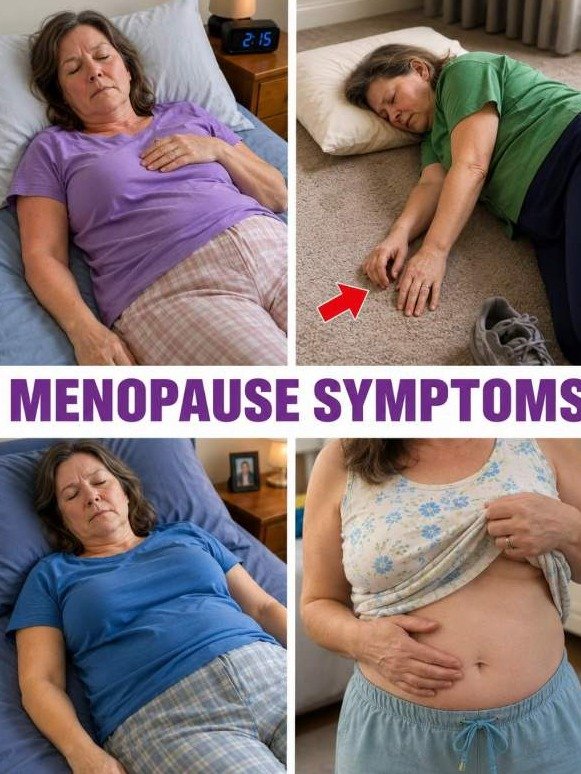
So, why isn’t this information more widely discussed and plainly explained? Perhaps because there’s no glamorous, high-budget ad campaign for simple, often overlooked truths. The most accessible solutions frequently receive the least attention, and the realities of menopause have, for far too long, been shrouded in euphemisms and polite, unhelpful language.
Yet, the signals from your body don’t cease with disrupted sleep and volatile moods. The physical transformations continue, often manifesting in ways women first encounter when looking in the mirror.
The Unexpected Belly Fat, Skin Changes, and Heart Palpitations That Women Often Overlook
The sudden and seemingly inexplicable accumulation of fat around your midsection can feel particularly frustrating, even insulting. Despite maintaining your usual habits, your waistband inexplicably tightens, as if your body has arbitrarily decided to reconfigure its fat storage system overnight.
Visualize a warehouse where the established shelving has collapsed, forcing all inventory to be haphazardly stacked in the central aisle. This vivid image perfectly illustrates how fluctuating hormones impact fat distribution – they redirect a greater proportion of fat towards your abdomen, making it notoriously stubborn and resistant to removal.
Next, consider your skin. It may become noticeably drier, itchy, and in some areas, almost paper-thin – a dryness so profound that your forearms feel uncomfortably taut after a shower, and your face seems to lose its natural radiance by midday. Estrogen previously played a crucial role in maintaining skin moisture and elasticity; with its decline, your skin begins to behave as though it has been perpetually exposed to harsh, drying winds.
And what about those unsettling heart flutters? These sensations can be likened to a frantic bird trapped beneath your ribs, an abrupt skip or surge in your heartbeat that causes you to momentarily freeze in your tracks. They are particularly alarming because they appear without warning, serving as a stark reminder that menopause impacts physiological systems far beyond what most people are prepared for.
The profound relief comes from this realization: once you recognize the overarching pattern, you cease viewing each symptom as an isolated, bewildering mystery.
Discovering What Truly Alleviates the Entire Symptom Cascade
When women begin to genuinely support their bodies’ systems during this transition, the initial improvements they notice aren’t about achieving perfection. Instead, it’s the welcome reduction in those jarring nighttime ambushes, fewer of those startling 3 AM wake-up calls, and mornings that no longer carry the heavy, groggy feeling of a hangover.
Implementing strategies like ensuring a cooler sleep environment, maintaining consistent meal times, engaging in regular movement, and adopting stress-reduction routines are all highly beneficial. These practices effectively prevent you from inadvertently fueling an already overreactive internal thermostat. Simply having a bedroom that feels fresh and crisp rather than stifling, a refreshing glass of water readily available on your nightstand, and experiencing a calmer, steadier pulse can dramatically improve the overall quality of your entire day.
As you consistently apply these supportive measures, the underlying pattern becomes strikingly clear: your body begins to find equilibrium once it’s no longer perpetually forced into a state of alarm. This is the profound transformation women are truly seeking – not some miraculous cure, but simply a nervous system that can finally de-escalate and find peace.
However, be aware that there’s one seemingly minor habit that possesses the power to completely undermine all your efforts, even before you’ve even settled into bed.
It’s a common practice many women engage in without a second thought, yet it can transform a potentially restless night into a full-blown, body-wide assault.
The Stealthy Habit That Guarantees a Ruined Night’s Sleep
Attempting to sleep when your body is already overheated – whether from a warm bedroom, excessively heavy blankets, consuming caffeine too late in the day, or having a large, spicy meal still actively digesting – significantly burdens your system with additional heat. This exacerbates the sensitivity of your internal thermostat, making it even more prone to erratic behavior. The evidence is palpable in your bedding: sheets that feel too warm, unpleasantly sticky, and cling uncomfortably to your skin.
This incorrect pre-sleep environment inevitably transforms what should be a peaceful night into a disruptive, sweat-drenched awakening. Furthermore, the crucial next piece of information most women need to grasp – the game-changing secret regarding the precise timing of sleep and temperature regulation – is essential for true relief.
This article is for informational purposes only and does not replace professional medical advice. Please consult your healthcare provider for personalized guidance.