 By admin
 Imagine discovering that a beloved staple in millions of kitchens worldwide, one you might even enjoy regularly, has a hidden side that’s been sensationalized as ‘dangerous.’ You’ve probably seen those alarming headlines screaming about “the most dangerous food in the world” and wondered, with a shiver: Could they possibly be talking about something I eat?
The food at the center of this buzz is often cassava (also known as yuca or manioc) — a crucial staple that feeds countless millions across diverse cultures in Africa, Asia, and Latin America.
Here’s the eye-opening truth: if not handled correctly, specific varieties of cassava do harbor natural compounds that absolutely demand careful processing before consumption. However, when prepared using time-honored, safe methods, cassava truly stands as an indispensable food source globally.
So, if this is a food you enjoy, there’s no need to panic — gaining a clear understanding of the facts is far more empowering than succumbing to fear. 🌿
Why Does Cassava Sometimes Get Labeled a “Risky” Food?
The reason for this discussion stems from cassava’s natural composition: it contains compounds known as cyanogenic glycosides. Particularly in certain bitter varieties, these compounds have the potential to release substances that absolutely require proper processing methods to be significantly reduced.
Fortunately, traditional preparation techniques have been perfected over centuries and typically involve:
✔ Thoroughly peeling the root
✔ Soaking it extensively when necessary
✔ Utilizing fermentation processes in specific cultural contexts
✔ Ensuring it is fully boiled or cooked until tender
✔ Strictly avoiding any raw consumption
These time-tested methods have safeguarded generations of cassava consumers.
Why Do Billions Across the Globe Still Rely on Cassava?
Despite the myths, cassava remains incredibly popular due to its undeniable practical advantages:
🌾 It’s naturally satisfying and incredibly versatile in the kitchen
🥔 Serves as an excellent alternative to potatoes or grains in countless recipes
💛 Provides a vital and accessible source of carbohydrates for sustained energy
🍲 Features prominently in a vast array of global cuisines, from hearty soups and crispy chips to delicious cakes, gluten-free flour, and cherished traditional meals
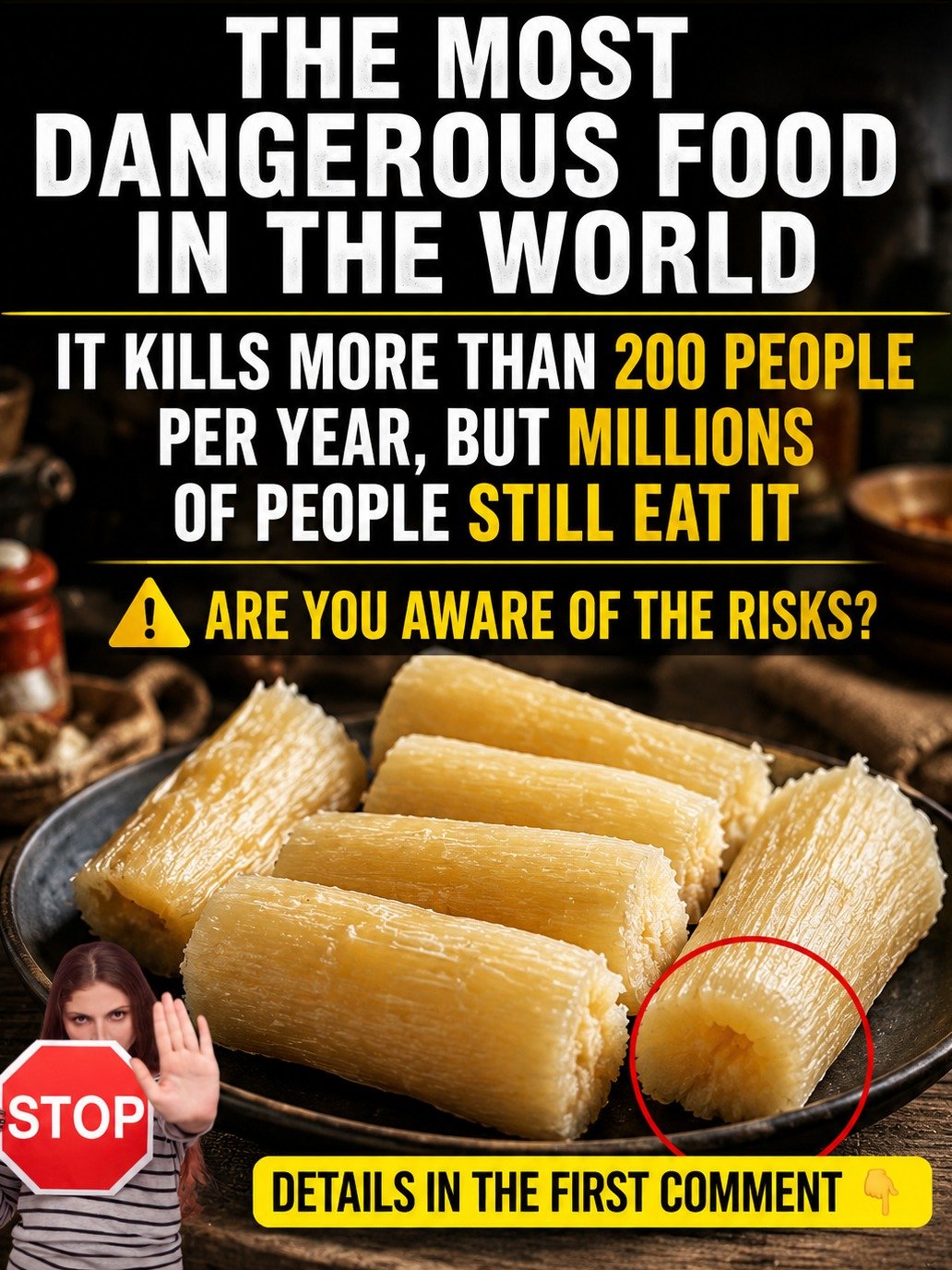
Indeed, countless households worldwide proudly feature cassava as a nourishing and integral component of their balanced daily meals.
Simple, Delicious, and Safe Ways People Prepare Cassava Daily
1. Perfectly Boiled Cassava
Simply peel the root, give it a good wash, chop it into manageable pieces, and boil until it reaches a tender, fork-soft consistency.
2. Flavorful Roasted Cassava
For a delightfully comforting side, lightly season your cassava pieces and roast them until golden brown and tender.
3. Versatile Cassava Flour in Recipes
This fantastic gluten-free alternative is widely used to create delicious breads, fluffy pancakes, and a variety of other gluten-free culinary delights.
4. Rich Traditional Fermented Preparations
Many cultures incorporate fermented cassava into their cuisine, enhancing both its unique flavor profile and appealing texture.
A Crucial Reminder About Food Hysteria
It’s easy to get swept up by the internet’s penchant for sensationalism and dramatic headlines:
❌ “This food *will* kill everyone!”
❌ “Absolutely *never* eat this again!”
❌ “Just one bite could be dangerous!”
However, a far more informed and balanced approach involves:
✅ Actively learning and applying proper preparation techniques
✅ Continuing to enjoy traditional foods, but always responsibly
✅ Prioritizing a diverse diet with an emphasis on variety and moderation
Ultimately, cassava is neither a “miracle food” that solves all problems nor an inherently dangerous ingredient. The crucial difference, as with many foods, lies in knowledge and diligent preparation.