 By admin
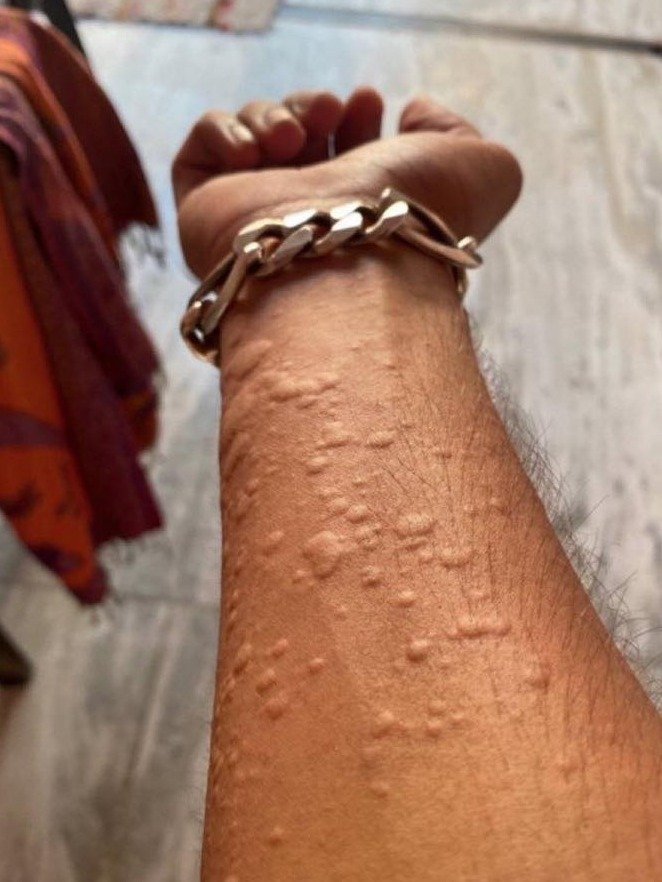
 Ever felt like your skin is staging a full-blown rebellion, erupting in furious, itchy welts that seem to appear from nowhere and then vanish, only to pop up somewhere else? This maddening phenomenon, known as urticaria or simply hives, is one of the most common—and undeniably most uncomfortable—skin reactions worldwide. They manifest as raised, red, or skin-colored bumps that can intensely itch, sting, or burn. Sometimes these unwelcome visitors show up in small, isolated clusters, while other times they merge into vast, irritated patches, truly giving the impression they’re migrating across your body.
If you’ve ever experienced a breakout of hives, you’re intimately familiar with that unsettling sensation—as if your very own skin has turned against you. But what exactly ignites this reaction within your body? And, crucially, how can you effectively identify what you might be allergic or sensitive to? We’re about to unpack these questions in a straightforward, actionable guide.
What Exactly Are Hives?
At their core, hives represent a distinct skin reaction triggered by the body’s release of histamine and other potent chemicals. This internal chemical cascade causes the tiny blood vessels beneath your skin to dilate and leak fluid, which then accumulates to form the characteristic swollen, intensely itchy welts visible on the surface.
Here’s what you typically notice with hives:
-
Distinctly raised, puffy bumps or patches, often referred to as welts.
-
Their color can range from bright red or pink to simply matching your natural skin tone.
-
They are overwhelmingly itchy, sometimes accompanied by a burning or stinging sensation.
-
These welts are dynamic, frequently changing their shape, size, and even location within mere hours.
-
Individual hives often disappear from one spot within 24 hours, only to have new ones emerge elsewhere.
Hives can manifest on virtually any part of your body—be it your arms, legs, torso, face, and even surprisingly, your lips or eyelids. Depending on the underlying cause, an episode can last anywhere from a few fleeting hours to several persistent weeks.
Acute vs. Chronic Hives: What’s the Difference?
Medical professionals generally categorize hives into two primary classifications:
1. Acute Hives
-
These episodes typically resolve in less than 6 weeks.
-
They are remarkably common, affecting many people at some point.
-
Often, there’s a clear, identifiable trigger, such as a specific food, an infection, or a medication.
-
Once the triggering factor is removed or subsides, the hives usually disappear on their own.
2. Chronic Hives
-
These are characterized by persistent outbreaks lasting more than 6 weeks, or by recurrent episodes that keep returning.
-
Identifying the exact triggers for chronic hives is often considerably more challenging.
-
In many instances, no single, definitive cause can be pinpointed.
-
While they can be incredibly frustrating and stressful to live with, chronic hives are generally not indicative of a serious underlying health danger.
The Million-Dollar Question: What Causes Hives?
Hives emerge when your immune system decides to release histamine into your body. The crucial puzzle piece is understanding: what provoked your immune system to act that way? While the answer is highly individual, here’s a breakdown of the most frequently encountered triggers.
1. Allergic Reactions
This is often the first thing that springs to mind when thinking about hives, and for very good reason.
Common culprits for allergic reactions include:
-
Certain foods: notorious triggers include peanuts, shellfish, eggs, milk, various tree nuts, strawberries, and tomatoes.
-
Medications: antibiotics (like penicillin), certain pain relievers, and aspirin are frequent offenders.
-
Insect stings or bites: reactions to bees, wasps, or ants can often lead to hives.
-
Contact with latex or specific chemicals.
-
Exposure to pet dander or pollen, particularly in sensitive individuals.
In these scenarios, your immune system mistakenly identifies an otherwise harmless substance as a threat, launching an exaggerated defense response that floods your system with histamine and results in hives.
2. Infections
A variety of infections—whether viral, bacterial, or even parasitic—can provoke hives, a phenomenon particularly common among children and teenagers.
Some examples include:
-
The common cold or influenza.
-
Strep throat.
-
COVID-19 or various other viral illnesses.
-
Gastrointestinal or stomach infections.
Interestingly, hives might emerge either during the active phase of an infection or sometimes even after you’ve begun to feel better and are on the mend.
3. Physical Triggers (Physical Urticaria)
For some individuals, hives aren’t caused by food or medication, but rather by direct physical factors that interact with their skin:
-
Cold exposure: this can be from cold air, cold water, or even ice (known as cold urticaria).
-
Direct heat or profuse sweating.
-
Pressure: often triggered by tight clothing, backpack straps, or prolonged sitting.
-
Exposure to sunlight (solar urticaria).
-
Vigorous exercise or any activity that significantly raises body temperature.
-
Vibration (a rare but documented cause).
In these cases, the skin directly responds to the physical stimulus with a localized hive reaction.
4. Stress and Emotional Triggers
While stress doesn’t function as a direct