 By admin
 As we gracefully navigate the journey of aging, one of the most prevalent skin concerns that often emerges is the appearance of age spots. These distinct dark patches typically manifest on sun-exposed areas like the hands, face, shoulders, and arms, a testament to years spent under the sun. In recent times, a surprising number of individuals have gravitated towards apple cider vinegar, hailing it as a natural, at-home solution to diminish the visibility of these pigmented areas.
But does this popular pantry item truly live up to its reputation? More importantly, is it a safe and effective option for your delicate skin?
Within this comprehensive guide, we will delve into the potential advantages of incorporating apple cider vinegar into your skincare routine for age spots, detail the proper and safe application methods, and highlight crucial precautions you must consider before embarking on this natural remedy.
Understanding Age Spots: What Are These Dark Patches?
Commonly referred to as liver spots or sun spots, age spots are essentially flat, discolored areas appearing in shades of brown, black, or gray. Their formation is primarily attributed to an overproduction of melanin, the pigment responsible for skin color, and they are most frequently triggered by:
- Long-term sun exposure
- Aging
- UV damage
- Tanning beds
- Skin inflammation
These noticeable spots typically emerge on parts of the body that receive frequent sun exposure, such as:
- Face
- Hands
- Neck
- Chest
- Arms
While age spots are almost always benign and pose no health risk, a significant number of individuals actively seek natural solutions to lessen their visibility and achieve a more uniform skin tone.
The Rise of Apple Cider Vinegar in Skincare: Why It’s So Popular
Apple cider vinegar (ACV) is renowned for its content of acetic acid and various natural fruit acids, which are believed to gently exfoliate the skin by sloughing off dead cells. This exfoliating action leads many to suspect that ACV could gradually diminish the intensity of dark spots and refine overall uneven skin texture.
The purported benefits of apple cider vinegar when applied to the skin encompass several key areas:
- Gentle exfoliation
- Removal of dead skin buildup
- Improved skin brightness
- Reduction of oily residue
- Temporary tightening effect
It’s important to note that the widespread acclaim for ACV in skincare largely stems from personal testimonies and anecdotal accounts, rather than robust scientific studies. While a subset of users reports noticeable enhancements, the outcomes are highly individual and can differ significantly from one person to another.
The Big Question: Can Apple Cider Vinegar Truly Erase Age Spots?
While definitive scientific research conclusively proving apple cider vinegar’s ability to completely eradicate age spots remains scarce, its composition of mild acids suggests a potential role in gradually fading superficial discoloration. This fading mechanism is primarily attributed to its exfoliating properties, which encourage cell turnover.
Anecdotal reports from consistent users suggest that regular application of ACV may lead to age spots appearing:
- Lighter
- Less noticeable
- Smoother around the edges
Nevertheless, it’s crucial to understand that ACV is not a miraculous solution for skin woes and should never be considered a substitute for professional dermatological interventions, especially for more profound or persistent pigmentation concerns.
Your Guide to Using Apple Cider Vinegar Safely for Skin Application
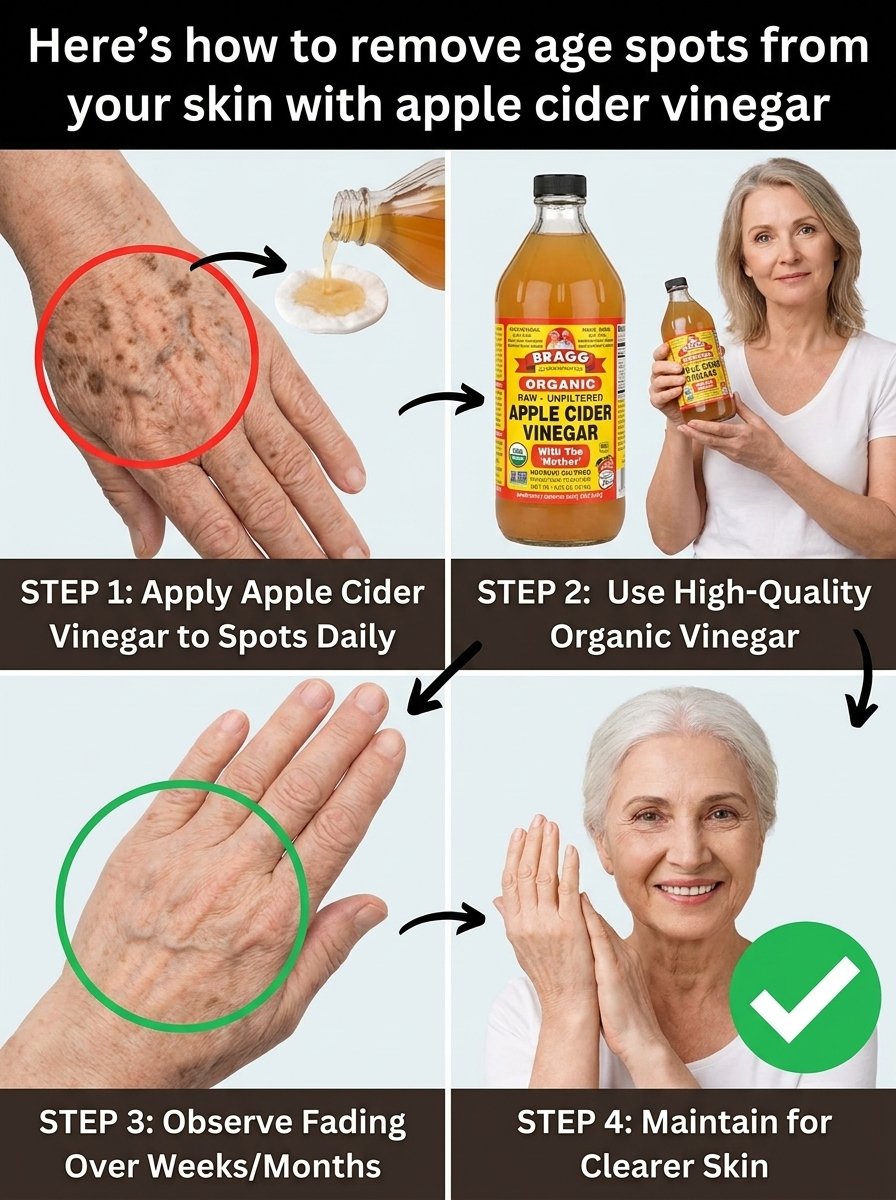
Due to its inherent acidity, apple cider vinegar must always be properly diluted before any direct application to the skin. Failing to do so can lead to significant irritation or even chemical burns.
The Essential Simple Diluted Method
What You’ll Need (Ingredients)
- 1 teaspoon apple cider vinegar
- 1 teaspoon water
- Cotton pad
Step-by-Step Application Instructions
- Mix equal parts ACV and water.
- Dip a cotton pad into the mixture.
- Apply gently to the age spots only.
- Leave on for 2–5 minutes.
- Rinse thoroughly with cool water.
- Apply moisturizer afterward.
Begin by applying this mixture just 2–3 times per week to carefully monitor how your skin responds and tolerates the treatment.
Crucial Safety Guidelines for Using ACV on Your Skin
Improper application of apple cider vinegar can potentially compromise and damage your skin’s protective barrier. Therefore, it is absolutely essential to adhere to the following precautions with utmost care:
The Golden Rule: Never Apply Undiluted ACV
Direct application of undiluted vinegar can lead to severe adverse reactions, including:
- Redness
- Burning
- Peeling
- Chemical irritation
Always Conduct a Patch Test First
Before applying ACV to any prominent facial or body areas, dab a tiny amount onto a discreet patch of skin, such as your inner arm, and observe for any reactions over a full 24-hour period.
Steer Clear of Sensitive or Compromised Skin
It is imperative that you refrain from applying ACV to any of the following skin conditions:
- Open wounds
- Cracked skin
- Eczema
- Active acne lesions
Non-Negotiable: Consistent Sunscreen Use
When skin undergoes exfoliation, it becomes significantly more vulnerable and sensitive to the sun’s harmful rays. Incorporating daily broad-spectrum SPF protection into your routine is absolutely crucial to prevent the exacerbation of existing pigmentation and safeguard against new damage.
Enhancing ACV: Natural Ingredients Frequently Paired for Skin Benefits
To mitigate the potential for irritation, many individuals opt to blend ACV with other natural, skin-calming ingredients.
Honey
Known for its emollient properties, honey can help provide moisture and soothe the skin, potentially counteracting ACV’s acidity.
Aloe Vera
Aloe vera gel is a popular choice, celebrated for its remarkable cooling, anti-inflammatory, and deeply hydrating qualities.
Green Tea
Rich in potent antioxidants, green tea extracts are believed to offer supportive benefits for overall skin health and protection.
It’s vital to remember that even seemingly benign natural ingredients can trigger adverse reactions in some individuals, so always proceed with careful patch testing.
Urgent: When to Consult a Dermatologist
It’s imperative to understand that not all dark spots are benign. You must seek immediate professional medical advice from a healthcare provider or dermatologist if you observe a spot that:
- Changes shape
- Becomes raised
- Bleeds
- Itches persistently
- Has uneven borders
- Changes color rapidly
Only a qualified dermatologist possesses the expertise to accurately assess whether a skin lesion is a benign age spot or indicative of a more serious underlying condition.
Proven Solutions: Scientifically Backed Treatments for Age Spots
When confronted with particularly stubborn age spots that resist home remedies, professional dermatological treatments often provide more consistent and reliable outcomes:
- Retinoids
- Vitamin C serums
- Chemical peels
- Laser therapy
- Cryotherapy
- Prescription lightening creams
It is paramount that these advanced treatments are administered and carefully guided by a qualified and experienced professional.
Concluding Thoughts: Your Skin’s Best Approach
Apple cider vinegar continues to be a widely embraced natural remedy, offering a potential avenue to enhance the look of mild age spots through its gentle exfoliating action. Nevertheless, it is crucial to temper expectations, as results are far from guaranteed, and improper or undiluted application can lead to significant skin irritation or even lasting damage.
Should you decide to explore this home remedy, remember these essential guidelines:
- Always dilute it
- Use it sparingly
- Protect your skin from the sun
- Stop immediately if irritation occurs
Ultimately, the foundation for maintaining consistently clear, radiant, and healthy-looking skin rests upon a holistic approach: diligent healthy skincare habits, unwavering sun protection, adequate hydration, and timely professional dermatological guidance remain the most proven and effective long-term strategies.