 By admin
 (The Unpleasant Reality of Tonsil Stones — Tonsilloliths)
Imagine this: you clear your throat, and suddenly, a tiny, hard, white or yellowish lump pops out. The smell is so repulsive it makes you instantly gag, and that awful odor seems to cling to your breath for hours, no matter how much you brush or floss.
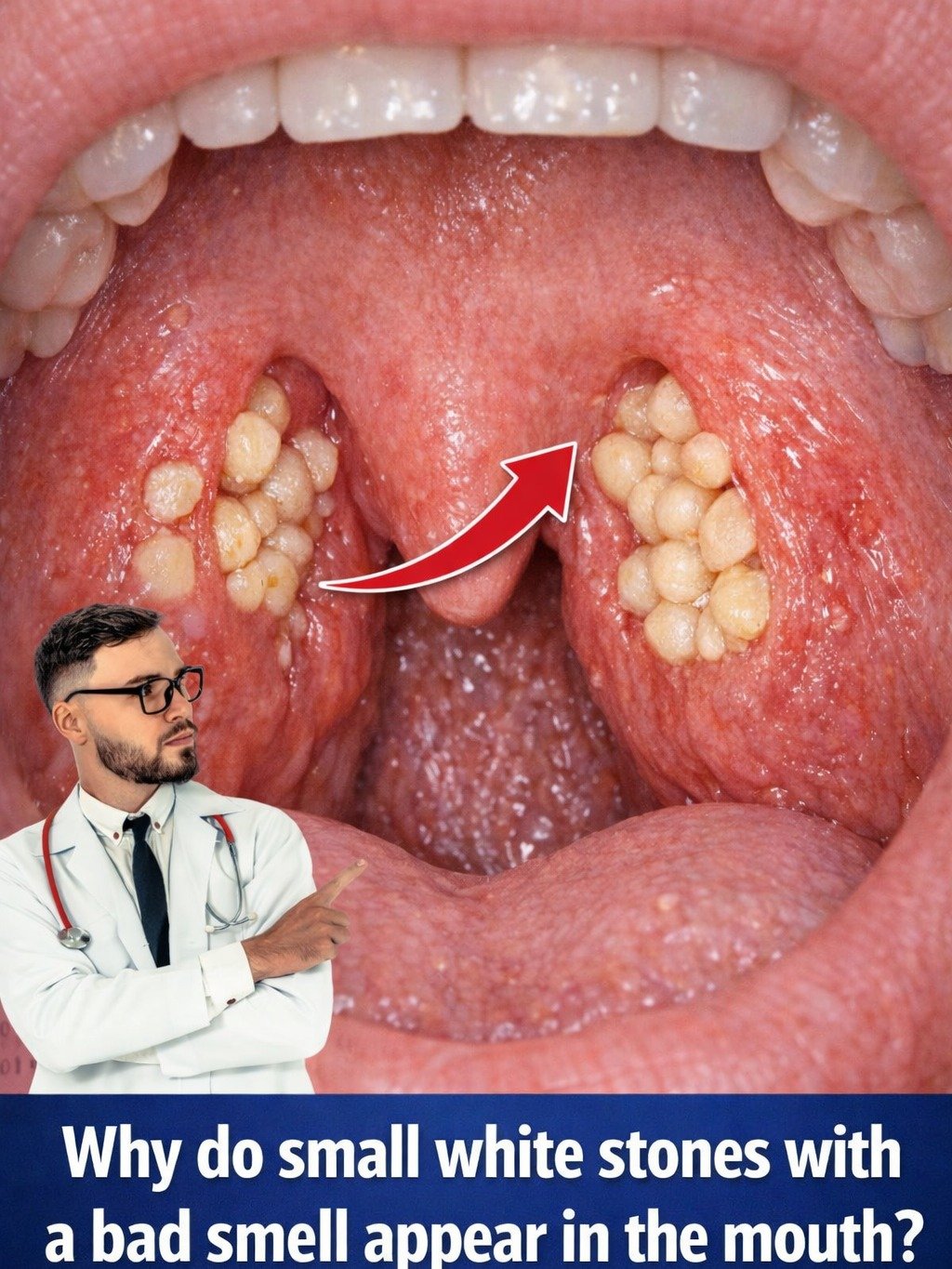
These notorious culprits are known as tonsil stones (tonsilloliths)—an incredibly common yet often unrecognized source of persistent bad breath that stubbornly resists typical oral hygiene efforts.
🤔 What exactly are tonsil stones?
Tonsil stones are essentially tiny, hardened deposits that develop within the natural nooks and crannies (often called “crypts”) of your tonsils. This process kicks off when:
-
Microscopic food particles, dead cells, and mucus become trapped in these deep pockets.
-
Bacteria, particularly anaerobic types, begin to feast on this trapped debris, thriving in the oxygen-deprived environment.
-
Minerals naturally present in your saliva—such as calcium, phosphorus, and magnesium—then calcify this accumulating material, transforming it into small, solid “stones.”
These formations can vary significantly in size, from being as tiny as a grain of rice to growing as large as a pea. While some individuals might only encounter them occasionally, others find themselves forming several new stones every single week.
🤢 Why do they smell so bad?
The truly offensive odor associated with tonsil stones stems from the specific bacteria that flourish within them. These microorganisms generate volatile sulfur compounds—the very same gases responsible for the unmistakable stench of rotten eggs.
It’s astonishing, but even one small stone has the power to make your breath more pungent and off-putting than a mouthful of garlic for extended periods.
🚨 8 common signs you might have tonsil stones
(You might not even see them, but these symptoms can give them away!)
-
Chronic bad breath that simply won’t improve, despite rigorous brushing, flossing, and mouthwash use.
-
A persistent unpleasant or metallic taste lingering at the very back of your throat.
-
Frequent bouts of sore throat or the uncomfortable sensation of something being perpetually lodged in your throat.
-
Visible white or yellowish spots appearing on your tonsils, which are the stones themselves.
-
Unexplained ear pain, which can occur due to shared nerve pathways between the tonsils and ears.
-
Noticeable swollen tonsils or mild, recurring episodes of tonsillitis.
-
Occasionally coughing up small, hard, and often very smelly lumps.
-
Persistent difficulty swallowing or a constant need to clear your throat.
👥 Who is more likely to get them?
-
Individuals blessed (or cursed) with naturally large or deeply “cryptic” tonsils, offering more places for debris to hide.
-
Teenagers and young adults, who often experience more active tonsillar crypts.
-
Those who suffer from post-nasal drip or ongoing chronic sinus issues, which increase mucus production.
-
People with a history of experiencing frequent tonsillitis during their childhood years.
🏠 How to reduce and deal with them at home
👉 Careful removal (when visible)
-
For visible stones, consider using a clean cotton swab or a low-pressure oral irrigator (like a water flosser on its lowest setting) to gently dislodge them.
-
Always gargle immediately with warm salt water after any removal attempt to soothe the area and rinse away debris.
🔁 Daily prevention routine
-
Make it a habit to gargle every single night with either warm salt water or an effective alcohol-free mouthwash.
-
Carefully use an oral irrigator around the tonsil area; the gentle stream can help flush out nascent debris before it hardens.
-
Stay well hydrated throughout the day, as a dry mouth creates an environment more conducive to stone formation.
-
Don’t forget to scrape your tongue regularly, and if you’re prone to constant mucus, consider incorporating nasal rinsing into your routine.
🌿 A natural spray many people use
Here’s a simple, natural spray recipe you can mix in a small spray bottle:
-
200 ml warm water
-
1 teaspoon salt
-
3–4 drops of either grapefruit seed extract or food-grade peppermint essential oil
Spray this mixture only onto the tonsil area, aiming for 3–4 times a day.
Many individuals who use this natural approach have reported that their tonsil stones tend to shrink or loosen significantly within just a few days.
🩺 When to see a professional
-
If you encounter stones that are larger than 5–6 mm or are causing significant pain and discomfort.
-
If you experience any bleeding when attempting to remove the stones yourself.
-
If you notice persistent swelling on one side of your tonsils only, which could indicate another issue.
-
For individuals suffering from recurrent infections related to tonsil stones, a healthcare professional can discuss more definitive treatment options, including potential medical procedures.
📊 Quick comparison of approaches
-
Mouthwash only: Offers temporary breath improvement, but does not remove existing stones, provides low prevention, and can be moderately costly ($$).
-
Salt water + irrigator: Significantly improves breath, effectively removes stones, offers very good prevention, and is highly cost-effective ($).
-
Professional procedures: Provides excellent breath improvement, ensures stone removal, delivers long-lasting results, but comes with a higher cost ($$$$).
👉 It’s worth noting that many people who consistently adopt the simple gargling + irrigator routine find they stop developing new tonsil stones entirely—and their breath quality improves remarkably quickly.
💡 Final message
It’s important to understand that having tonsil stones isn’t a sign of carelessness; it simply means your tonsils naturally have deep crypts where debris can collect.
Commit to starting tonight with regular gargling and reinforcing your good oral hygiene habits. You might be surprised to find that within just a few days, your body could naturally clear away those troublesome stones, leading to fresher breath and greater comfort.
Disclaimer: This content is provided for informational purposes only and should not be considered a substitute for professional medical advice, diagnosis, or treatment. If your symptoms persist or cause significant pain, always consult with a qualified healthcare professional.