 By admin
What if the secret to understanding your body’s deepest health mysteries was right at your fingertips? Most of us rarely give our fingernails a second glance, yet these unassuming keratin plates are incredibly powerful diagnostic tools, capable of revealing critical insights into your overall well-being. From ancient times to modern medicine, the subtle changes in your nails have been recognized as vital clues, hinting at everything from minor infections to serious underlying conditions affecting your liver, lungs, or heart.
While sometimes a nail anomaly might simply point to a common fungal infection or a minor injury, it’s crucial to understand that your fingernails can frequently act as early warning signals for much more significant health issues. These tiny indicators can provide a timeline of your recent physiological state, offering a unique glimpse into your body’s internal workings.
The Hidden Story in Your Nail’s Half-Moons
When your nails are thriving, they typically display a healthy pink hue, complemented by delicate, light pink to white half-moons, known as lunulae, at their base. According to Dr. L Reed, ND, these half-moons serve as a key indicator of optimal thyroid health. If you notice a reduction in the number or size of these lunulae, it could suggest a weaker thyroid function, a condition that might manifest as mood swings, persistent depression, thinning hair, among a range of other symptoms.
Decoding Your Nail’s Texture
Ideally, healthy nails should be uniformly smooth, free from any noticeable ridges, grooves, spots, or discoloration. However, if you observe an unexpected alteration in your nails’ color, shape, texture, thickness, or any other unusual growth pattern, and you can’t pinpoint an obvious cause, it’s definitely a signal that it might be time to schedule a visit with your general practitioner.
This guide is designed to empower you to interpret the subtle messages your nails are sending, unlocking the secrets they hold about your comprehensive health:
1. Nails That Are Brittle or Crumbly
Brittle or crumbly nails can often be attributed to the natural aging process or prolonged exposure to harsh detergents and nail polishes. However, this texture can also signify more serious conditions such as a fungal nail infection, Lichen planus (an inflammatory skin and mucous membrane condition), thyroid disease, or psoriasis. In rarer instances, it could even be an early indication of Reactive arthritis, a painful form of inflammatory arthritis.
2. Nails with Discoloration
Yellow nails might simply be a result of extended nail varnish use, but they can also be a symptom of a fungal nail infection or psoriasis. Furthermore, yellowing can point to several other health concerns, including jaundice due to liver problems (for more insights, check out our post on early signs of liver damage), sinus infections, thyroid gland issues, lung infections, and lymphedema (fluid retention, usually in the limbs). For a deeper dive, read our article on the most common reasons for yellow nails.
Green-black nails typically signal a bacterial infection, which commonly develops beneath loose nails.
Bluish or purple nail beds may strongly suggest a lack of oxygen in the blood.
Grey nails can sometimes be an unexpected side effect of certain medications.
Brown nails could indicate a thyroid disorder or nutritional deficiencies. Nails that are distinctly half white at the base and half brown towards the tips can be a critical sign of kidney failure, AIDS, or a side effect following chemotherapy treatments.
White nails might be a benign sign of aging, a fungal nail infection, or an iron deficiency (anemia). However, they can also be linked to a broader spectrum of ailments such as cirrhosis (severe liver scarring), kidney or heart failure, diabetes, hyperthyroidism, malnutrition, or a consequence of chemotherapy.
3. Nails That Appear Thickened
While several factors can lead to thickened nails, a fungal nail infection is the most frequent culprit. Yet, this condition can also stem from psoriasis and reactive arthritis (a painful inflammatory arthritis). Furthermore, nails that are yellowish, thickened, and grow slowly can sometimes be a sign of underlying lung diseases.
4. Nails That Are Loose
When fingernails begin to detach and separate from the nail bed, it might indicate a past injury or infection. Additionally, it could point to thyroid disease, psoriasis, poor circulation, or an allergic reaction to certain medications.
5. Spoon-Shaped Nails (Koilonychia)
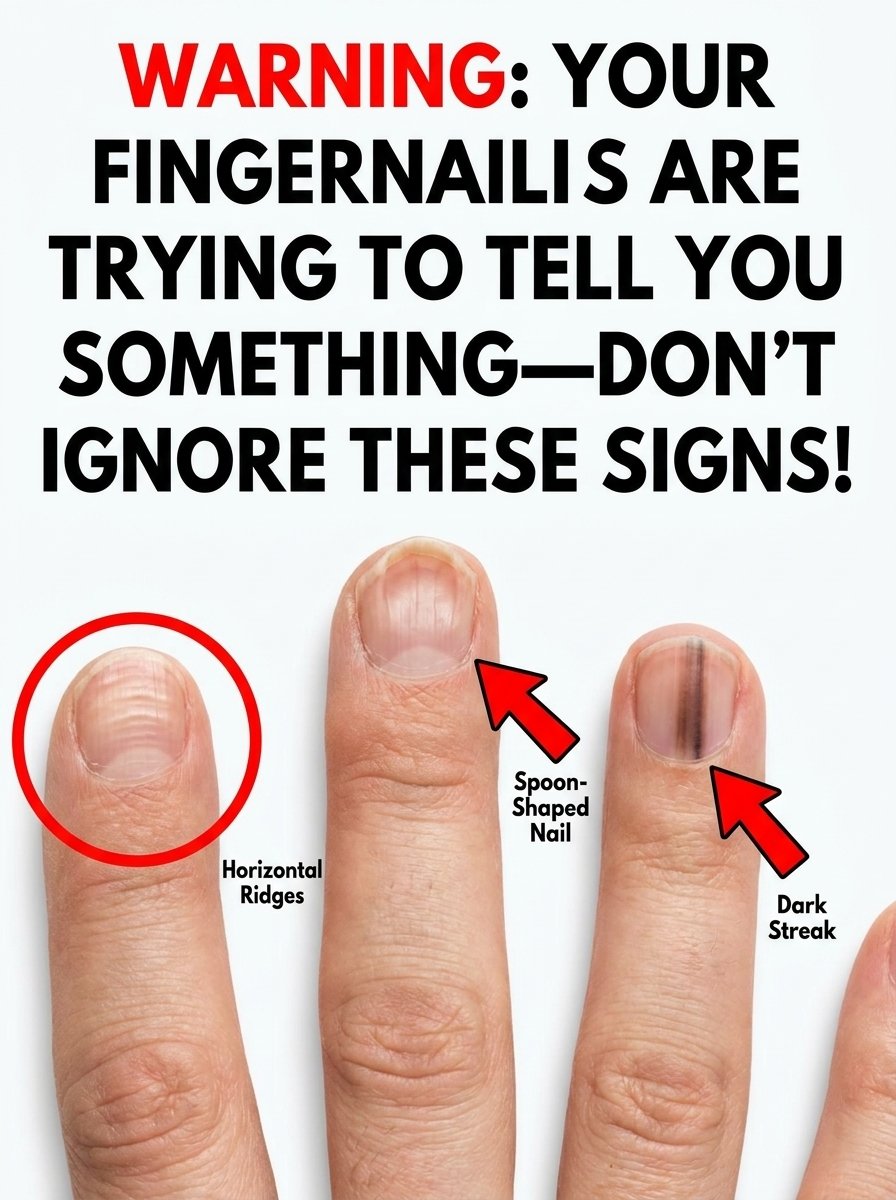
If your fingernails curve inward, creating a scooped-out appearance, this could be a significant indicator of iron-deficiency anemia, hemochromatosis (a liver condition characterized by iron overload), Raynaud’s disease (which impacts blood flow to the fingers and toes), heart disease, or hypothyroidism.
6. Pitting or Dents on the Nails
Small pits or dents appearing on your nails can be telltale signs of psoriasis, eczema, reactive arthritis, and alopecia areata (an autoimmune condition causing hair loss).
7. Grooves Running Across the Fingernails (Beau’s Lines)
Observing deep lines or grooves that stretch horizontally across your nails can be a result of chemotherapy, a previous injury, exposure to extreme cold, Raynaud’s disease (affecting blood supply to extremities), diabetes, vascular disease, zinc deficiency, and illnesses accompanied by a high fever.
8. Nail Clubbing
Nail clubbing is characterized by an unusual curving of the fingertips and nails around the ends of the fingers. While it can sometimes be a harmless, familial trait due to increased blood flow, a sudden onset of clubbing may signal low oxygen levels in the blood, indicating lung disease. It can also be associated with other conditions like heart disease, inflammatory bowel disease (IBD), liver disease, and AIDS.
9. White Lines Running Across the Nails
In this specific case, the white lines run parallel to the base of the fingernail. It’s important not to confuse these with common white spots or streaks, which are usually benign. However, distinct parallel white lines across multiple nails can be a significant sign of low protein levels in the blood, often resulting from malnutrition or liver disease.
10. Dark Stripes Running Down the Nails
These dark stripes are a common and usually normal finding among people with darker skin tones. Nevertheless, in some cases, they can indicate a serious form of skin cancer affecting the nail bed, known as subungual melanoma. Typically, this aggressive type of cancer will only affect one nail.
11. Red or Brown Tiny Streaks Under the Nails
Often referred to as splinter hemorrhages, these are typically small lines of blood caused by minuscule damaged blood vessels. While a few isolated streaks are usually nothing to be concerned about, if numerous nails are affected, it could signal an underlying systemic disease that warrants medical attention.
Never underestimate the power of your fingernails as diagnostic tools. Make it a habit to regularly inspect your nails, as they offer a crucial window into your overall health and can provide early warnings you shouldn’t ignore.
At Healthy and Natural World, our core mission is to empower individuals to proactively manage their health by delivering comprehensive, practical, and meticulously researched information.