 By admin
 What if the reason you’re feeling sluggish, achy, or just ‘off’ isn’t just stress or aging, but something far more fundamental? Many of us know Vitamin D as the ‘sunshine vitamin,’ but few realize just how deeply it anchors our entire well-being. When your body’s essential ‘solar anchor’ runs low, it can trigger a cascade of subtle yet significant changes that leave you feeling perpetually drained, even when the sun is shining brightly. The good news is that by learning to recognize these silent signals, you can proactively restore your body’s natural warmth and revitalized energy.
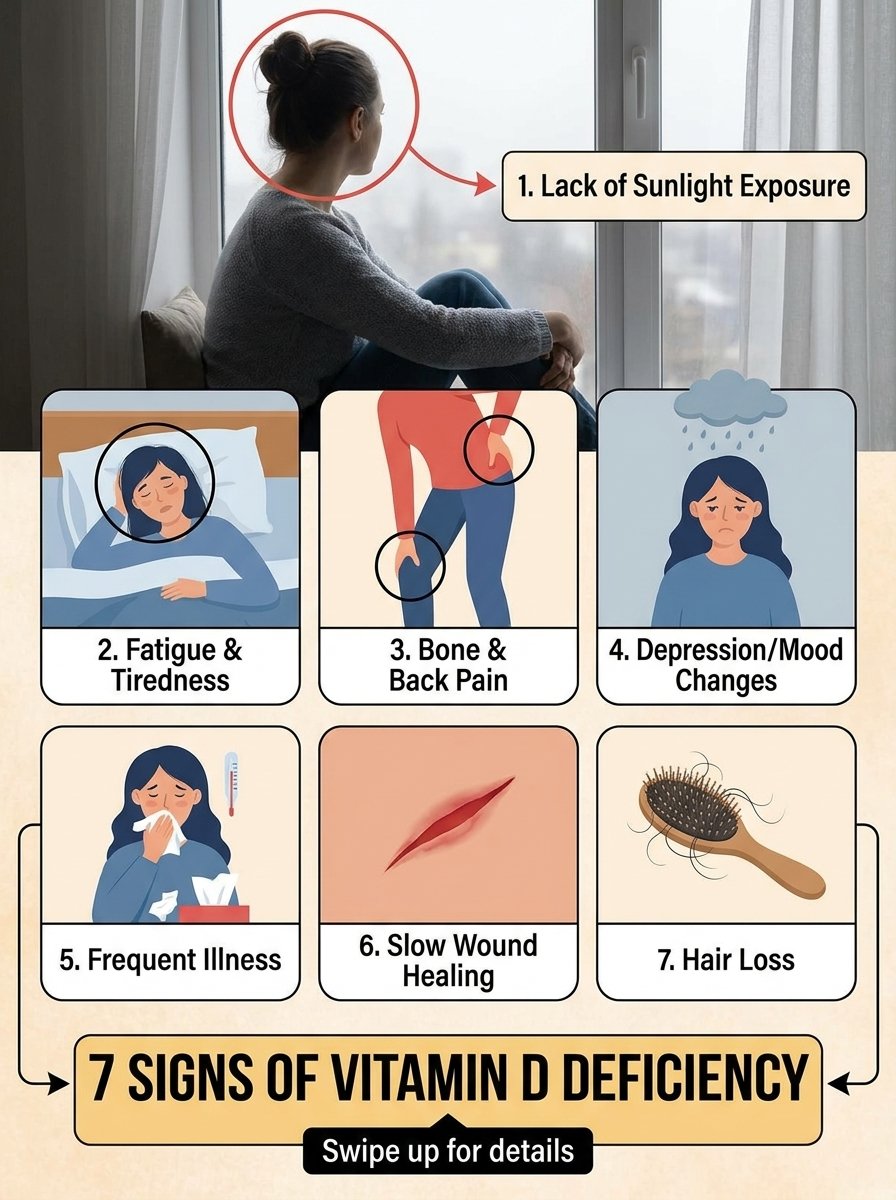
This straightforward guide will illuminate seven common indicators that your body might be experiencing a Vitamin D shortage. We’ll start with evocative, easy-to-remember names for these symptoms, followed by clear explanations of what’s happening internally and practical steps you can take. If any of these descriptions resonate with you, it’s a valuable next step to discuss them with your healthcare provider and inquire about the potential benefits of a Vitamin D blood test.
1. The Marrow-Ache (Bone and Back Pain)
If you experience a persistent, deep, and nagging ache in your bones or lower back, particularly after extended periods of rest or during the night, your body could be signaling a need for attention. Vitamin D is crucial for helping your body absorb calcium from your diet and effectively integrate it into your bone structure. When Vitamin D levels are insufficient, this vital process falters, potentially leaving your skeletal framework feeling tender, sore, or more susceptible to strain.
For many individuals in their middle years and beyond, this deficiency might manifest as stiffness upon waking, discomfort following routine daily tasks, or a dull, throbbing sensation in the lower back that seems disproportionate to any recent physical activity. Over time, inadequate Vitamin D is directly linked to decreased bone density, which significantly elevates the risk of fractures. You don’t have to carry this concern without seeking answers. A simple blood test, consistent Vitamin D intake, along with sufficient calcium and gentle weight-bearing exercises, can help rebuild and strengthen your foundational bone health.
To begin, simply observe and record when these aches typically occur, how long they persist, and if they hinder your daily activities. Share these observations with your doctor. If Vitamin D deficiency is identified as a contributing factor, restoring healthy levels often leads to a noticeable improvement in comfort and renewed confidence in your mobility.
2. The Spirit-Dusk (Persistent Low Mood)
Much like a day loses its vibrancy when heavy clouds obscure the sun, your mental landscape can feel similarly dulled when Vitamin D levels plummet. Many people describe a pervasive sense of grayness, a noticeable dip in enthusiasm, or a struggle to ignite their usual spark for life. While mood is undeniably intricate and influenced by countless elements, scientific research indicates that Vitamin D plays a significant role in critical brain chemistry and supports the neural pathways essential for maintaining emotional balance.
During certain seasons or in specific geographical locations, reduced exposure to natural sunlight can further intensify this experience. You might find that small pleasures feel less impactful, or you may lose interest in social engagements you once genuinely enjoyed. Experiencing these feelings is not a sign of personal weakness; it could simply be your brain communicating its need for additional ‘solar’ support.
If this description resonates, consider requesting a Vitamin D test as part of your routine health check-ups. Should your levels be low, supplementing may help to gently lift the emotional shadows. While it’s not a universal remedy for all mood disorders, many individuals report a more stable, brighter baseline mood once their Vitamin D stores are replenished, especially when combined with regular physical activity, adequate sleep, and meaningful social connections.
3. The Lethargy-Tide (Unexplained Fatigue)
Have you ever experienced waking up after a full night’s rest only to feel profoundly heavy, as if your limbs are weighed down? This persistent drag could be a clear indication that your body’s internal energy production systems are merely idling. Vitamin D functions as a subtle yet crucial catalyst within the microscopic powerhouses of your cells, facilitating the conversion of fuel into consistent, usable energy. When its levels drop, you might feel like you’re navigating your day with the handbrake perpetually engaged.
This particular type of exhaustion frequently appears disproportionate to your actual activity levels. You might find yourself needing to pace simple chores, requiring more frequent breaks, or feeling your eyelids droop while watching your favorite shows long before your usual bedtime. It can transform enjoyable exercise into a daunting task and make routine errands feel overwhelmingly large.
If you recognize this pattern, try keeping a simple record of when you feel most tired, what you’ve consumed, and your daily outdoor exposure. Share this detailed timeline with your healthcare provider. If a Vitamin D deficiency is a piece of the puzzle, bringing your levels back into a healthy range often helps restore a more even and reliable sense of energy throughout your day.
4. The Slow-Heal (Lingering Wounds)
Minor scrapes and cuts typically mend themselves with remarkable speed. However, if you’ve noticed that a small nick from gardening or a minor kitchen mishap seems to take an unusually long time to heal, it warrants closer investigation. Vitamin D actively supports your body’s intricate repair mechanisms by helping to regulate inflammation and orchestrating the signals that summon fresh cells to reconstruct damaged tissues. When Vitamin D levels are insufficient, this crucial initial phase of teamwork can become noticeably sluggish.
This might manifest as a scab that forms more slowly than usual, a wound that remains tender for an extended period, or a bruise that appears to fade at a much slower pace than in the past. While numerous factors influence healing, including blood sugar regulation, circulation, and overall nutritional status, it’s always wise to consider the complete picture. Nevertheless, Vitamin D often emerges as a common missing link, especially if you find several other