 By admin
 Imagine feeling that familiar twinge in your chest after just a few steps, a silent alarm bell you try to ignore. You’ve heard whispers about aspirin ‘cleaning’ your arteries, a comforting thought that promises an easy fix to a terrifying problem. But what if everything you thought you knew about aspirin and your heart health was actually a dangerous misunderstanding? By the time you finish reading this, you’ll uncover a simple, overlooked daily habit that could be far more powerful than any pill, a habit you absolutely cannot afford to miss.
What People Mean by “Cleaning Arteries” With Aspirin
Let’s immediately clarify a common misconception in straightforward terms. When individuals talk about “cleaning arteries,” they are generally referring to the process of reducing the accumulation of plaque within their blood vessels. This plaque is a complex mixture of fats, cholesterol, calcium, and other substances that gradually adhere to artery walls over an extended period.
Now, this is where aspirin often enters the conversation. Aspirin is widely recognized for its significant impact on blood clotting. It plays a crucial role in preventing platelets from clumping together, which in turn can lower the likelihood of dangerous blood clots forming.
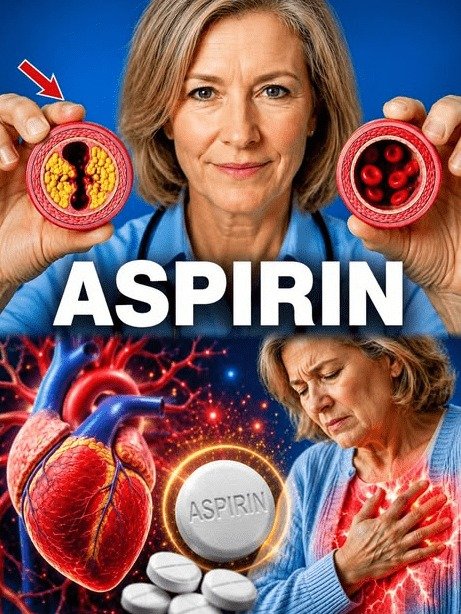
However, here’s the critical detail that many online discussions and videos frequently omit. Aspirin does not possess the ability to physically remove existing plaque from your arteries. It certainly doesn’t operate like a scrub brush or a cleaning agent.
The truth is, aspirin acts more like a “traffic controller” for your blood, not a scrubbing tool for your arteries.
Understanding this distinction is far more important than most people realize.
How Aspirin Actually Works in the Body
Aspirin falls into a category of medications known for their anti-inflammatory properties and their influence on blood coagulation.
Here’s a simplified breakdown to help you grasp its mechanism:
Aspirin effectively reduces the “stickiness” of platelets.
Platelets are microscopic cells in your bloodstream designed to cluster together to stop bleeding.
When these platelets clump too readily inside your arteries, they can form dangerous clots that obstruct blood flow.
Extensive research has consistently demonstrated that for specific populations, particularly those with a history of cardiovascular events, aspirin can significantly decrease the risk of new clot formation.
But that’s not the whole story.
Because it interferes with the clotting process, aspirin also carries an increased risk of bleeding, especially in sensitive areas like the stomach or brain. This inherent risk is precisely why it’s not a medication everyone should casually incorporate into their daily routine.
Why “Cleaning Arteries” Is the Wrong Idea
Many online articles and posts tend to oversimplify what is, in reality, a highly complex medical issue. They often create the impression that your arteries are merely pipes that can be easily flushed or scrubbed clean.
However, your body’s intricate systems simply do not function in such a straightforward manner.
Plaque accumulation is a gradual, long-term process that is significantly influenced by a multitude of factors, including:
Your dietary choices
Your level of physical activity
Your blood pressure readings
Your cholesterol levels
Your smoking habits
Aspirin, while beneficial in specific contexts, does not address or eliminate these fundamental root causes of plaque buildup.
Here’s a quick comparison to help solidify this understanding:
| Common Belief | Scientific Reality |
|---|---|
| Aspirin cleans arteries | Aspirin primarily affects blood clotting, not existing plaque. |
| One pill fixes buildup | Artery health is dependent on consistent, long-term lifestyle habits. |
| Safe for everyone daily | Daily use may elevate the risk of bleeding. |
This is precisely where many individuals unknowingly make critical errors in judgment regarding their health.
Who Might Be Advised to Use Aspirin
Now, let’s have an honest conversation, much like a trusted family doctor would.
Aspirin is indeed sometimes recommended for specific individuals, particularly those who already face an elevated risk of experiencing cardiovascular events.
This group may encompass people who:
Have a documented history of heart-related problems
Exhibit particular risk factors identified and assessed by a medical professional
Are currently under ongoing medical supervision for various preventive health strategies
However, here is the absolutely crucial point:
Not everyone stands to benefit from daily aspirin use.
In fact, recent medical guidelines have adopted a more cautious stance, especially concerning older adults who do not have a clear, medically established reason for taking it.
Because while aspirin can be a life-saving intervention in certain circumstances, it also carries the potential for significant harm if it is used inappropriately.
And that is a risk you should never, ever overlook.
Safer, Proven Ways to Support Artery Health
Now we arrive at the section most people tend to gloss over, but it’s the one you absolutely shouldn’t skip.
If your primary objective is to genuinely support and enhance your artery health, scientific research consistently and overwhelmingly points towards the profound impact of consistent daily habits, not the allure of quick-fix solutions.
Here are the fundamental habits that truly make a measurable difference:
Prioritize eating whole, unprocessed foods
Emphasize incorporating abundant vegetables, fruits, whole grains, and healthy fats into your diet.
Maintain consistent physical activity
Even a modest 20-minute walk each day can significantly boost your circulation and overall heart health.
Effectively manage your stress levels
Chronic stress, often silently, takes a heavy toll on your cardiovascular well-being.
Completely avoid smoking
This remains one of the single largest and most damaging contributors to artery damage and disease.
Regularly monitor your blood pressure and cholesterol
Consistent medical checkups provide vital insights and are far more reliable than mere guesswork.
The surprising truth is, many people are already aware of these crucial habits, yet struggle to follow them consistently.
That inconsistency is precisely where the greatest health risks begin to accumulate.
Simple Daily Routine You Can Start Today
Let’s translate this vital information into something practical and effortlessly integrated into your daily life.
Here is a straightforward daily routine specifically designed with older adults in mind:
Morning
Begin your day with a refreshing glass of water.
Engage in some gentle stretching or a brief, invigorating walk.
Midday
Opt for a well-balanced meal featuring plenty of vegetables and lean protein sources.
Afternoon
Take another short walk or ensure you remain lightly active.
Evening
Avoid consuming heavy meals late at night.
Prioritize relaxation and reduce your screen time before bed.
Weekly
Keep track of your weight and be mindful of any notable changes.
Ensure you attend all necessary medical appointments.
This routine might appear remarkably simple on the surface.
However, it is the unwavering consistency that ultimately generates profound, long-term health benefits.
The Hidden Risk Many People Ignore
Here’s the critical piece of information that frequently gets overlooked in the pursuit of viral content and quick health tips.
Using aspirin without the appropriate medical guidance can potentially lead to a range of serious health complications, including:
Significant stomach irritation
Internal bleeding, which can be life-threatening
Dangerous interactions with other prescribed medications
Furthermore, these inherent risks tend to escalate considerably with advancing age.
This is precisely why blindly adhering to health advice found on social media platforms can often prove to be far more detrimental than beneficial.
This warning is not intended to instill fear in you.
It is genuinely meant to protect your well-being.
Key Takeaways You Should Remember
Aspirin does not actively “clean” your arteries.
Its primary action is on blood clotting, not the removal of plaque buildup.
It may offer benefits to certain individuals, but it is not universally helpful.
Professional medical advice is absolutely essential before considering regular use.
Lifestyle habits hold significantly more power.
Your daily choices are the true architects of your long-term artery health.
Simple, consistent routines can yield remarkable results.
Consistency consistently outperforms the allure of quick fixes.
FAQ About Aspirin and Artery Health
Can I take aspirin daily to keep my arteries healthy
Not without explicit medical guidance. The suitability of daily aspirin use is entirely dependent on your unique personal health profile and individual risk factors.
Does aspirin remove plaque from arteries
No, aspirin does not remove existing plaque. Its main therapeutic effect is on preventing blood clots.
What is the safest way to support artery health
According to current medical research, the most reliable and safest approach to supporting artery health involves a comprehensive combination of healthy eating habits, regular physical activity, and consistent medical checkups.
Final Thoughts
If there is just one single message I want you to internalize and remember from this entire article, it is this:
There is absolutely no shortcut that can effectively replace the profound impact of consistent, positive daily habits.
While aspirin can certainly play a vital role for some individuals under medical supervision, it is by no means a magical, all-encompassing solution for artery health.
The real, enduring power lies in the countless small, deliberate choices you make every single day, even when no one else is observing.
And that “simple daily habit” I hinted at right at the beginning of this article?
It’s not a pill, and it’s not a secret supplement.
It is the unwavering commitment to showing up for your own health, diligently, one day at a time.
Disclaimer
This article is provided for informational purposes only and should never be considered a substitute for professional medical advice. Always consult with a qualified healthcare provider before making any decisions regarding medication or changes to your health routines.