 By admin
 You’ve probably seen the viral hacks: a sprinkle of baking soda promises a flawless complexion, a quick fix for everything from acne to dark spots. It’s a tempting thought – a cheap, readily available kitchen staple replacing expensive skincare products. But what if this popular DIY beauty secret is actually harming your skin more than helping it?
Many online communities promote baking soda (sodium bicarbonate) as a miraculous solution for smoother, brighter skin, but does it truly deliver on these promises? And more importantly, is it a safe choice for your delicate facial skin?
In this essential guide, we’ll cut through the hype to reveal the realistic effects of baking soda on your skin, identify its potential dangers, and outline how some individuals might cautiously incorporate it into their routine, while emphasizing a balanced approach to skincare.
🌿 What Is Baking Soda and Why Is It Used in Skincare?
Baking soda, a common household item, is a fine, white crystalline powder primarily known for its uses in baking and cleaning. Within the realm of skincare, it sometimes makes an appearance as a DIY physical exfoliant, thanks to its mildly abrasive texture.
When combined with a liquid like water or a hydrating ingredient, the granular consistency of baking soda can mechanically help slough off dead skin cells from the skin’s outermost layer. This process might leave the skin feeling noticeably smoother and appearing temporarily more luminous.
However, a critical factor to consider is baking soda’s highly alkaline pH level (ranging from 8 to 9). This stands in stark contrast to healthy skin’s natural state, which is slightly acidic (with a pH of 4.5 to 5.5). This significant pH imbalance is key to understanding how your skin will react to baking soda applications.
🧪 What Does Baking Soda Actually Do for the Skin?
Baking soda’s action on the skin is predominantly superficial, affecting only the very top layer. It may offer:
- A gentle buffing away of surface dead skin cells.
- A fleeting sensation of a smoother skin texture.
- The perception of a thorough, deep cleanse due to its exfoliating properties.
Crucially, it does not:
- Penetrate into the deeper layers of your skin.
- Actively reduce melanin production, which is responsible for skin tone.
- Provide a permanent solution for lightening dark spots or hyperpigmentation.
- Eradicate wrinkles or stimulate collagen synthesis for anti-aging benefits.
Therefore, it’s vital to maintain realistic expectations, as its effects are merely temporary and focused on the surface.
✅ Potential Benefits (Based on User Experiences)
Anecdotal reports and user feedback suggest that baking soda might:
- Offer mild exfoliation, particularly for those with non-sensitive skin types.
- Impart a short-lived feeling of softer skin immediately after use.
- Serve as an accessible and budget-friendly alternative to commercial exfoliants.
- Feel more comfortable and less harsh when blended with gentle, soothing ingredients.
⚠️ Important Risks and Precautions
Leading dermatology experts frequently caution against using baking soda on the face, as it carries several significant risks. It may:
- Lead to excessive dryness or an uncomfortable tight sensation.
- Trigger adverse reactions such as redness, persistent itching, or general irritation.
- Compromise and disrupt the skin’s natural protective barrier.
- Significantly heighten your skin’s vulnerability and sensitivity to sun exposure.
- Exacerbate existing skin conditions like eczema, rosacea, or generally sensitive skin types.
🚫 You should absolutely avoid using baking soda if you have:
- Any open wounds or broken skin.
- Active, inflamed acne breakouts.
- Exceptionally sensitive or already compromised skin.
👉 Always, without exception, perform a patch test before applying baking soda to your face.
Simply apply a tiny amount to a discreet area like your inner forearm and observe for 24 hours to check for any negative reaction.
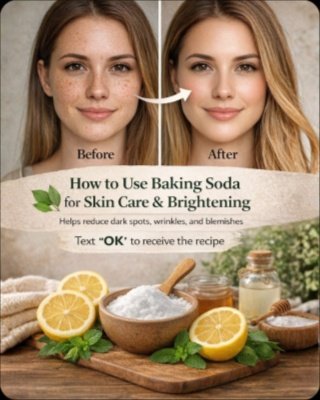
Should you still choose to experiment with baking soda, do so with extreme caution and use it very sparingly—ideally no more than once a week, or even less frequently if you have sensitive skin.
1️⃣ Gentle Exfoliating Paste
Ingredients:
- 1 teaspoon baking soda
- 2–3 teaspoons water (or a gentle liquid like milk, or a mild, non-comedogenic moisturizer)
Steps:
- Begin by cleansing your face thoroughly with your usual gentle cleanser.
- Carefully apply the prepared mixture to your damp face, using very light, circular motions.
- Gently massage your skin for a maximum of 1 to 2 minutes; absolutely avoid any harsh scrubbing.
- Rinse your face completely with lukewarm water until all residue is removed.
- Gently pat your skin dry with a clean towel and immediately follow with your preferred moisturizer.
- If using this treatment during the day, ensure you apply a broad-spectrum sunscreen afterward.
2️⃣ With Honey (For Normal to Dry Skin)
Ingredients:
- 1 teaspoon baking soda
- 1 tablespoon natural honey
How to use:
- Combine the ingredients well and apply the mixture gently to your face.
- Allow the mask to sit on your skin for a brief period, typically 3 to 5 minutes.
- Rinse your face thoroughly with water until clean.
🍯 The addition of honey can provide a soothing and hydrating effect, potentially counteracting some of baking soda’s harshness.
3️⃣ With Coconut Oil (Use with Caution)
Ingredients:
- 1 teaspoon baking soda
- 1 teaspoon coconut oil
This particular combination might appeal to those with dry skin, but be warned: coconut oil is known to be comedogenic for some individuals, meaning it can clog pores. Proceed with extreme caution and observe your skin closely.
⚖️ Quick Comparison: Baking Soda vs. Recommended Exfoliants
| Feature | Baking Soda | Gentle Chemical Exfoliants (AHA/BHA) |
|---|---|---|
| Cost | Very low | Medium to high |
| Type | Physical exfoliation | Chemical exfoliation |
| Irritation risk | Higher if overused | Lower when used properly |
| Frequency | Once a week or less | 2–3 times per week |
| Scientific support | Limited | Well-studied |
❓ Frequently Asked Questions
Does baking soda permanently lighten dark spots?
Absolutely not. While it might temporarily improve the skin’s appearance by removing dull, dead skin cells from the surface, it possesses no ability to address or treat pigmentation issues at their root cause.
Can it reduce wrinkles?
Unfortunately, no. Baking soda may impart a fleeting sensation of smoother skin, but it lacks the capacity to stimulate collagen production or diminish the appearance of fine lines and wrinkles over the long term.
Is it safe for under-eye dark circles?
It is strongly advised to avoid using baking soda in the delicate under-eye area. The skin around the eyes is exceptionally thin and fragile, making it highly susceptible to irritation and damage from harsh ingredients.
⚠️ Important Note
Please be aware that the information presented here is intended solely for general knowledge and educational purposes. It should never be considered a substitute for personalized professional medical or dermatological advice. If you have any uncertainties about whether a particular skincare ingredient is suitable for your skin, it is always best to consult with a qualified dermatologist, especially if you have sensitive, reactive, or problematic skin.
🌸 Final Thoughts
While baking soda might offer a quick, temporary surface smoothing effect, it is certainly not the miracle skincare solution some claim it to be. For truly healthy, consistently glowing skin, a regimen built on consistency, gentle care, and scientifically formulated products will almost always yield more reliable and sustainable results over time.
Ultimately, the most effective approach to skincare isn’t always the latest trend, but rather the one that prioritizes safety, balance, and long-term skin health.