 By admin
 Ever caught a glimpse of an unexpected guest peeking from your ear and wondered, ‘Where did that come from?’ You’re definitely not alone. While it’s easy to dismiss ear hair as just another annoying sign of aging, there’s a fascinating biological story behind its appearance, far beyond mere aesthetics.
Whether it’s a stray strand catching the light in your bathroom mirror or a casual remark from your barber, the sudden appearance of ear hair can be a surprising moment. Many simply chalk it up to “getting older,” but this isn’t just a minor cosmetic annoyance.
In reality, the growth of ear hair is deeply rooted in significant hormonal changes, your genetic blueprint, and the intricate biological processes that unfold as we age.
By unraveling the true reasons behind this common phenomenon, you might find it far less perplexing—and ultimately, much less of a concern.
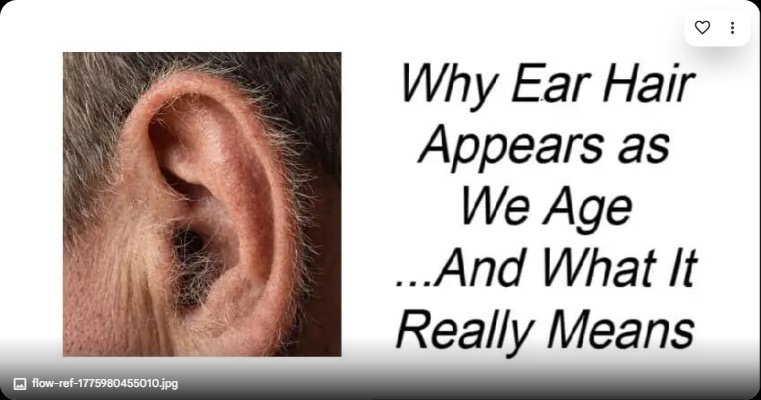
Why Ear Hair Increases With Age
You’ve probably heard the old quip that hair “relocates” from your head to your ears and nose as you get older. While hair follicles don’t literally pack up and move, there’s a scientific explanation for why this seemingly bizarre shift appears to happen.
The truth is, almost everyone has a covering of very fine, often unnoticeable hairs on their ears from birth. However, with the passage of time, a combination of factors triggers these delicate vellus hairs to transform, becoming significantly thicker, darker, and much more prominent.
The Testosterone Effect
The primary culprit behind this change is a group of hormones known as androgens, with testosterone playing a leading role. As our bodies mature, specific hair follicles—particularly those nestled within the ears, nose, and eyebrows—develop an increased sensitivity to the presence of these potent hormones.
It’s a curious paradox: the very same hormonal sensitivity responsible for the thinning and eventual loss of hair on your scalp can, in stark contrast, ignite a surge of growth in other regions. While the follicles on your head may begin to miniaturize, those in your ears can experience the exact opposite effect, becoming more robust.
Longer Growth Cycles
Every hair follicle on your body follows a natural cycle of growth, rest, and shedding. As we advance in years, this intricate cycle often undergoes a deceleration. For ear hairs, this means they can remain in their active growth phase for extended periods and shed far less frequently, leading to strands that are noticeably longer, coarser, and often wirier in texture.
Thinning Skin
Another contributing factor is the natural aging process of our skin. With time, skin loses its youthful elasticity and becomes progressively thinner. This means that hairs that were previously almost imperceptible can suddenly become much more apparent, not necessarily because the hair itself has transformed drastically, but because the underlying canvas has changed.
The Role of Genetics
Take a look at your family tree: if noticeable ear hair is a common trait among your relatives, then there’s a strong likelihood you’ll experience it as well. Your genetic makeup plays a crucial role in dictating just how sensitive your hair follicles are to hormonal fluctuations and precisely which areas of your body will exhibit more pronounced hair growth.
It’s important to understand that this predisposition is entirely beyond your control; it’s not a reflection of your hygiene, specific grooming routines, or lifestyle choices. Rather, it’s a straightforward matter of inherited biology, passed down through generations.
Is Ear Hair a Sign of Health Problems?
For the vast majority of individuals, the presence of ear hair is an entirely benign and normal occurrence. Nevertheless, there are rare instances where a sudden or extreme change in ear hair growth might hint at deeper internal shifts.
Hormonal Shifts
Should you observe a rapid or particularly pronounced surge in ear hair development—especially if this is accompanied by symptoms like persistent fatigue, noticeable mood swings, or any other unexplained physical changes—it could indicate a significant hormonal imbalance that warrants a discussion with your healthcare professional.
The Heart Health Myth
You might have heard whispers linking ear hair to heart disease, a notion stemming from older research that investigated potential correlations between various external physical traits and cardiovascular risk. However, it’s crucial to clarify that contemporary scientific evidence definitively does not substantiate ear hair as a reliable diagnostic marker for heart health issues.
To be clear: the presence of ear hair is not a crystal ball for predicting your cardiac well-being. What it does serve as, however, is a fascinating reminder that the visible changes on the surface of our bodies are frequently outward manifestations of the complex internal systems at play.
Safe Ways to Manage Ear Hair
It’s worth noting that ear hair actually plays a beneficial protective role, acting as a natural barrier to trap dust, small particles, and debris from entering your ear canal. Therefore, deciding to remove it is entirely a personal choice. If you do find its presence bothersome, prioritizing safe and effective grooming methods is paramount.
For optimal results and safety, consider these methods:
- Electric trimmers: These are widely regarded as the safest and most efficient tools for routine upkeep and precise trimming of ear hair.
- Blunt-tipped scissors: Excellent for carefully snipping individual stray hairs, provided you use a good mirror and maintain a very steady hand.
It’s strongly advised to steer clear of these options:
- Tweezing or plucking: This can lead to uncomfortable ingrown hairs, irritation, or even potential infections in the sensitive skin of the ear.
- DIY waxing: Attempting to wax your ears at home carries significant risks and could potentially cause damage to the delicate ear canal or eardrum.
- Chemical hair removers: These products are typically too harsh and are not formulated for use on the extremely sensitive skin within and around the ears.
Should you decide that waxing is your preferred method, it is absolutely essential to seek out a qualified professional to perform the service safely.
The Bottom Line
Ultimately, the emergence of ear hair is a perfectly normal and natural facet of the aging journey. It should not be misconstrued as an indicator of poor hygiene, personal neglect, or any form of declining health. Instead, it represents just one of the myriad fascinating ways our bodies continuously adapt and evolve throughout our lives.
Instead of perceiving it as a flaw or something “amiss,” we can embrace it as compelling proof that the human body is an incredibly dynamic, responsive, and perpetually self-adjusting system. Armed with safe grooming practices and a healthy dose of perspective, ear hair becomes just another entirely manageable transformation on our life’s intricate path.
You’ve just explored the fascinating reasons behind why ear hair appears as we age. For more intriguing insights, consider reading our article: Manager Had To Hire A New Employee.