 By admin
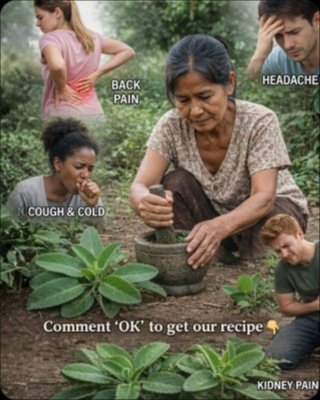
 Imagine scrolling through your feed, and there it is: a viral image of a thick, vibrant green leaf, brimming with water.
Someone in the comments claims, “Just drink its juice, and your cough will vanish… even stubborn pain too!”
Instantly, your curiosity sparks: Could this really be true? Is it truly safe, or just another one of those old wives’ tales passed down through generations?
This plant often evokes feelings of nostalgia for backyard gardens, damp flowerpots, and traditional Sunday home remedies. And that’s precisely its powerful allure: the word “natural” often instills a false sense of security—even when caution is absolutely necessary.
Keep reading, because today we’re going to dive deep into what Bryophyllum pinnatum (famously known as Kalanchoe, the “miracle leaf,” or sống đời) truly is, explore why so many people swear by it, and equip you with the essential knowledge to approach it with both common sense and critical caution.
Why These Remedies Go Viral (and Why That Matters)
When you’re dealing with a nagging hoarseness, a persistent mild cough, or a stubborn cold that just won’t loosen its grip, your immediate instinct is to find rapid relief.
Moreover, if daily stress leaves your back aching or you feel a general soreness throughout your body, it’s natural to seek out quick fixes and shortcuts to feel better.
This is precisely when age-old, word-of-mouth remedies emerge, offering simple solutions like a unique leaf, a soothing tea, or a refreshing juice.
The allure is incredibly strong: these solutions are often perceived as inexpensive, readily available, and having stood the test of time, “used forever.”
However, there’s a crucial detail that almost no one openly discusses:
When it comes to your health, it’s essential to remember that “popular” doesn’t always mean “safe for everyone.”
While one individual might experience a sense of improvement due to simple hydration, much-needed rest, or even the powerful placebo effect, another could potentially worsen their condition through adverse interactions, unexpected side effects, or by inadvertently delaying a critical medical diagnosis.
Have you ever observed a situation where a remedy seems to offer temporary relief, only for the underlying issue to resurface with even greater intensity?
Our purpose today isn’t to condemn this plant or to peddle any magical solutions. Instead, we aim to provide you with a clear and practical roadmap:
-
What it might potentially offer support for
-
What it absolutely cannot replace
-
And, critically, when it’s time to cease experimentation and seek professional medical assistance
Because the most valuable asset isn’t the leaf itself. It’s your informed judgment.
What Is Kalanchoe and What People Claim It “Supports”
Bryophyllum pinnatum (Kalanchoe) is a fascinating succulent plant.
Its thick, fleshy leaves are adept at retaining water, and when broken, they release a clear, slightly bitter juice.
Within many traditional households, it’s often employed as a perceived support for a range of minor ailments:
-
A mild, irritating cough
-
Light symptoms associated with a common cold
-
General throat irritation or discomfort
-
Feelings of general tiredness or fatigue
-
Aches and pains often linked to tension
How is it traditionally used?
Typically, people will thoroughly wash a few leaves, then either crush them to extract their juice or prepare a very mild infusion. The widespread belief is that this helps to “soothe” and “calm inflammation.”
However, here’s the absolutely critical distinction:
The mere fact that something is used as a home remedy does not automatically qualify it as medicine.
And it certainly doesn’t imply it’s suitable for addressing serious health problems such as persistent headaches, severe back pain, kidney discomfort, or any ongoing, concerning symptoms.
A fleeting, mild discomfort is one thing entirely. An undeniable warning sign is another.
So, does it actually “work” or not?
The most responsible and accurate answer is:
It may provide a feeling of helpfulness as a support for very mild symptoms in certain individuals, but it does not serve as a substitute for professional medical evaluation, and crucially, it’s not suitable for everyone.
This leads us directly to the most practical and valuable segment of this discussion: the potential benefits when utilized with genuine common sense—and the strict boundaries you must always respect.
9 Potential Benefits of Using It Carefully (and the Last One Changes How You Decide Everything)
9) It forces you to slow down and truly listen to your body
“Maria,” a 59-year-old (fictional name), lived her life in a perpetual rush. Whenever she caught a cold, she would simply power through, working as if nothing were amiss.
One day, a kind neighbor offered her Kalanchoe leaves and patiently demonstrated how to prepare them.
As she carefully washed the leaf and listened to the gentle sound of running water, Maria finally allowed herself a moment to pause. That brief moment of stillness, combined with a warm drink, provided her with a subjective sense of relief.
It wasn’t solely the leaf at work. It was the vital pause.
What if your very first “remedy” was simply genuine, restorative rest?
8) It can support hydration when consumed as a light infusion
When you’re experiencing a mild cough or throat irritation, your throat often simply craves warm, soothing fluids.
Maria noticed a significant reduction in scratchiness after drinking something warm and gently inhaling the steam.
Sometimes, what truly provides comfort is the moisture itself, not some “secret ingredient.”
If incorporating it encourages you to consume more fluids, that’s already a significant advantage.
The crucial question remains: Are you using it as a gentle support, or as a dangerous substitute for necessary medical treatment?
7) It can foster a feeling of relief through ritual and temperature
There’s an undeniable power in sensory self-care: the comforting warmth spreading through your throat, the subtle, earthy herbal scent, and the very act of intentionally taking care of yourself.
“Raúl,” 63 (fictional name), often remarked: “It calms me because I feel like I’m actually doing something beneficial.”
That profound feeling of agency can significantly reduce anxiety—and heightened anxiety frequently intensifies the perception of discomfort.
Crucially: Feeling better does not provide proof that something cures disease.
However, comfort is undeniably important—provided it is safe.
6) It might help you steer clear of overusing unnecessary syrups or pills
In moments of desperation, some individuals tend to combine every available remedy: various syrups, potent cold medications, multiple painkillers, and anti-inflammatory drugs.
Yet, sometimes, the body truly only required rest, adequate fluids, and time to heal naturally.
If a simple home-based ritual prevents you from indiscriminately overusing medications, that can indeed be a positive outcome.
The insidious hidden risk? Using it to deliberately ignore critical red flags such as a soaring fever, concerning shortness of breath, or a persistent cough that simply refuses to subside.
The delicate line between “support” and “danger” is defined by the passage of time and the intensity of symptoms.
5) It may alleviate mild throat discomfort during simple colds
In the context of a common cold, a sore throat frequently improves with straightforward, gentle measures.
Raúl, for instance, prepared a very light, warm infusion and reported that it “smoothed” the rough, scratchy sensation he felt when swallowing.
This soothing effect can often be attributed to the warmth and hydration provided.
It’s not a guaranteed cure, but rather a potential possibility.
The intelligent approach is to carefully observe:
Do your symptoms improve within a few days—or do they steadily worsen?
If they deteriorate, it’s imperative to change your plan immediately.
4) It trains you to actively monitor early signals instead of just guessing
Maria developed a habit of meticulously tracking her health: her temperature, the duration of her cough, the color of her mucus, and her overall energy levels.
This practice significantly enhanced her understanding and management of her own health.
If her symptoms remained mild and showed clear signs of improvement, she confidently continued with simple self-care.
However, if a fever or extreme fatigue emerged, she promptly scheduled a doctor’s appointment.
This proactive habit is far more valuable than any leaf could ever be. It grants you genuine control over your well-being.
Do you honestly know how long that persistent cough has been bothering you?
Most people don’t—and that lack of awareness is often where serious problems truly begin.
3) It can help you feel like you breathe easier through warm steam
The gentle steam rising from a warm drink can create the comforting sensation of more “open” airways.
Raúl shared that gently inhaling this steam made him feel noticeably less congested.
It does not possess the power to cure infections, and it does not serve as a replacement for professional medical care.
However, if a bothersome symptom eases, you often find yourself sleeping better.
And better quality sleep is a fundamental pillar of recovery.
Crucially: If you experience genuine difficulty breathing, wheezing sounds, or sharp chest pain, this is no longer the domain of home remedies—it’s a medical emergency.
2) It reminds you of the profound power of moderation
Here’s a vital truth that few people openly discuss: Even something “natural” can still have potent effects.
Many plants contain active compounds that are simply not suitable for consumption during pregnancy, while breastfeeding, or when combined with certain prescribed medications.
That’s precisely why adopting an approach of small amounts, occasional use, and vigilant observation is far more intelligent than mindlessly “taking it every day just because it’s natural.”
Raúl once consumed more than his usual amount and experienced significant discomfort.
He quickly learned that with herbal remedies, less is very often more effective and safer.
Is moderation the primary ingredient in your health philosophy?
1) The life-changing benefit: It teaches you when to stop and ask for help
The true transformative power isn’t found in the leaf itself.
It lies in your conscious decision not to self-medicate with blind, unfounded faith.
Maria meticulously learned to recognize non-negotiable warning signs:
-
A persistently high fever
-
A cough that lasts for weeks on end
-
Severe pain in the side, lower back, or what feels like the “kidney area”
-
Burning sensations during urination or the presence of blood in urine
-
Intense, unrelenting headaches or any new neurological symptoms
-
Dizziness, sudden visual changes, or pain that significantly worsens rapidly
At that critical juncture, no herbal tea, however comforting, will be sufficient. You urgently need a professional medical check-up.
Cultivating this habit can actively prevent severe complications that arise from waiting too long.
The single most “healing” skill you can possess is making timely decisions about your health.
How to Think About Using It Prudently (If You Choose to Try)
Should you ultimately decide to use Kalanchoe as a support for mild, transient symptoms, it’s vital to maintain the correct mindset:
It functions as a complementary aid, not a standalone medical treatment.
Here are some general, safety-first guidelines to consider:
-
Thoroughly wash the leaves with clean, potable water before use.
-
Avoid combining it with numerous other herbs or dietary supplements simultaneously.
-
If you do consume it, use very small amounts and carefully monitor your body’s response.
-
Always prioritize adequate rest, consistent hydration, and exposure to fresh air.
-
If you are pregnant, breastfeeding, manage chronic health conditions, or are currently taking prescription medication, do not experiment without explicit professional medical advice.
“But my family has used it for generations!” you might say.
That’s a common sentiment. However, your unique body, your specific medications, and your individual medical history are distinctly different from your grandmother’s.
This isn’t a sign of disrespect; it’s the very essence of responsible health care in the modern age.
Traditional Use vs. A Responsible Approach
| Element | What People Often Do | A More Careful Approach | Why It Matters |
|---|---|---|---|
| Fresh leaves | Crush and consume the juice | Use sparingly and in very small quantities | Prevents potential excess and irritation |
| Light infusion | Prepared “like a strong tea” | Keep it very mild, not concentrated | Significantly reduces the risk of discomfort |
| Reason for use | “For everything and anything” | Only for mild, self-limiting symptoms, for a short duration | Crucial for preventing delayed medical diagnosis |
| Expectations | “It definitively cures all ailments” | “It may offer support, but it does not cure” | Safeguards you from potentially dangerous false promises |
Warning Signs: When NOT to Continue Home Remedies
This section represents the absolute most critical information within this entire article.
The gravest danger isn’t directly related to the plant itself. It’s the profound risk of waiting far too long to seek professional help.
Immediately seek urgent medical care if you experience any of the following:
-
A high fever, or a fever that consistently refuses to subside
-
A cough that persists for weeks, or is accompanied by shortness of breath
-
Intense pain in your side, lower back, or what you perceive as the “kidney area”
-
A burning sensation when urinating, visible blood in your urine, or colicky pain
-
Severe, persistent headaches that are unusual for you, or any new neurological symptoms
-
Pain that suddenly awakens you from sleep or rapidly intensifies
Safety Guide at a Glance
| Situation | What to Do | Why It Matters |
|---|---|---|
| Mild cold (1–3 days) | Increase fluids, prioritize rest, and observe closely | Most common colds resolve with simple supportive care |
| Mild cough, no fever | Consider a light infusion + ensure hydration + rest | May offer a soothing effect for irritation |
| Pregnancy / breastfeeding | Strictly avoid without professional medical advice | Periods of higher physiological sensitivity and potential risks |
| Chronic illness or medications | Absolutely do not experiment without physician consultation | Significant potential for adverse interactions |
| Intense or persistent symptoms | Immediately consult a doctor | May indicate a need for genuine medical treatment |
Final Thoughts: Your Health Is NOT a Gamble
A simple home remedy can indeed be a pleasant and helpful supportive measure when your symptoms are genuinely mild and you are meticulously paying attention to your body.
However, when the warning signs become strong and undeniable, the truly intelligent decision is to seek a professional diagnosis.
Not because you are weak or incapable.
But precisely because you are astute and wise.
Take these three profound ideas with you:
-
Kalanchoe may offer a sense of relief as a supportive ritual, but it is not a miraculous medicine.
-
Moderation and vigilant observation are far more important than any fleeting health trend.
-
Recognizing and acting on critical warning signs is your most effective form of protection.
Share this essential information with someone who habitually keeps leaves in their fridge “just in case.”
And honestly ask yourself: what do you find harder—allowing yourself to stop and rest, or having the courage to ask for professional help in time?
This article is provided solely for informational purposes and should not be considered a substitute for professional medical advice. Always consult with a qualified healthcare provider for personalized guidance regarding your health.