 By admin
 Introduction
Imagine a silent threat lurking, one that often goes unnoticed until it’s too late. If you’re over 60, your risk of stroke is unfortunately higher, but what’s truly alarming is how frequently mini strokes (also known as TIAs or transient ischemic attacks) manifest with symptoms so subtle, they’re often dismissed as minor annoyances.
Overlooking these crucial early indicators isn’t just risky; a mini stroke is frequently a critical red flag, signaling that a devastating major stroke could be just around the corner.
Understanding these hidden signs isn’t just knowledge—it could be the key to saving your own life, or that of a loved one.
What Is a Mini Stroke (TIA)?
So, what exactly is a mini stroke, or TIA? It occurs when the blood supply to a part of your brain is briefly interrupted. While the symptoms of a mini stroke might vanish entirely within a few minutes or hours, unlike a full-blown stroke, this temporary nature doesn’t mean it’s benign.
On the contrary, a TIA is frequently a powerful precursor to a more severe stroke, sometimes striking just days later.
10 Silent Mini Stroke Symptoms You Should Never Ignore
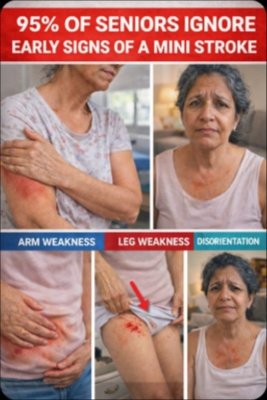
1. Sudden Numbness or Weakness
You might feel an unexpected sensation of weakness or numbness in:
- Your face
- An arm
- A leg (especially on one side of the body)
Even if it fades quickly, dismissing this could be a grave error.
2. Trouble Speaking or Slurred Speech
Suddenly finding yourself struggling to articulate words clearly or comprehending what others are saying can be a critical indicator.
You might:
- Struggle to find the right words
- Speak unclearly or with a slur
- Feel confused during conversations
3. Temporary Vision Problems
Mini strokes have a surprising ability to impact your eyesight, potentially causing:
- Blurred vision
- Double vision
- Sudden loss of vision in one or both eyes
4. Dizziness or Loss of Balance
A sudden onset of unsteadiness, persistent dizziness, or an inexplicable difficulty maintaining your balance while walking can all be critical signals pointing to a temporary disruption in brain function.
5. Sudden Severe Headache
If you’re hit with an abrupt, excruciating headache that seems to come out of nowhere, especially one without any clear explanation, consider it a potential warning sign that demands immediate attention.
6. Confusion or Difficulty Understanding
Experiencing a sudden mental fogginess, feeling disoriented, or struggling to process information with your usual clarity can be a distressing and important symptom to recognize.
7. Brief Loss of Coordination
Activities you once performed effortlessly might suddenly become challenging, such as:
- Difficulty holding objects
- An inability to walk in a straight line
- Struggling with other fundamental movements
8. Facial Drooping
A noticeable drooping on one side of your face, or an uneven appearance when you try to smile, is a very serious and classic indicator of a stroke.
This symptom absolutely requires urgent medical evaluation.
9. Sudden Fatigue or Weakness
An unexpected and profound feeling of exhaustion or weakness that appears suddenly, particularly without an obvious cause, might actually be connected to a temporary reduction in blood flow to your brain.
10. Short Episodes That Disappear Quickly
Perhaps the most treacherous characteristic of a mini stroke is how fleeting its symptoms often are. They might only persist for a few minutes before vanishing completely on their own.
- Last only a few minutes
- Go away on their own
This deceptive brevity frequently causes people to dismiss them, yet these brief episodes should always be treated with utmost seriousness.
Why You Should Act Immediately
Even if every symptom seems to have vanished, it is crucial to understand that a mini stroke still constitutes a legitimate medical emergency. Research unequivocally demonstrates that the likelihood of experiencing a full-blown, debilitating stroke is significantly elevated within the critical 48-hour window following a TIA.
Therefore, if you observe any of these warning signs, prompt and immediate medical attention is absolutely non-negotiable.
Who Is at Higher Risk?
Certain factors significantly increase your susceptibility to a mini stroke. Your risk profile is heightened if you:
- Are aged 60 or older
- Live with high blood pressure
- Have a diabetes diagnosis
- Are a smoker
- Suffer from high cholesterol
- Typically maintain a sedentary lifestyle
How to Reduce Your Stroke Risk
Maintain a Healthy Lifestyle
- Consistently consume a balanced, heart-friendly diet
- Engage in regular physical activity
- Strive to maintain a healthy body weight
Manage Medical Conditions
Proactive management of existing medical conditions is paramount. Ensure that conditions such as high blood pressure, diabetes, and elevated cholesterol levels are consistently kept under strict control.
Avoid Smoking and Limit Alcohol
It’s vital to eliminate harmful habits. Both smoking and excessive alcohol consumption are known to dramatically escalate your overall stroke risk.
Conclusion
While mini strokes might be fleeting in their manifestation, the potential consequences they carry are profoundly life-threatening. The ability to promptly identify these 10 often-silent warning signs is not just important; it’s absolutely crucial for enabling you to intervene and seek help long before a devastating major stroke has the chance to strike.
If you, or anyone you are with, ever experiences any of these critical symptoms, remember: there is no time to waste—seek immediate medical assistance without delay.