 By admin
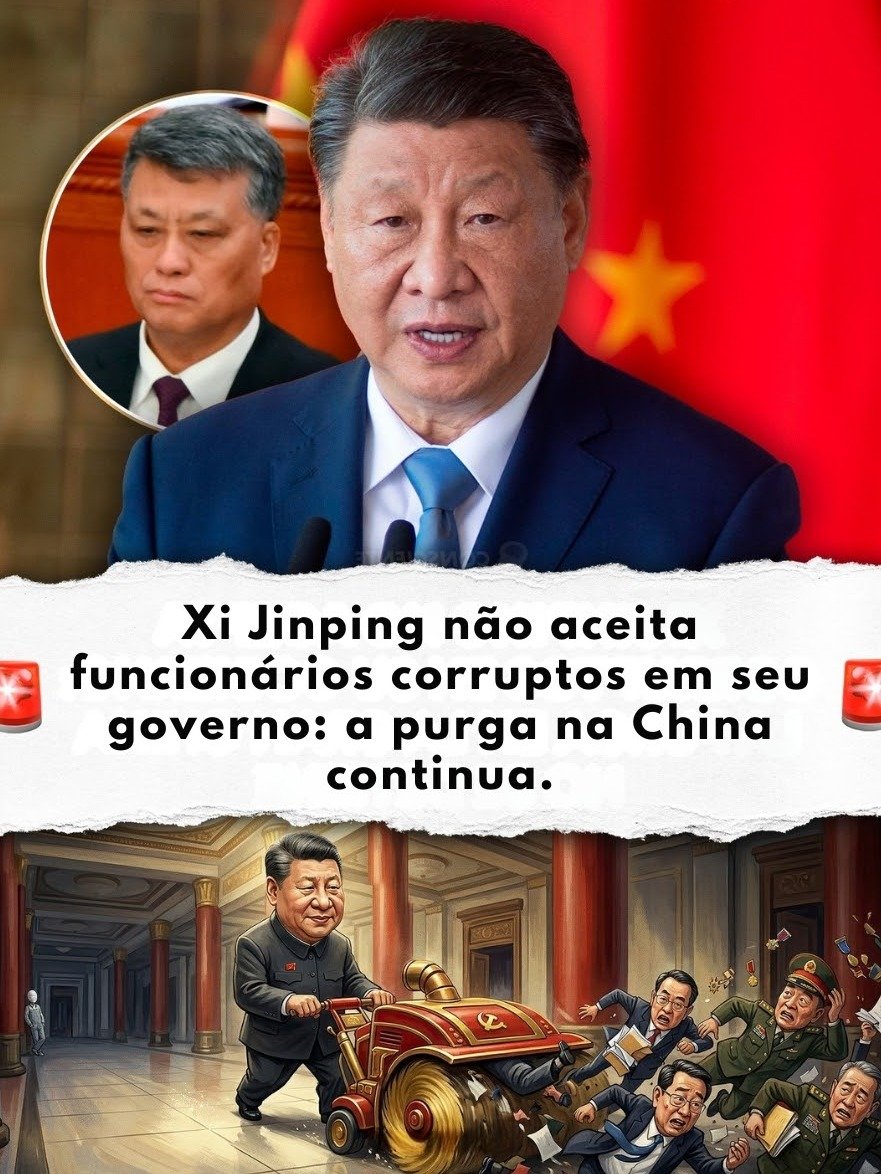
 Imagine a political earthquake so powerful it’s shaking the very foundations of one of the world’s most influential nations. That’s precisely what’s happening in China as President Xi Jinping’s relentless anti-corruption campaign continues its relentless ascent, now targeting the highest echelons of the Chinese Communist Party.
The latest high-profile figure caught in this sweeping dragnet is Ma Xingrui, a prominent Politburo member and former party secretary for the Xinjiang region. He is currently under investigation for “grave violations of discipline and law” — a phrase that almost invariably signals serious corruption charges within China’s political system.
🔎 Who is Ma Xingrui?
Ma Xingrui, at 66 years old, holds a doctorate in mechanics and forged an impressive academic career at the Harbin Institute of Technology, an institution deeply intertwined with China’s critical aerospace and defense sectors.
His last public appearance was in October of the previous year. Since then, his conspicuous absence from official events had fueled widespread speculation, which now appears to be definitively explained by the recent announcement of his investigation.
⚖️ Escalation of Investigations in 2026
With this latest revelation, Ma Xingrui becomes the third Politburo member to face investigation in 2026 alone, signaling a dramatic acceleration of the campaign.
Among the high-ranking officials previously targeted this year are:
- Zhang Youxia, a top military commander and Vice Chairman of the Central Military Commission
- Liu Zhenli, Chief of the Joint Staff Department
Both were specifically accused of undermining central authority and actively fostering corrupt practices within the armed forces, highlighting a significant purge within China’s military leadership.
🧹 A Campaign That Never Stops
Ever since taking the helm in 2012, Xi Jinping has orchestrated one of the most extensive and impactful anti-corruption campaigns in China’s modern history, fundamentally reshaping the political landscape.
The sheer scale of this crackdown is truly staggering, with figures that paint a stark picture:
- Over 1 million cases investigated in 2025 alone
- Approximately 983,000 individuals punished
- A significant rise in severe convictions, including the death penalty in certain high-profile instances
Officially, this sweeping initiative is framed as a crucial effort to bolster internal party discipline and to diligently restore public trust in China’s governmental institutions.
🏛️ Impact on Power Structures
These recent, aggressive investigations have already triggered tangible and significant shifts within China’s intricate political framework:
- The Politburo, which historically comprised 25 members, now operates with a reduced count of 23
- The Central Military Commission has seen a substantial reduction in its membership, leading to an even greater concentration of power
Such profound alterations unequivocally signal a major reorganization underway within the nation’s highest political and military echelons, consolidating authority at the very top.
🌐 Anti-Corruption Drive or Power Consolidation?
International analysts are largely divided, presenting two primary interpretations for the motivations behind this relentless offensive:
- A genuine and far-reaching effort to combat systemic corruption that has permeated all levels of government.
- A calculated strategy to consolidate power and effectively eliminate internal political opponents or rivals.
Regardless of which interpretation holds more weight, the undeniable impact is a dramatically increased centralization of authority and profound, lasting changes within Chinese governance.
🌍 Global Repercussions
As the world’s second-largest economy, any significant internal shifts within China inevitably ripple across the globe, profoundly influencing international markets, complex supply chains, and intricate diplomatic relations.
✨ Conclusion
The relentless intensification of China’s anti-corruption campaign clearly signals that the nation is currently undergoing a period of profound and transformative political change, the full implications of which are yet to be seen.
Amidst discussions of discipline, control, and strategic maneuvering, one fact remains undeniable: China’s internal political landscape will continue to be meticulously observed and analyzed by the entire global community.
👉 In our increasingly interconnected global context, gaining a clear understanding of these critical internal movements is absolutely essential for anyone seeking to grasp the future trajectory of international economics and politics.