 By admin
 Imagine a root vegetable that feeds over 800 million people globally, yet frequently appears in alarming headlines. Cassava—also known as yuca or manioc—is precisely that: a fundamental food source across Africa, South America, and Southeast Asia, appearing in everything from tapioca pearls to fries, flatbreads, and porridges. Recently, however, sensational headlines, often echoing phrases like “Doctors reveal that eating yuca can cause…” have been widely circulating across online platforms, leaving countless individuals feeling confused and deeply worried about this versatile root.
So, what’s the definitive truth behind this widely consumed root? Is cassava truly a miraculous superfood, a lurking health risk, or does its reality lie somewhere in the nuanced middle?
To truly understand its place on our plates, we’re going to meticulously break down the underlying science, the undeniable benefits, and the potential risks associated with cassava consumption. This deep dive will illuminate precisely why this humble yet powerful root is simultaneously cherished by millions and, at times, profoundly misunderstood.
Unveiling Cassava (Yuca): What Exactly Is It?
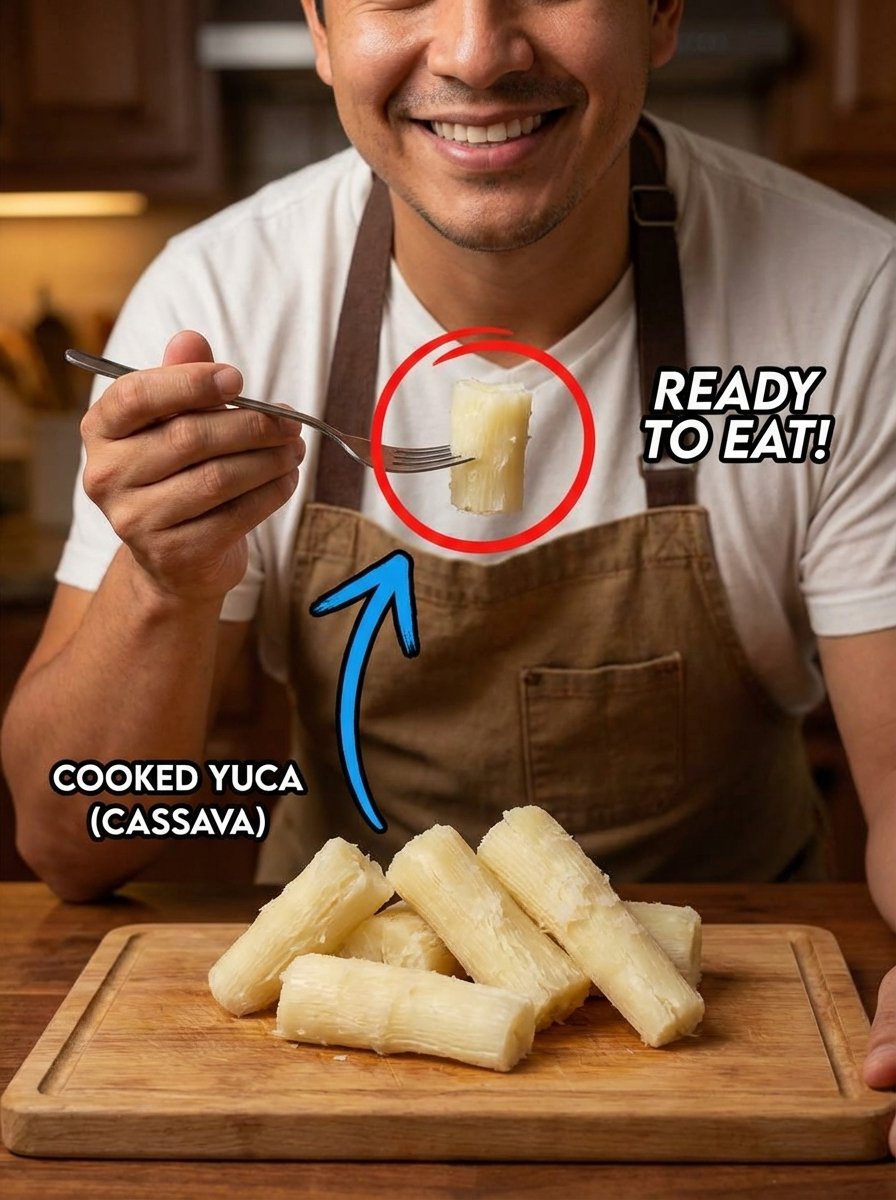
Cassava is a fascinating tropical root vegetable, often resembling a longer, brown sweet potato from the exterior, but revealing striking white or pale yellow flesh once peeled. Renowned for its incredibly high carbohydrate content, it serves as an indispensable primary energy source across numerous nations worldwide.
This versatile root can be found transformed into a variety of popular foods, including:
-
Tapioca, famously derived from cassava starch
-
Versatile cassava flour and various breads
-
Crispy cassava fries and crunchy chips
-
Essential ingredients in countless traditional dishes across Latin America, Africa, and Asia
Its incredible resilience, thriving even in poor soil and drought-stricken conditions, has earned cassava the moniker of a “survival crop.” While it undeniably sustains millions, it’s crucial to acknowledge that its consumption also involves some significant health considerations.
The Nutritional Powerhouse (Mostly): Why Cassava Is a Global Staple
Nutritionally speaking, cassava primarily functions as an outstanding energy food, offering vital fuel. Its profile includes:
-
Abundant Carbohydrates: Delivering both rapid and prolonged energy boosts
-
Beneficial Vitamin C: Crucial for robust immune function and healthy skin
-
Essential Potassium: Vital for optimal muscle function and maintaining fluid balance
-
Modest quantities of fiber: Supporting healthy digestion, particularly when consumed in its whole-root forms
An added advantage is that cassava is inherently gluten-free, making it an incredibly popular and valuable ingredient in gluten-free diets and a staple for products such as tapioca flour and cassava flour.
When it comes to providing accessible, satisfying, and calorie-dense sustenance, cassava truly shines as an invaluable component of the human diet, especially for those in need.
The Alarming Truth: Why Doctors Issue Warnings About Cassava (It’s the Cyanide)
This is precisely the point where those alarming headlines begin to make sense.
Naturally, cassava contains specific compounds known as cyanogenic glycosides. The critical issue arises when the plant is damaged or processed improperly, as these compounds then have the potential to release cyanide, a highly toxic substance.
It’s important to distinguish between the two primary varieties of cassava:
-
Sweet cassava: Contains significantly lower concentrations of these compounds, making it less risky
-
Bitter cassava: Features considerably higher levels of these compounds, posing a much greater danger if not processed with extreme care
Historically, in regions where cassava constitutes a primary dietary staple, serious health issues have unfortunately emerged. These problems typically arise when populations heavily depend on inadequately processed cassava, or during dire periods of famine where the luxury of proper, safe preparation methods is simply unavailable.
The potential long-term health risks associated with chronic exposure to improperly prepared cassava can be severe, including:
-
Severe nerve damage and debilitating movement disorders (observed in extreme, prolonged consumption scenarios)
-
Compromised thyroid function due to interference with iodine metabolism
-
Life-threatening acute poisoning in exceptionally rare, yet profoundly serious, circumstances
This crucial context clarifies why you might encounter sensational headlines dramatically proclaiming that “yuca causes poisoning” or “doctors warn against cassava.” The fundamental problem isn’t the cassava root itself, but rather the methods by which it is processed and ultimately consumed.
The Burning Question: Is Cassava Truly Safe for Consumption?
The good news is that for the vast majority of the world, the cassava products readily available in stores—ranging from tapioca to cassava flour and various packaged cassava foods—are meticulously processed in strict adherence to established food safety standards. Consequently, these items are widely regarded as safe for consumption when incorporated into a regular, diverse diet.
However, potential problems typically arise under specific circumstances, such as when:
-
Cassava becomes a predominant daily food source, with insufficient dietary diversity
-
The essential processing methods are subpar or hastily executed
-
Individuals depend on cassava almost exclusively for extended durations, neglecting other nutrients
To put it plainly, for the typical consumer who enjoys store-bought cassava products occasionally as part of a varied diet, the health risk remains exceptionally low.
Beyond the Warnings: Surprising Health Benefits of Cassava (When Consumed Responsibly)
Despite the cautionary tales, it’s vital to recognize that cassava offers several genuine and significant health benefits:
1. An Unbeatable and Reliable Energy Source
Boasting an incredibly high carbohydrate content, cassava proves exceptionally valuable for individuals requiring calorie-dense sustenance. This includes everyone from dedicated athletes and highly active individuals to those who face challenges in maintaining a healthy weight.
2. A Godsend for Gluten-Free Diets
For individuals navigating celiac disease or gluten sensitivity, cassava-based products present an exceptionally valuable and versatile alternative to traditional wheat-based foods, broadening their dietary options significantly.
3. A Pillar of Global Food Security
On a global scale, cassava plays an absolutely critical and indispensable role in the ongoing fight against hunger. Its remarkable capacity to flourish even in the most challenging environmental conditions firmly establishes it as a vital lifeline crop in countless vulnerable regions worldwide.
4. Essential Vitamin C and Mineral Contributions
While it might not earn the trendy label of a “superfood,” cassava certainly delivers a respectable contribution of vitamin C and potassium, offering crucial support for fundamental immune system health and optimal muscle function.
Unmasking the TRUE Danger: Over-Reliance and a Severely Unbalanced Diet
It’s crucial to understand that the majority of doctors and nutrition experts aren’t advocating for a complete ban on cassava. Instead, their core message profoundly emphasizes the importance of dietary balance and expansive variety.
Diets that disproportionately lean on cassava as a primary food source, severely lacking in:
-
Adequate protein
-
Essential healthy fats
-
Crucial micronutrients (such as iodine, iron, and zinc)
can tragically culminate in severe malnutrition over extended periods, astonishingly, even when overall calorie intake appears sufficient.
Therefore, the more profound and overarching danger isn’t merely the consumption of cassava itself, but rather the act of substituting cassava for a truly balanced and nutrient-rich diet.
Cassava vs. Tapioca: The Key Differences You Need to Know
While tapioca is indeed derived from purified cassava starch, its nutritional profile reveals an even more refined and stripped-down composition:
-
Extremely concentrated in carbohydrates
-
Critically deficient in fiber, protein, and essential vitamins
-
Primarily utilized for its textural properties and immediate energy, with minimal nutritional contribution
This distinction means that while tapioca is perfectly acceptable as an occasional culinary ingredient, it should absolutely not be misconstrued or promoted as a standalone health food.
The Truth Behind the Hype: Why Clickbait Headlines Mislead You About Cassava
Sensational headlines, such as the infamous “Doctors reveal that eating yuca causes…” are deliberately crafted to capture immediate attention and provoke a reaction. What they consistently fail to include, however, is the crucial context:
-
The specific quantity consumed is highly significant
-
The rigorous preparation and processing methods are paramount
-
The context of your entire dietary intake is absolutely crucial
In reality, cassava is neither a deadly poison nor a miraculous cure-all superfood. It stands as a fundamental staple carbohydrate, presenting a balanced profile of both advantages and potential risks, entirely contingent on its preparation and consumption.
The Definitive Verdict: Should You Really Avoid Cassava?
For the vast majority of individuals, the following guidelines apply:
-
Enjoying cassava products on an occasional basis is perfectly acceptable
-
Commercially available, meticulously processed products are overwhelmingly considered safe
-
Cassava should always be integrated as one component of a diverse and well-balanced diet, rather than forming its entirety
Should you encounter sensational or frightening headlines, always keep this crucial distinction in mind: they are almost invariably referring to extreme cases or improper preparation and usage, not the typical, safe consumption patterns of everyday life.
Final Verdict: Unpacking the Cassava Conundrum
Ultimately, cassava (yuca) stands as a compelling illustration of how a vital food source can simultaneously be both indispensable and profoundly misunderstood. For countless generations, it has nourished millions, yet it unequivocally demands due respect and meticulous handling to prevent potential health complications.
So, the next time you encounter a dramatic, fear-mongering post loudly proclaiming that “doctors warn about yuca,” pause for a moment, take a deep breath, and delve into the complete, nuanced picture. The reality, as is so often the case, is far more balanced—and infinitely more valuable—than any sensationalized headline could ever convey.