 By admin
 What if your body was silently screaming for help, but you weren’t listening? The truth is, your arteries, the vital highways for your blood, can become dangerously clogged without you even realizing it. This insidious condition, medically known as atherosclerosis, happens when sticky plaque accumulates within your blood vessels, gradually choking off the essential flow of blood.
If this critical blockage is ignored, it can unleash devastating health crises, including life-threatening heart attacks, debilitating strokes, and painful peripheral artery disease. But here’s the good news: your body often sends subtle, yet urgent, signals. Learning to recognize these crucial early warning signs could be the most important step you take to protect your health before irreversible damage occurs. In this guide, we’ll reveal 7 key symptoms that demand your immediate attention, potentially indicating you have blocked arteries.
1. Unexplained Chest Pain (Angina)
Perhaps the most widely recognized indicator of arterial blockage is chest pain or a feeling of deep discomfort, a condition medically termed angina. This distressing sensation arises when your heart muscle, starved of vital oxygen-rich blood, struggles to function properly due to narrowed arteries.
Be on the lookout for these critical symptoms:
- A persistent feeling of pressure, squeezing, or tightness across your chest.
- Pain that radiates beyond your chest, potentially reaching your shoulders, arms (especially the left), back, neck, or even your jaw.
- Intensified discomfort or pain that appears or worsens during physical exertion, emotional stress, or after a heavy meal.
2. Persistent Shortness of Breath
When your arteries become constricted, your heart is forced to work much harder, yet less efficiently, to circulate blood throughout your system. This diminished pumping capacity can leave your body’s tissues starved for oxygen, manifesting as a troubling shortness of breath. You might find yourself gasping for air or feeling unusually winded even when performing routine, light activities that never bothered you before, such as climbing a short flight of stairs or walking across a room.
3. Leg Pain During Movement (Claudication)
It’s a common misconception that arterial blockages are solely a heart issue. In reality, these blockages can occur in any artery, including those supplying blood to your legs. This leads to a condition known as claudication, where restricted blood flow to your lower limbs causes significant discomfort.
Be vigilant for these tell-tale signs:
- Aching, cramping, or a heavy sensation in your leg muscles (calves, thighs, or buttocks) specifically when you walk or engage in physical activity.
- The pain consistently subsides and finds relief within a few minutes of stopping the activity and resting.
- A noticeable weakness or fatigue in your lower limbs, particularly during exertion.
4. Unexplained Coldness or Numbness in Feet
A critical reduction in blood flow, directly resulting from blocked arteries, can manifest as a persistent feeling of coldness or numbness in your feet. This isn’t just a minor discomfort; it’s a significant indicator of peripheral artery disease (PAD), a serious condition where narrowed arteries reduce blood flow to your limbs. If one foot feels noticeably colder than the other, or if you experience a constant pins-and-needles sensation, it’s a red flag that shouldn’t be ignored.
5. Chronic Fatigue and Generalized Weakness
When your arteries are compromised, the entire body suffers from a lack of adequate blood supply. This means your vital muscles and organs are consistently deprived of the oxygen and nutrients they need to function optimally. The result? A pervasive, unexplained fatigue and generalized weakness that can linger even when you haven’t engaged in strenuous physical activity. If you’re constantly feeling drained, lacking energy, or find simple tasks exhausting, it could be your body signaling a deeper circulatory issue.
6. Erectile Dysfunction (ED) – A Hidden Warning
For men, the unexpected onset or worsening of erectile dysfunction (ED) can be a critical, yet often overlooked, indicator of underlying arterial blockages. When arteries supplying blood to the pelvic region become narrowed or clogged, it directly impacts the ability to achieve or maintain an erection. What many don’t realize is that ED can serve as one of the earliest and most significant warning signs of widespread cardiovascular disease, often preceding more severe heart-related issues by several years. It’s a signal that should prompt immediate medical evaluation, not just for sexual health but for overall heart health.
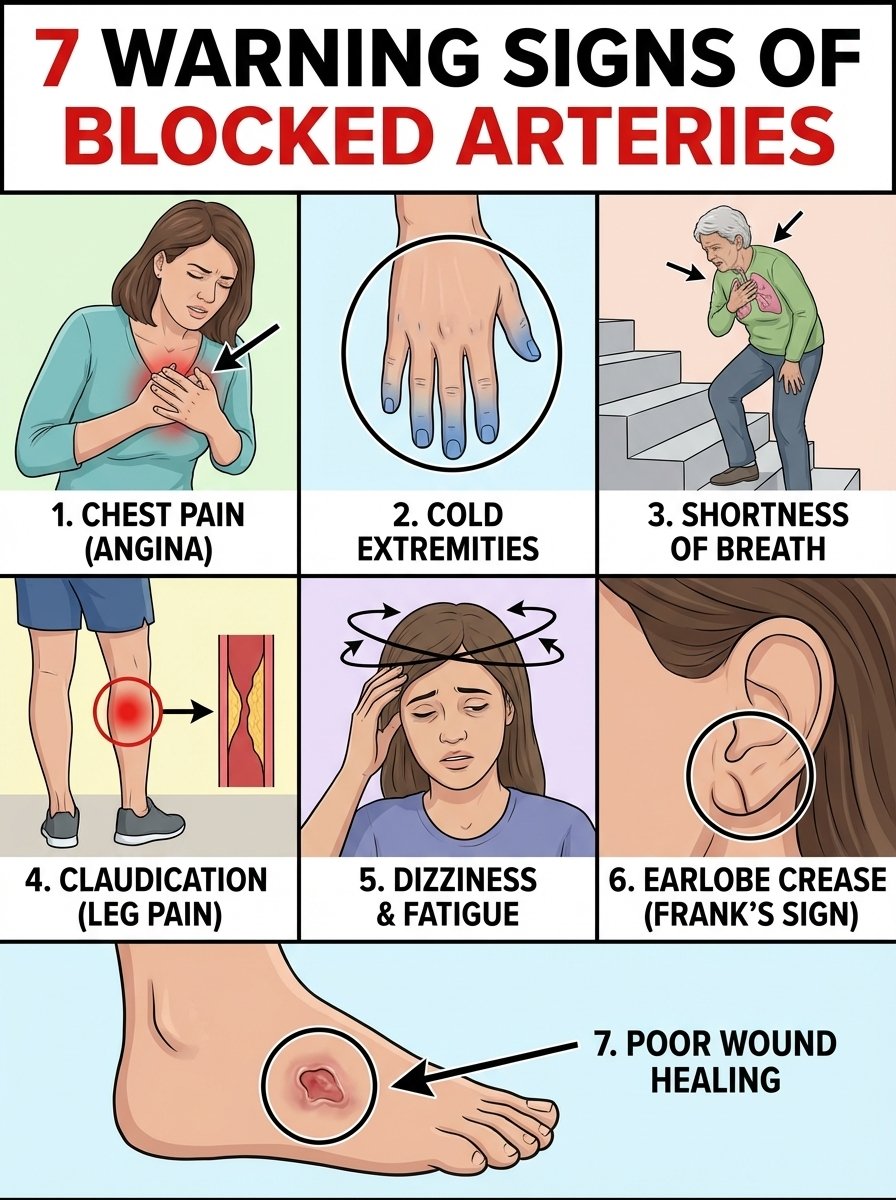
7. Unusually Slow-Healing Wounds
Your body’s ability to heal relies heavily on a robust supply of oxygen and nutrients delivered by healthy blood flow. If you notice that minor cuts, scrapes, or any wounds—particularly those located on your legs or feet—are taking an abnormally long time to heal, or don’t seem to heal at all, it’s a serious red flag. This impaired healing process is often a direct consequence of poor blood circulation, indicating that narrowed or blocked arteries are preventing essential healing factors from reaching the affected area. This symptom is especially concerning in individuals with diabetes, where circulatory issues are already a heightened risk.
Understanding the culprits behind arterial plaque buildup is crucial for prevention. A combination of several lifestyle and genetic factors significantly increases your risk, including:
- Elevated cholesterol levels, particularly high LDL (bad) cholesterol.
- Smoking, which severely damages blood vessels.
- Uncontrolled high blood pressure, putting constant strain on artery walls.
- Diabetes, which can accelerate arterial damage.
- Obesity, contributing to inflammation and other metabolic issues.
- A sedentary lifestyle, lacking sufficient physical activity.
Proactive Steps: Preventing and Managing Blocked Arteries
The good news is that you hold significant power in preventing and managing arterial blockages. By embracing proactive lifestyle adjustments, you can dramatically reduce your risk and improve your cardiovascular health:
1. Adopt a Truly Heart-Healthy Diet
Shift your dietary focus towards a vibrant array of fresh fruits and vegetables, nutrient-dense whole grains, lean proteins, and beneficial healthy fats, such as those rich in omega-3 fatty acids found in fish and nuts. Minimize processed foods, saturated fats, and excessive sugar intake.
2. Incorporate Regular Physical Activity
Strive for at least 30 minutes of moderate-intensity aerobic exercise on most days of the week. Activities like brisk walking, cycling, or swimming can significantly boost circulation, strengthen your heart, and maintain healthy weight.
3. Eliminate Smoking Entirely
If you smoke, quitting is arguably the single most impactful step you can take for your arterial health. Smoking is a primary aggressor, causing severe damage to blood vessel walls and drastically accelerating the accumulation of plaque.
4. Master Stress Management Techniques
Uncontrolled chronic stress can have a detrimental ripple effect on your entire cardiovascular system. Explore relaxation techniques such as meditation, yoga, deep breathing exercises, or engaging in hobbies to keep stress levels in check.
5. Prioritize Routine Medical Check-Ups
Regular visits to your doctor are essential for monitoring key indicators like cholesterol levels, blood pressure, and blood sugar. Early detection and management of these risk factors are critical in preventing or slowing arterial disease progression.
Urgent: When to Consult Your Doctor
While lifestyle changes are powerful, it’s vital to know when to seek professional medical advice. If you are experiencing any persistent or worsening symptoms such as recurrent chest pain or pressure, unexplained shortness of breath that interferes with daily life, or significant leg pain and cramping specifically when walking, do not delay. Seek immediate medical attention. Prompt diagnosis and intervention are paramount; they can be the difference between managing a condition and facing severe, potentially life-threatening cardiovascular complications.
Your Lifeline: Final Thoughts
Atherosclerosis, or blocked arteries, is a silent threat that can insidiously progress for years without obvious alarm bells. However, as we’ve explored, your body is an incredible system that often provides crucial warning signals if you know how to interpret them. By actively listening to these symptoms, taking proactive steps towards a heart-healthy lifestyle, and seeking timely medical advice when needed, you empower yourself to safeguard your most vital organ and ensure a future of robust overall well-being. Don’t let these warnings go unnoticed – your health depends on it.