 By admin
What if we told you that the answers to some of your most pressing health questions are literally staring back at you every day? Your eyes, often called the windows to the soul, are far more than just organs of sight; they are incredibly sophisticated health indicators, constantly signaling what’s truly going on inside your body. From a subtle shift in color to persistent discomfort, these visual cues can be critical warnings you simply cannot afford to overlook.
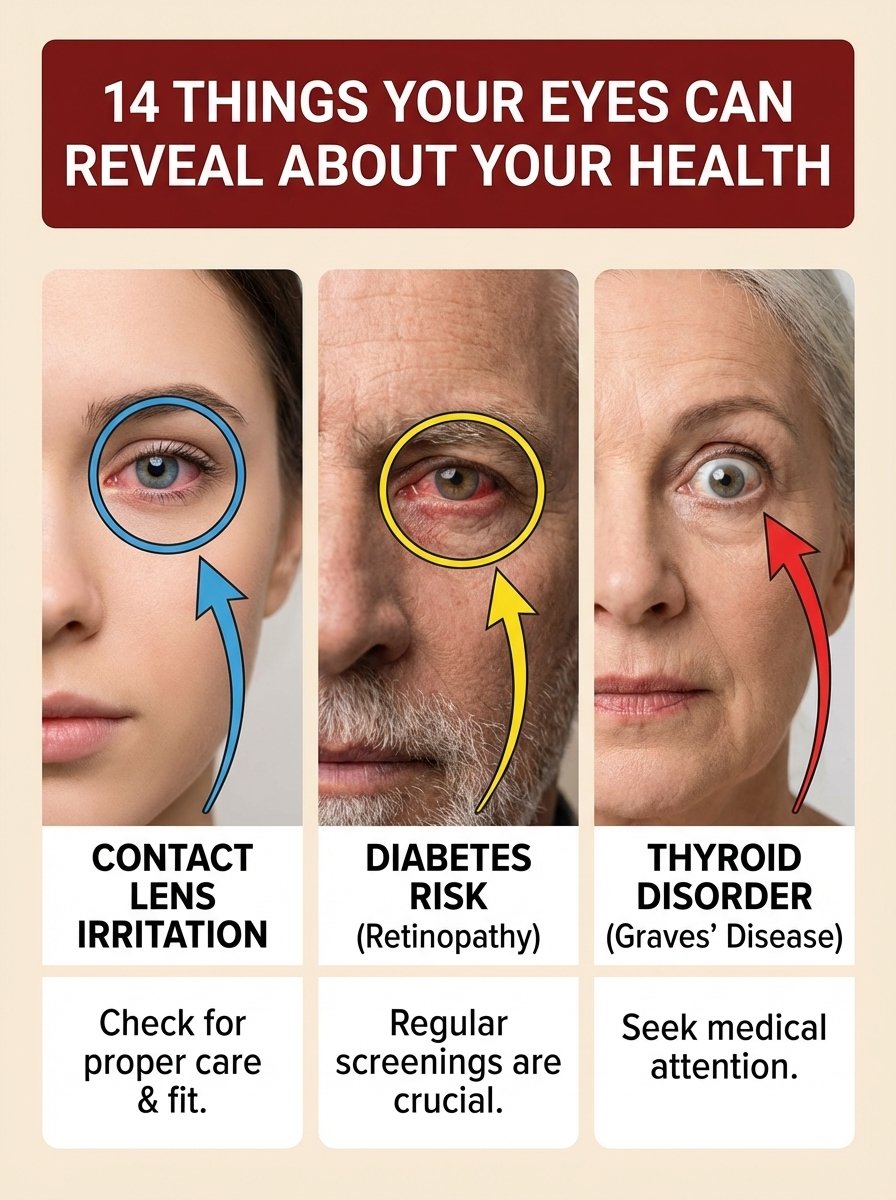
In this essential guide, we’re diving deep into 14 vital signs your eyes are sending about your health, explaining exactly what each symptom could mean and when it’s absolutely crucial to seek professional medical advice. Prepare to see your body in a whole new light.
1. Red Eyes
While occasional redness in your eyes might just be a sign you need more sleep, are battling seasonal allergies, or have some simple irritation, don’t dismiss it too quickly. If your eyes remain persistently red, this could be a red flag for underlying issues such as infections like conjunctivitis (pink eye) or even more severe conditions, including the silent threat of glaucoma.
2. Yellowing of the Eyes
If you notice a distinct yellow tint appearing in the whites of your eyes, medically known as the sclera, this is a symptom that demands immediate attention. It’s often a tell-tale indicator of significant liver problems, which could range from jaundice to more serious conditions like hepatitis.
3. Blurry Vision
Experiencing a momentary blur in your vision might not always be a cause for concern, but if you find yourself frequently struggling with blurry episodes, it’s time to investigate. This symptom can be a crucial indicator linked to conditions such as diabetes, uncontrolled high blood pressure, or various underlying vision disorders.
4. Dry Eyes
That irritating sensation of dry, itchy eyes is often attributed to spending too much time staring at screens or exposure to dry, windy environments. However, when dryness becomes a persistent, chronic issue, it might be a subtle hint from your body, potentially signaling underlying autoimmune conditions such as Sjögren’s syndrome.
5. Eye Twitching
Most of the time, that annoying eye twitch is an innocent response to everyday factors like too much stress, insufficient sleep, or excessive caffeine intake. While typically harmless and temporary, if the twitching becomes persistent or severe, it could potentially be indicative of more complex, nerve-related underlying issues that warrant investigation.
6. Dark Circles Under the Eyes
Dark circles beneath your eyes are almost universally associated with a poor night’s sleep, but their presence can actually reveal a broader spectrum of health insights. Beyond fatigue, these shadowy indicators might also subtly suggest issues like dehydration, iron deficiency (anemia), or even persistent allergies.
7. Puffy Eyes
Experiencing noticeable swelling or puffiness around your eyes can often be a consequence of simple factors like temporary fluid retention, insufficient sleep, or consuming too much salt. However, in certain instances, persistent puffy eyes could be a more significant indicator, potentially pointing towards underlying thyroid problems that require medical evaluation.
8. Sensitivity to Light
If you find yourself frequently squinting or experiencing discomfort in normal lighting conditions, this heightened sensitivity to light (photophobia) shouldn’t be overlooked. It’s often linked to debilitating migraines, various eye infections, or, in more serious scenarios, could even be a symptom of underlying neurological conditions.
9. White or Gray Ring Around the Iris
Observing a distinctive white or gray ring forming around the edge of your iris is a condition medically identified as arcus senilis. While this phenomenon is generally considered a benign sign of aging in older adults, its appearance in younger individuals can be a significant warning, often indicating dangerously high cholesterol levels that need immediate attention.
10. Sudden Vision Loss
Any instance of sudden vision loss, whether partial or complete, in one or both eyes, is an undeniable medical emergency that demands immediate professional intervention. This critical symptom could be the result of life-threatening events such as a stroke, a retinal detachment, or other severe conditions that require urgent medical attention to prevent permanent damage.
11. Bloodshot Eyes
While bloodshot eyes often simply reflect a lack of sleep or prolonged dryness, it’s important not to dismiss them too readily. Beyond these common causes, persistently bloodshot eyes can also be a visual indicator of various infections or underlying inflammatory processes within the eye or body.
12. Dilated Pupils
If you notice your pupils appear unusually large or dilated for no apparent reason, it’s a sign worth noting. While this can sometimes be a side effect of certain medications or a reaction to extreme stress, persistent or unexplained pupil dilation could also point towards more serious underlying neurological issues that require medical assessment.
13. Difficulty Seeing at Night
Struggling to see clearly in low-light conditions or experiencing significantly impaired night vision is more than just an inconvenience. This symptom can be a vital clue, potentially indicating a vitamin A deficiency, which is crucial for eye health, or even the early developmental stages of serious eye diseases such as cataracts.
14. Spots or Floaters
While occasionally noticing small floating spots or “cobwebs” in your vision is a fairly common occurrence, a sudden and dramatic increase in their number or the appearance of new, larger floaters is a serious warning sign. This could indicate significant retinal problems, such as a tear or detachment, and absolutely requires immediate evaluation by an eye care specialist.
🌿 Essential Tips to Keep Your Eyes Healthy and Vibrant
- **Hydrate Regularly** 💧 Ensure you drink enough water throughout the day to support overall bodily functions, including tear production.
- **Nourish Your Vision** 🥕 Incorporate a diet rich in vitamin A, C, E, and antioxidants, found in colorful fruits and vegetables, to protect your eyes.
- **Mind Your Screen Time** 📱 Take frequent breaks using the 20-20-20 rule (every 20 minutes, look at something 20 feet away for 20 seconds) to reduce digital eye strain.
- **Schedule Regular Eye Exams** 👨⚕️ Don’t wait for symptoms; routine check-ups can detect problems early, even before you notice them.
- **Prioritize Quality Sleep** 😴 Adequate rest allows your eyes to recover and replenish, preventing fatigue and dryness.
⚠️ Crucial Important Note
It’s absolutely vital to understand that while your eyes offer incredibly valuable insights and potential health clues, interpreting these signs yourself is not a substitute for a professional medical diagnosis or consultation. Should you observe any persistent, unusual, or concerning symptoms in your eyes, do not hesitate to consult a qualified healthcare professional or eye specialist immediately for proper evaluation and guidance.
Conclusion
Ultimately, your eyes possess an astonishing ability to reveal far more about your overall health than you might ever have imagined. By becoming more attuned to the subtle and not-so-subtle changes occurring in your vision and around your eyes, you empower yourself to detect potential health issues at their earliest stages, significantly contributing to your long-term well-being and health outcomes.
👁️ Cherish and protect your eyes—they truly hold the power to offer life-saving warnings.