 By admin
 What if everything you thought you knew about aging after 70 was wrong? You might assume your body’s changes are a slow, steady decline, but the reality is far more dynamic – and empowering. Entering your 70s isn’t just ‘getting older’; it’s a profound physiological recalibration where multiple body systems undergo significant, often surprising, shifts simultaneously.
You might start noticing lighter sleep, less dependable temperature control, or a tougher time holding onto muscle strength. But here’s the crucial insight: these aren’t signs of inevitable decline. Instead, view these shifts as vital signals, providing incredible opportunities to adapt, optimize, and fiercely protect your vibrant quality of life for years to come.
Equipping yourself with knowledge about these internal transformations isn’t just informative; it becomes your most powerful asset for maintaining an active, independent, and incredibly resilient lifestyle.
1. The Truth About Why Sleep Gets Lighter After 70
Among the first and most striking changes many experience in their 70s is a noticeable alteration in sleep patterns. This isn’t necessarily full-blown insomnia, but rather a common outcome of natural neurological shifts. As the years progress, your brain naturally produces reduced amounts of melatonin, the crucial hormone that guides you into deep, truly restorative slumber. Concurrently, your body’s innate circadian rhythm grows increasingly responsive to external cues like light, ambient sound, and even minor deviations in your daily schedule.
What you may notice:
You might find yourself waking up more often throughout the night, or it could take considerably longer to drift back to sleep once disturbed.
Helpful habits:
Start your day with exposure to natural morning sunlight; this is a powerful way to recalibrate your internal clock. In the evenings, make a conscious effort to minimize blue-light exposure from screens like phones and TVs for at least an hour before heading to bed, as this significantly promotes more restful sleep.
2. Navigating Shifting Temperature Regulation
As we advance in age, our body’s intricate internal “thermostat” begins to operate with less precision. The natural mechanisms that help us cool down by sweating or warm up by constricting blood vessels become less responsive. This means both hot and cold environmental conditions can feel much more pronounced and challenging to manage.
What you may notice:
You might experience feeling uncomfortably cold even when indoors, or conversely, find yourself overheating far more rapidly when the weather turns warm.
Helpful habits:
Embrace the strategy of dressing in versatile, breathable layers to easily adjust to temperature fluctuations. Crucially, prioritize staying consistently well-hydrated; sufficient water intake is a fundamental pillar in maintaining stable body temperature.
3. Understanding Slower Digestion & Nutrient Absorption
The efficiency of your digestive system undergoes a natural slowdown over time, largely due to a decrease in stomach acid production and a reduction in the speed of intestinal contractions. This shift can have a direct impact on your body’s ability to effectively absorb vital nutrients, including critical elements like vitamin B12, iron, and calcium.
What you may notice:
You might find yourself feeling satiated much more quickly after meals, experiencing occasional bouts of constipation, or even unexplained fatigue that could signal underlying nutrient deficiencies.
Helpful habits:
Opt for smaller, more frequent, and highly nutrient-dense meals spread throughout your day, rather than relying on larger, less frequent portions. Make it a priority to incorporate plenty of fiber-rich foods into your diet and ensure you maintain consistent, ample hydration.
4. Mastering Balance and Stability
Your ability to maintain balance is a sophisticated interplay involving your vision, the intricate systems of your inner ear, and your rapid reaction time. Once you reach your 70s, these interconnected systems greatly benefit from deliberate and consistent maintenance. The truly empowering news is that balance isn’t a fixed state; it is remarkably trainable and can be significantly improved.
What you may notice:
You might observe a slight hesitation or increased caution when navigating uneven terrain, or a noticeable dip in your overall confidence while moving about.
Helpful habits:
Incorporate functional balance exercises into your routine, such as carefully practicing standing on one foot while holding onto a sturdy chair for support, or engaging in gentle, flowing activities like Tai Chi. These specific movements are excellent for enhancing both your coordination and spatial awareness.
5. Optimizing Protein Intake for Muscle Preservation
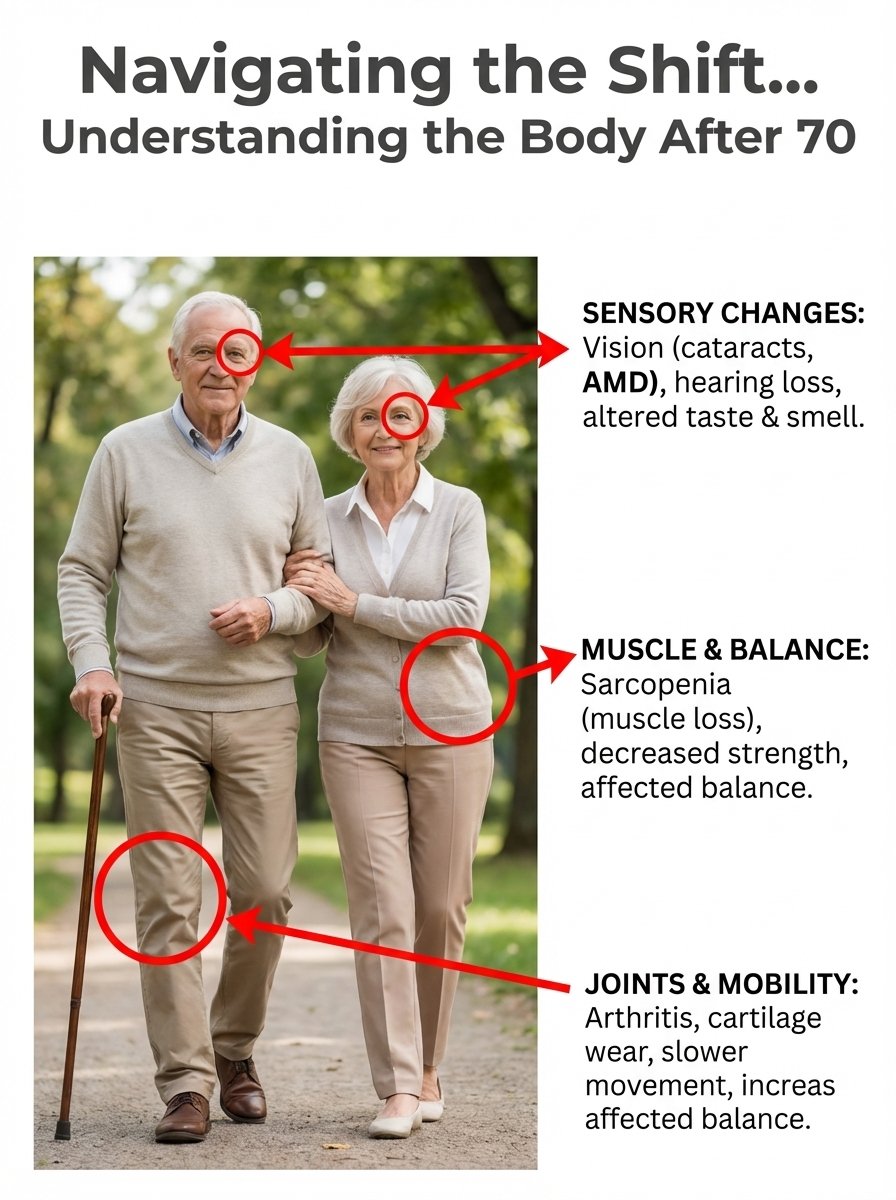
The natural process of muscle loss, medically termed sarcopenia, typically accelerates significantly after the age of 70. Even for those who maintain consistent physical activity, the body’s efficiency in utilizing dietary protein for critical muscle repair and maintenance tends to diminish.
The strategy:
Instead of consuming the majority of your protein in a single meal, strategically distribute your protein intake evenly across all your meals throughout the entire day.
Helpful sources:
Excellent and readily available sources of high-quality protein include Greek yogurt, eggs, various types of fish, nutrient-rich lentils, and lean cuts of meat.
Knowledge: Your Ultimate Path to Lasting Vitality
It’s crucial to understand that these profound biological transformations are a universal experience, impacting every individual regardless of their past fitness journey or lifestyle choices. These are not indicators of decline or personal failure; rather, they signify that your body is simply adapting and operating under a new, evolved set of mechanics.
The critical distinction between succumbing to frailty and embracing vibrant vitality frequently hinges not on an attempt to resist or avoid these natural changes, but on how intelligently and proactively you choose to respond to them.
By thoughtfully adjusting your nutrition, refining your daily routines, and optimizing your environment to perfectly align with your body’s current needs, you unlock the power to preserve abundant energy, cherished independence, and profound enjoyment for many fulfilling years to come.
You’ve just explored the essential insights into Understanding the Body After 70. For more fascinating reads, why not check out Manager Had To Hire A New Employee.