 By admin
 What if your body is trying to tell you something critical, but you’re missing the message? Millions of women unknowingly dismiss subtle shifts as ‘just stress’ or ‘normal hormonal changes,’ completely unaware they could be early whispers of something far more serious: cervical cancer.
This common oversight can tragically delay crucial early intervention, allowing the condition to advance much further than it ever should have.
But there’s empowering news: by becoming acutely aware of these often-missed signs and prioritizing consistent health screenings, you can seize control of your well-being. Here’s a powerful secret many overlook: cultivating the simple habit of truly listening to your body and noticing even the smallest, most unusual changes can be the ultimate game-changer for early detection.
What Exactly Is Cervical Cancer?
Cervical cancer originates within the cells that form the delicate lining of the cervix, which is the lower, narrow part of the uterus that acts as a gateway to the vagina. This condition typically progresses at a gradual pace, often unfolding over many years, and is predominantly associated with an ongoing infection from specific high-risk strains of human papillomavirus (HPV)—a widespread virus primarily spread through intimate contact.
Remarkably, in a significant number of instances, the body’s robust immune system successfully eliminates the HPV virus within a couple of years. Yet, should the virus linger and persist, it can unfortunately trigger abnormal cellular transformations over a period of time.
Why Early Detection Is Absolutely Critical
Despite cervical cancer being largely preventable and highly treatable if identified in its nascent stages, a concerning number of diagnoses still occur later than ideal. This delay often happens because the initial warning signs are subtle, easily dismissed, or unfortunately mistaken for more benign, everyday ailments.
Therefore, forging a powerful alliance between a keen awareness of potential symptoms and diligent, routine screening appointments stands as one of the most profoundly effective strategies for safeguarding your long-term health and well-being.
Crucial Symptoms You Must Watch For
It’s imperative to pay close attention: if you observe any of the following indicators persisting for more than two weeks, or if they simply feel ‘not right’ for your body, making an appointment to consult a healthcare professional is not just a good idea—it’s essential:
🌸 Unexpected Changes in Your Menstrual Cycle
- Experiencing periods that are significantly heavier or extend beyond their typical duration.
- Any unexpected bleeding or spotting occurring between your regular menstrual cycles.
- Vaginal bleeding observed after you have officially entered menopause.
🌸 Unexplained Vaginal Discharge
- Discharge that appears watery, tinged with blood, or has an unusual color.
- A noticeable strong or unpleasant odor accompanying vaginal discharge.
- Any presence of blood in your discharge outside of your expected menstrual period.
🌸 Bleeding After Intimacy
- Even slight bleeding after sexual intercourse warrants immediate attention and medical evaluation.
🌸 Pain During Intimacy
- If you experience new or intensifying discomfort during sexual activity, it’s a symptom that demands investigation.
🌸 Persistent Pelvic or Lower Back Pain
- Ongoing, unexplained pain localized in your lower abdomen or persistent discomfort in your lower back region.
🌸 Other Potential Signs
- Feeling persistently tired without any clear reason.
- Losing weight without actively trying or making dietary changes.
- Noticeable swelling in one or both legs, or experiencing changes in your urinary habits (these are typically less frequent symptoms).
When Should You Urgently Seek Medical Advice?
You absolutely should prioritize a conversation with a healthcare provider if:
- Your symptoms linger stubbornly for several weeks or more.
- Any discomfort or pain starts to disrupt your daily routines or quality of life.
- You simply feel uncertain, uneasy, or deeply concerned about any shifts occurring within your body.
Remember, even if symptoms appear minor or ambiguous, seeking professional reassurance or expert guidance can provide invaluable peace of mind and empower you to feel far more confident and in control of your health journey.
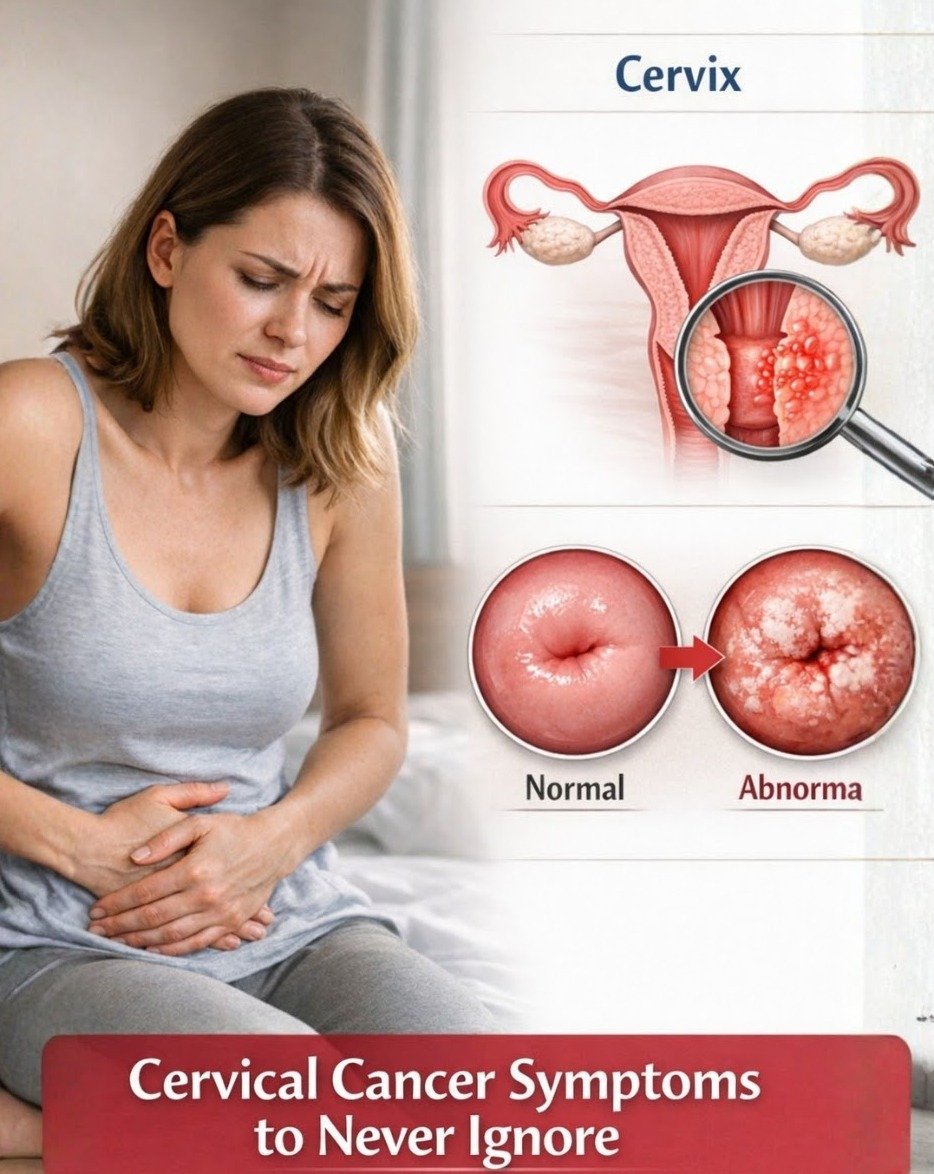
How Cervical Cancer Is Reliably Detected
Crucially, a significant number of cases can be pinpointed long before any noticeable symptoms manifest, thanks to the power of routine screening protocols:
- HPV test: Typically recommended every 5 years for women aged 25–65, though specific guidelines may vary.
- Combined HPV and Pap test: An integrated screening approach offering enhanced detection.
- Pap smear alone: Generally advised every 3 years for specific age groups or situations.
These straightforward yet incredibly vital tests serve as the cornerstone of early detection and primary prevention strategies against cervical cancer.
Practical Tips to Proactively Support Your Health
🌿 Become an astute observer of your body’s unique signals and any new changes.
🌿 Adhere diligently to your scheduled, regular health screenings.
🌿 Discuss the benefits of HPV vaccination with your doctor if it’s suitable for you.
🌿 Embrace and maintain a well-rounded, health-conscious lifestyle.
The Often-Overlooked Life-Saving Habit
Perhaps the single most potent and often underestimated habit you can cultivate is the unwavering practice of truly listening to your body’s subtle cues and fearlessly speaking up about any changes, no matter how insignificant they may seem. Fostering open, honest communication with your healthcare professionals creates an invaluable partnership that can lead to much earlier detection of potential concerns and ensure you receive the precise, timely care you need.
Lifestyle Factors That May Significantly Boost Your Well-Being
- Strictly avoid all forms of tobacco and smoking.
- Strive to maintain a healthy body weight through balanced living.
- Prioritize consuming a nutritious and well-balanced diet.
- Actively implement strategies to manage stress in your daily life.
Conclusion: Your Body’s Voice Matters
Ultimately, honing your ability to listen intently to your body stands as one of the most profoundly important actions you can take to safeguard your long-term health and vitality. Never underestimate the significance of even the mildest or most subtle symptoms; they all warrant your careful attention.
Empowered by cutting-edge modern screening technologies and an ever-increasing global awareness, you possess the incredible capacity to take decisive action at the earliest opportunity, thereby remaining firmly in control of your personal health journey and overall well-being.
Frequently Asked Questions
What are the absolute earliest indications of cervical cancer?
It’s crucial to understand that in its initial stages, cervical cancer frequently presents with no discernible symptoms. However, if signs do emerge early, they often manifest as unexpected bleeding or unusual vaginal discharge.
Is it possible for these symptoms to be mistaken for other, less serious conditions?
Absolutely. Many of these symptoms can indeed mimic those of various other common health issues, which is precisely why a thorough medical evaluation by a qualified professional is indispensable for an accurate diagnosis and understanding.
What is the recommended frequency for cervical cancer screenings?
Generally, screenings are advised every 3 to 5 years. However, the exact frequency can vary based on your age, individual risk factors, and the specific recommendations from your healthcare provider.
Important Disclaimer
Please be aware: The content provided in this article is strictly for general informational purposes and should never be considered a substitute for professional medical advice, diagnosis, or treatment. Always seek the expert guidance of a qualified healthcare provider for any health concerns, personalized medical recommendations, or before making any decisions related to your health.