 By admin
 Ever Wondered About Those Small Lumps After Sneezing?
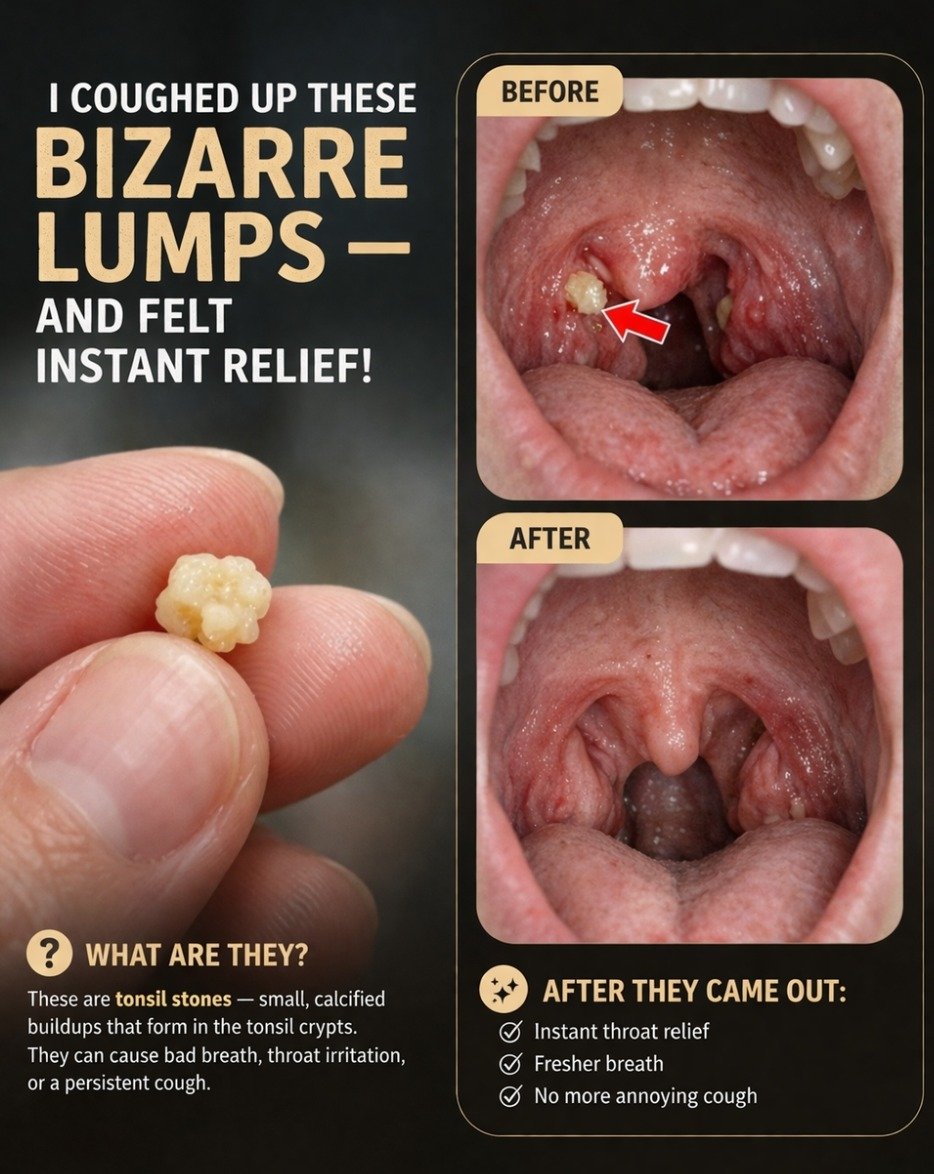
Have you ever experienced that bizarre moment after a powerful sneeze or cough when a tiny, yellowish lump suddenly appears in your mouth? If so, you’re definitely not alone!
It’s a common, if slightly unsettling, occurrence. You might notice a soft, yellowish piece with a crumbly, cheese-like texture, leaving you to ponder its mysterious origin and whether it signals a bigger problem.
Yet, a sense of relief often follows its expulsion, as your throat can feel noticeably clearer and more comfortable. This immediate improvement frequently sparks a crucial question: what exactly was that strange little thing?
These peculiar, tiny formations are widely recognized as tonsil stones, medically referred to as tonsilloliths.
They are essentially small, solidified masses that develop within the natural folds and pockets, known as crypts, located on your tonsils at the very back of your throat. Typically, they present as white or yellow in color, and their texture can range from grainy like tiny pebbles to soft and crumbly, much like cheese.
According to reputable health authorities such as the Cleveland Clinic, tonsil stones can begin to form when various elements:
- Lingering food particles
- Shed dead cells
- Excess mucus
- Oral bacteria
become lodged deep within the tonsil crypts and gradually solidify over time, a process often aided by the minerals present in your saliva.
👉 Here’s the good news: for the vast majority of people, tonsil stones are completely harmless.
Understanding Why Tonsil Stones Appear
Your tonsils serve as vital guardians, functioning like natural filters designed to capture and prevent unwanted particles from entering your body. Nevertheless, the intricate, often uneven surface of the tonsils can sometimes create ideal pockets for various forms of debris to accumulate, particularly in individuals who naturally possess deeper tonsil crypts.
Several factors commonly contribute to the formation of these stones, including:
- A natural anatomical predisposition, such as deeper tonsil crypts
- Insufficient hydration, meaning not consuming enough water
- An accumulation of bacteria and microscopic food particles
- A past record of recurring throat infections
- Inconsistent or inadequate daily oral hygiene practices
It’s important to note that tonsil stones don’t affect everyone; their development often hinges on a combination of individual anatomical features and routine daily habits.
The Sneezing Connection: Why They Suddenly Appear
When you sneeze or cough forcefully, it generates considerable pressure and vibration throughout your throat and oral cavity.
This powerful, sudden expulsion of air can be just enough to effectively loosen and dislodge a tonsil stone that has been nestled within its crypt.
Consequently, you might observe a few distinct sensations or outcomes, such as:
- A distinct, sudden feeling of something being expelled from your throat
- An almost instantaneous sense of relief and improved comfort
- A noticeable feeling of a cleaner, more unobstructed passage in your throat
Rest assured, this particular experience is remarkably frequent among many individuals and generally doesn’t warrant any serious apprehension.
Recognizing Potential Symptoms
While some individuals might remain completely unaware of tonsil stones, others may encounter a range of noticeable symptoms, including:
- A persistent sensation of something lodged in the back of the throat
- Chronic bad breath, known as halitosis, which persists even after diligent brushing
- A minor but persistent discomfort or irritation in the throat area
- An unappealing or metallic taste lingering in the mouth
- Intermittent ear discomfort, a phenomenon linked to shared nerve pathways in the head and neck
Should any of these symptoms continue unabated or become particularly troublesome, it is always wise to consult with a healthcare professional for proper evaluation and guidance.
Essential Daily Habits for Optimal Throat and Oral Health
Embracing and consistently practicing excellent oral hygiene is a powerful strategy to minimize the accumulation of debris that can lead to tonsil stones, thereby promoting greater comfort and overall well-being in your throat.
Incorporating these straightforward habits into your daily routine can be highly beneficial:
- Thoroughly brushing your teeth and tongue at least twice a day
- Committing to regular flossing to remove trapped food particles
- Gargling periodically with warm salt water to cleanse the throat
- Ensuring you remain adequately hydrated throughout the day
- Utilizing an alcohol-free mouthwash for gentle yet effective oral rinsing
Adopting these practices with unwavering consistency can yield significant and positive changes in your oral and throat health over time.
When Is It Time to Consult a Healthcare Professional?
While tonsil stones are generally benign and pose no serious health threat, there are specific instances when seeking advice from a healthcare professional becomes advisable. Consider scheduling an appointment if:
- The discomfort or irritation in your throat persists or noticeably intensifies
- You observe any signs of swelling in or around your tonsils
- Persistent bad breath remains unimproved despite consistent oral hygiene efforts
- You find that tonsil stones are forming with alarming frequency
A qualified medical professional can provide an accurate diagnosis, rule out other conditions, and offer tailored guidance on the most appropriate care and management strategies.
Final Thoughts
Discovering a tiny, unexpected lump after a sneeze can certainly be a startling experience initially. However, in the vast majority of situations, what you’ve encountered is merely a tonsil stone—a remarkably common and, for the most part, entirely benign phenomenon.
By diligently maintaining excellent oral hygiene practices and ensuring you stay adequately hydrated, you can significantly diminish the chances of these formations developing, thereby contributing to a consistently more comfortable and healthier feeling throat.
Frequently Asked Questions (FAQs)
Is it unusual for a small lump to be expelled from your throat after a sneeze?
No, this occurrence is quite common and, in most cases, does not indicate any serious health issue.
What makes tonsil stones contribute to bad breath?
The primary reason is that the trapped bacteria and decaying debris within the stones release sulfur compounds, which are responsible for creating offensive odors.
Are there specific lifestyle adjustments that can help prevent tonsil stones?
Absolutely—implementing rigorous daily oral hygiene practices and maintaining consistent hydration are key strategies that can significantly help in reducing their formation and recurrence.
Important Disclaimer
Please be aware that the content presented in this article is intended solely for general informational purposes. It should not, under any circumstances, be considered a substitute for professional medical advice, diagnosis, or treatment. If you are experiencing persistent symptoms, have specific health concerns, or require personalized medical guidance, it is imperative that you consult with a qualified healthcare provider.