 By admin
 Picture yourself settling into bed at night, longing for restorative sleep, only to find yourself restless and uncomfortable due to persistent backaches or a stiff spine. For a significant number of adults, this isn’t merely an occasional annoyance; it’s a nightly struggle. Back pain stands as one of the most widespread health complaints globally, and the way you sleep significantly influences its presence and intensity. Adopting the correct sleeping posture can be instrumental in maintaining proper spinal alignment, easing pressure on muscles, and finally delivering the relief you’ve been seeking.
Understanding the importance of this is crucial. Back pain doesn’t just disrupt your nights; it encroaches upon your waking hours too. Inadequate sleep diminishes your ability to concentrate, saps your energy levels, and can exacerbate existing health conditions. Individuals who are older, those with sedentary desk jobs, and anyone who spends extended periods sitting are particularly susceptible. While incorporating exercise, pursuing physical therapy, and seeking medical guidance are vital components of managing back pain, even minor adjustments—such as optimizing your position in bed—can offer remarkable support.
So, what are the most beneficial positions for your back and spine? Let’s explore 10 essential pieces of information you should be aware of, with the most pivotal insight revealed at number one.
Number 10: Sleeping flat on your stomach can put significant strain on your spine.
While initially it might feel comfortable, lying face down places undue stress on your neck and the delicate structures of your lower back. Over time, this posture can intensify existing pain and contribute to new discomfort. If you find it challenging to break this habit, try placing a thin pillow underneath your hips to help alleviate some of the strain.
Number 9: Side sleeping offers excellent support when done correctly.
Resting on your side with your knees gently bent helps to keep your spine elongated and minimizes pressure points that can lead to discomfort. For enhanced alignment and reduced stress on your hips and lower back, consider placing a small pillow between your knees.
Number 8: Adopting the fetal position can relieve disc pressure.
Gently curling into a loose fetal position allows the spaces between your spinal vertebrae to open up. This can be particularly helpful if you are dealing with conditions such as herniated discs, as it reduces compression. Interestingly, the comforting curl you may have adopted as a baby could still provide solace for your spine today.
Number 7: Back sleeping with proper knee support is highly recommended.
When lying on your back, placing a pillow beneath your knees helps to maintain the natural curve of your spine. This simple addition prevents your lower back from arching excessively, which can otherwise lead to uncomfortable pressure and stiffness.
Number 6: The height of your pillow is a critical factor.
A pillow that is either too high or too flat can cause unnecessary strain on your neck and shoulders, disrupting spinal alignment. The primary objective is to ensure your head remains perfectly aligned with your spine, regardless of whether you are sleeping on your back or your side.
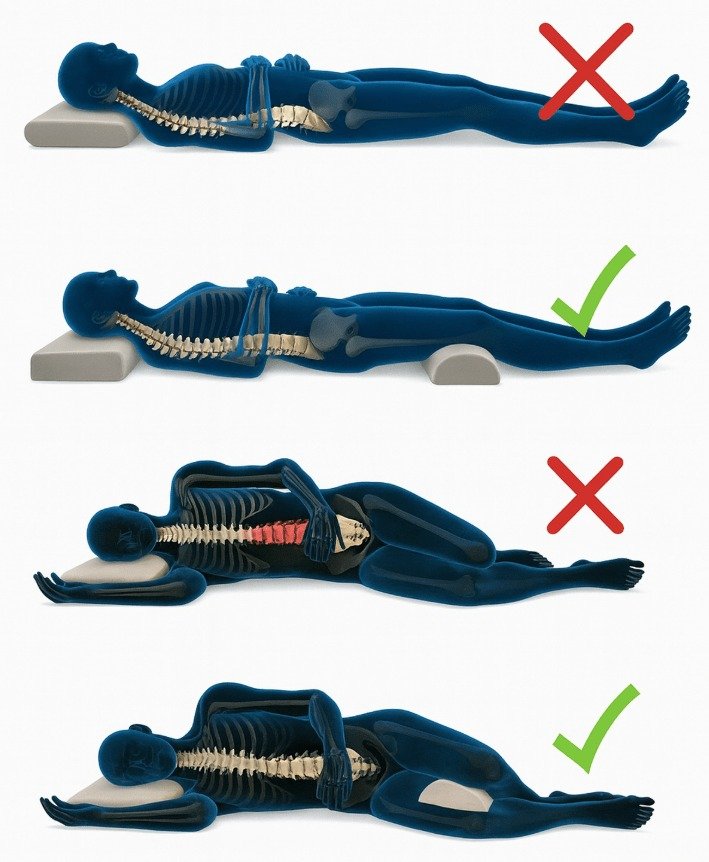
Number 5: A small pillow or rolled towel under your lower back can provide targeted relief.
For some individuals who prefer sleeping on their back, sliding a rolled towel or a small, flat pillow under the curve of their lumbar spine offers additional support. This can be especially beneficial if you frequently wake up feeling stiff or with low back pain.
Number 4: Sleeping in a partially reclined position may ease discomfort for some.
If lying completely flat aggravates your back pain, experimenting with a reclined position can be effective. This can be achieved using an adjustable bed or by strategically stacking pillows to elevate your upper body and knees. This posture can often bring greater comfort to people with conditions like spinal stenosis.
Number 3: Your mattress plays a pivotal role in spinal health.
Even the most optimal sleeping position will be undermined if your mattress is old, sagging, or unsupportive. A medium-firm mattress is often considered ideal for individuals with back pain, as it provides the necessary balance of comfort and firm support for proper spinal alignment. Consider your mattress as the stage upon which your body performs; your spine will function best when this stage is solid and supportive.
Number 2: Consistency in your chosen sleeping position is key.
While it’s natural to shift positions throughout the night, beginning your sleep in a properly aligned posture sets a positive tone for better rest. Gradually training your body to adopt and maintain a supportive sleeping position may require time and patience, but the long-term benefits for your back health are well worth the effort.
Number 1: Achieving neutral spinal alignment is the ultimate secret.
Here lies the most crucial insight: the goal isn’t necessarily to find one single ‘perfect’ position, but rather to consistently maintain a neutral spine. Neutral alignment means that your head, shoulders, and hips are kept in a relatively straight line, with the natural curves of your spine adequately supported. This posture significantly reduces stress on muscles, ligaments, and joints, allowing your back to truly rest, recover, and repair itself throughout the night.
So, how can you begin to implement these strategies tonight? Select one of the recommended supportive positions—either on your back with a pillow under your knees, or on your side with a pillow placed between your legs. Make slight adjustments with your pillows until you discover what feels most comfortable and supportive for your body. Remember, if your back pain is persistent or severe, always consult with a qualified healthcare professional for personalized advice and treatment.
Here is your challenge: Tonight, actively experiment with your pillow setup and chosen sleeping position. Pay close attention to how your back feels upon waking, and make one small adjustment each subsequent night until you identify the configuration that best suits you. Sometimes, profound relief is truly just a pillow away.
This article is provided for informational purposes only and should not be considered a substitute for professional medical advice. Readers are strongly encouraged to consult a qualified healthcare provider for personalized guidance regarding their specific health concerns.