 By admin
 In the United States, a stroke occurs every 40 seconds. However, a less obvious but equally perilous threat often precedes a full-blown stroke: the mini stroke, also known as a Transient Ischemic Attack (TIA). These brief “silent alarms” typically last only a few minutes, though sometimes up to an hour, before their symptoms vanish. This fleeting nature often leads to them being dismissed. Yet, overlooking a TIA can have dire consequences—the American Stroke Association reports that nearly one in three individuals who experience a mini stroke will subsequently suffer a major stroke if no preventative measures are taken. Recognizing these critical warning signs in elderly loved ones can be instrumental in preventing life-altering disability.
What Exactly Is a Mini Stroke (TIA)?
A Transient Ischemic Attack occurs when the brain’s blood supply is temporarily interrupted, usually due to a blood clot. Unlike a major stroke, the obstruction clears on its own, causing symptoms to quickly disappear. Despite this rapid resolution, a TIA is far from harmless. It serves as a critical warning signal indicating that the brain and the broader cardiovascular system are under threat. Consider it a preliminary event to a major stroke—an urgent opportunity to intervene before more serious damage occurs.
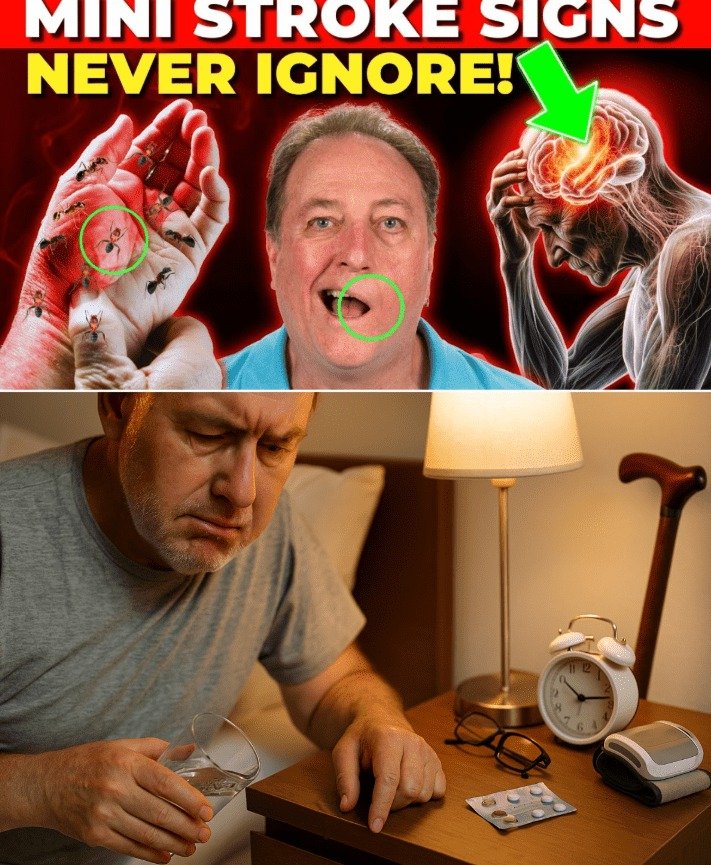
1. Abrupt Numbness or Weakness
The sudden onset of weakness, tingling sensations, or numbness—particularly affecting one side of the body, face, or an arm—is a classic indicator. Even if it lasts only a few minutes, this symptom signifies a temporary disruption in blood flow to the brain.
2. Difficulty Speaking or Comprehending Language
Slurred speech, sudden mental confusion, or challenges in understanding what others are saying are strong signs of a TIA. If an older individual unexpectedly sounds disoriented or