 By admin
 March 13, 2026
Have you ever paused to examine your fingernails, only to discover subtle lines or ridges that weren’t there before? This is a common experience. Such minor alterations often spark curiosity, and occasionally, a degree of worry. While a vast majority of nail lines are entirely harmless, some can serve as silent indicators from your body, suggesting that an underlying issue might require your attention.
Your nails undergo a gradual growth process, effectively chronicling your internal health. Consequently, even slight shifts in their texture or appearance can mirror changes occurring within your body, sometimes weeks or even months before they become evident in other ways.
This guide aims to clarify the most prevalent types of nail lines, explore their potential implications for your well-being, and help you discern when it’s appropriate to seek further medical advice.
The Connection Between Your Nails and Overall Health
Fingernails are primarily composed of keratin, a robust protein also present in your hair and skin. Their growth originates from the nail matrix, which is situated beneath the cuticle. When your body undergoes periods of stress, experiences nutritional deficiencies, or battles an illness, this crucial growth process can be disturbed, often leaving behind noticeable marks on your nails.
Several common factors can significantly impact the appearance of your nails, including:
-
The natural process of aging
-
Insufficient nutrient intake
-
Episodes of physical or emotional strain
-
Fluctuations in hormone levels
-
Problems with blood circulation
While many of these changes are benign, any persistent or unusual patterns observed on your nails should not be dismissed.
1. Vertical Ridges on Nails (Longitudinal Lines)
Vertical ridges, which extend from the nail’s base to its free edge, are incredibly common and, in the vast majority of cases, represent a completely normal aspect of nail anatomy.
Common causes for their appearance
-
The natural aging process: Similar to how skin develops wrinkles, nails naturally form ridges over time.
-
Lack of hydration or general dryness
-
Minor trauma or injuries to the nail plate
-
Genetic predisposition
These ridges frequently become more apparent after the age of 30 or 40 and are seldom a reason for genuine concern.
When it’s advisable to seek attention
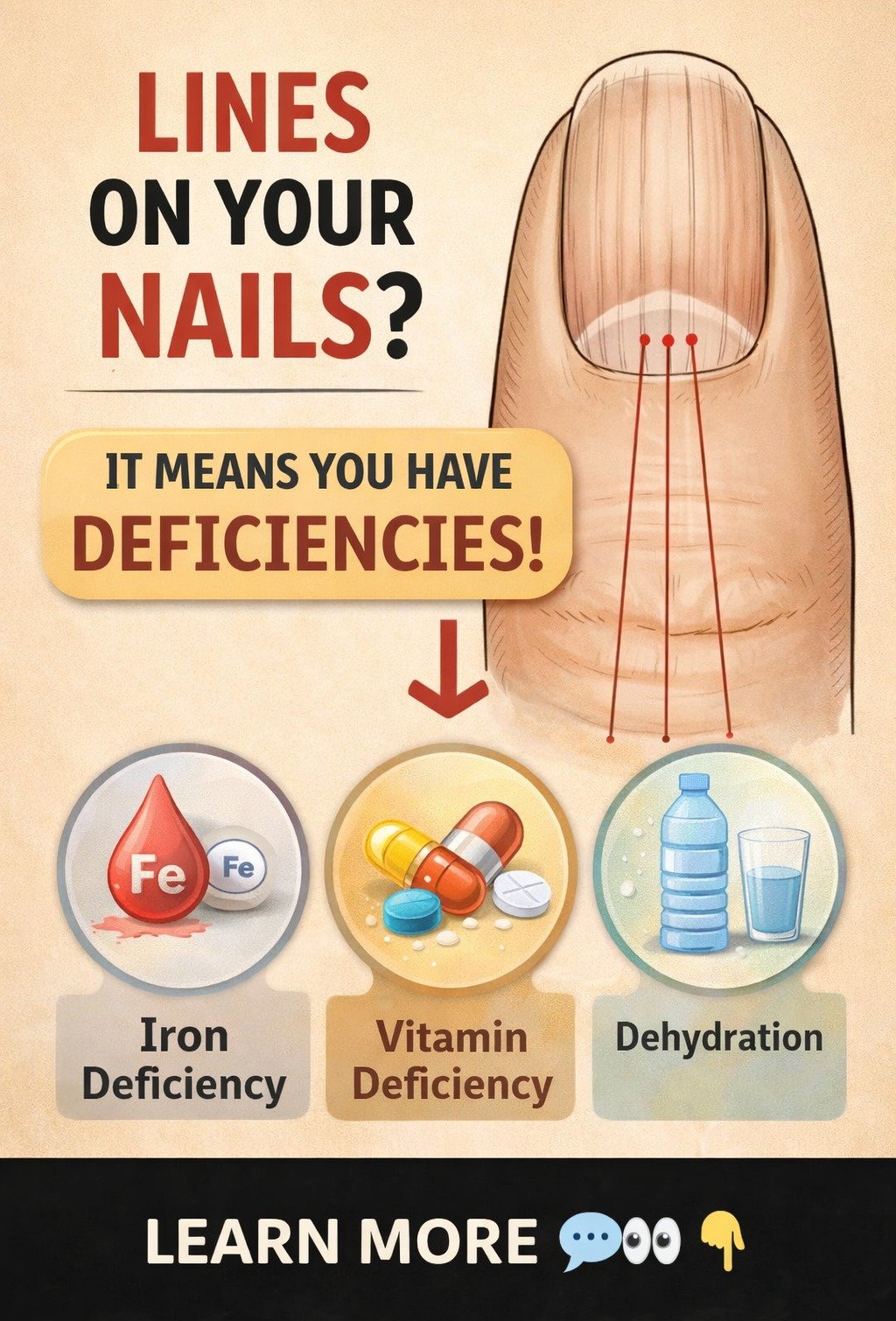
If vertical ridges suddenly become significantly more prominent, or if they are accompanied by brittle, splitting nails, this could potentially signal:
-
An iron deficiency
-
Insufficient levels of vitamin B12, zinc, or magnesium
-
An imbalance in thyroid function
-
Compromised blood circulation
2. Horizontal Lines on Nails (Beau’s Lines)
In contrast to vertical ridges, horizontal grooves—specifically known as Beau’s lines—can signify a temporary halt or disruption in nail growth.
Potential underlying triggers
-
Episodes of high fever or severe illness
-
Various viral infections
-
Diabetes mellitus
-
A deficiency in zinc
-
Chemotherapy treatments
-
Direct physical trauma to the nail
-
Periods of intense physiological stress on the body
Given the slow pace of nail growth, these distinct lines might not become visible until several weeks after the precipitating event has occurred.
3. Deep Grooves or Multiple Pronounced Nail Lines
Should you observe deeper grooves, noticeable cracks, or numerous pronounced ridges extending across several of your nails, this could indicate that your body has recently navigated a period of internal imbalance.
Common factors that may contribute to this condition
-
A deficiency in protein
-
Impaired nutrient absorption (often linked to digestive issues)
-
Chronic states of dehydration
-
Certain autoimmune conditions
These specific factors have the potential to disrupt the normal, healthy formation of nails, leaving behind these visible, distinctive patterns.
4. Nail Lines Accompanied by Color Changes
When nail lines manifest concurrently with unusual alterations in nail color, it is crucial to regard these signs with serious attention.
Key warning signs to look out for include:
-
Streaks that are dark brown or black in coloration
-
A noticeable yellowing or thickening of the nails
-
Nails that appear unusually white or take on a distinctive spoon shape
Such changes could be indicative of infections, anemia, various lung conditions, or other serious underlying health issues. If you observe any of these symptoms, it is highly recommended to consult a healthcare professional without delay.
5. When Nail Lines Are Considered Completely Normal
It’s important to remember that not every line or ridge on your nails signifies a medical warning.
Indeed, mild vertical ridges are frequently a natural and expected component of the aging process and typically do not necessitate any specific treatment.
You likely have no cause for concern if:
-
The ridges are subtle and appear consistent across your nails
-
There is an absence of pain, tenderness, or swelling around the nails
-
The natural color of your nails remains unchanged and healthy
-
Your nails generally feel robust and strong
However, sudden or dramatic changes in the appearance of these lines, or if new symptoms develop alongside them, should always prompt a discussion with your doctor to rule out any underlying health concerns.