 By admin
 Unmasking the Unseen: Subtle Breast Cancer Signs Women Over 50 Often Overlook
It begins subtly. A fleeting concern while getting dressed, a quiet ‘what if’ dismissed as aging, hormones, or a minor ache. Many women, especially after 50, are prone to overlooking these faint whispers from their bodies, often leading to delays and regret. The good news? Your body often communicates long before it screams for attention. Learning to decode these subtle signals can be your most powerful health protector. In this vital guide, we’ll explore key signs often missed, and reveal a simple habit doctors recommend for earlier detection.
Changes in Breast Skin Texture
When we think of breast cancer, a lump often comes to mind first. However, the skin itself can be an early indicator. Many women notice changes in the texture of their breast skin that can resemble an orange peel – a condition medically known as “peau d’orange” or skin dimpling. This occurs when underlying tissue alterations pull on the skin, creating small indentations or puckering.
Be vigilant for:
- Small dimples or dents in the skin.
- Areas that feel unusually thickened or firm compared to surrounding tissue.
- A patch of skin that suddenly appears rough, scaly, or swollen.
- Skin that looks slightly puckered or uneven when you raise your arm.
Leading organizations like the American Cancer Society emphasize that such visible skin changes can manifest before a lump is even palpable. While not every skin change signifies a serious issue – aging naturally alters skin – any new or persistent alteration warrants prompt medical evaluation.
Unusual Redness or Persistent Warmth
Many women attribute breast redness or warmth to minor irritations, allergies, or a fleeting rash. While this can sometimes be true, persistent redness or a noticeable warmth on the breast that doesn’t resolve can be a critical signal of deeper tissue changes.
Pay attention to:
- A red patch that lingers for several days without improvement.
- Skin that feels distinctly warmer to the touch compared to the other breast.
- Slight swelling or a sensation of tightness in a specific area.
These symptoms are often pain-free, leading to their dismissal as inconsequential. However, medical research highlights that inflammatory breast cancer, a rare but aggressive form, frequently presents with redness and swelling rather than a distinct lump. If such changes persist, especially without a clear cause, consulting a healthcare professional is crucial.
Subtle Changes in Nipple Appearance
The appearance of our nipples is often overlooked in daily self-checks, yet it can offer vital clues. Small, seemingly minor shifts can be significant, particularly if they occur unilaterally.
Key changes to observe include:
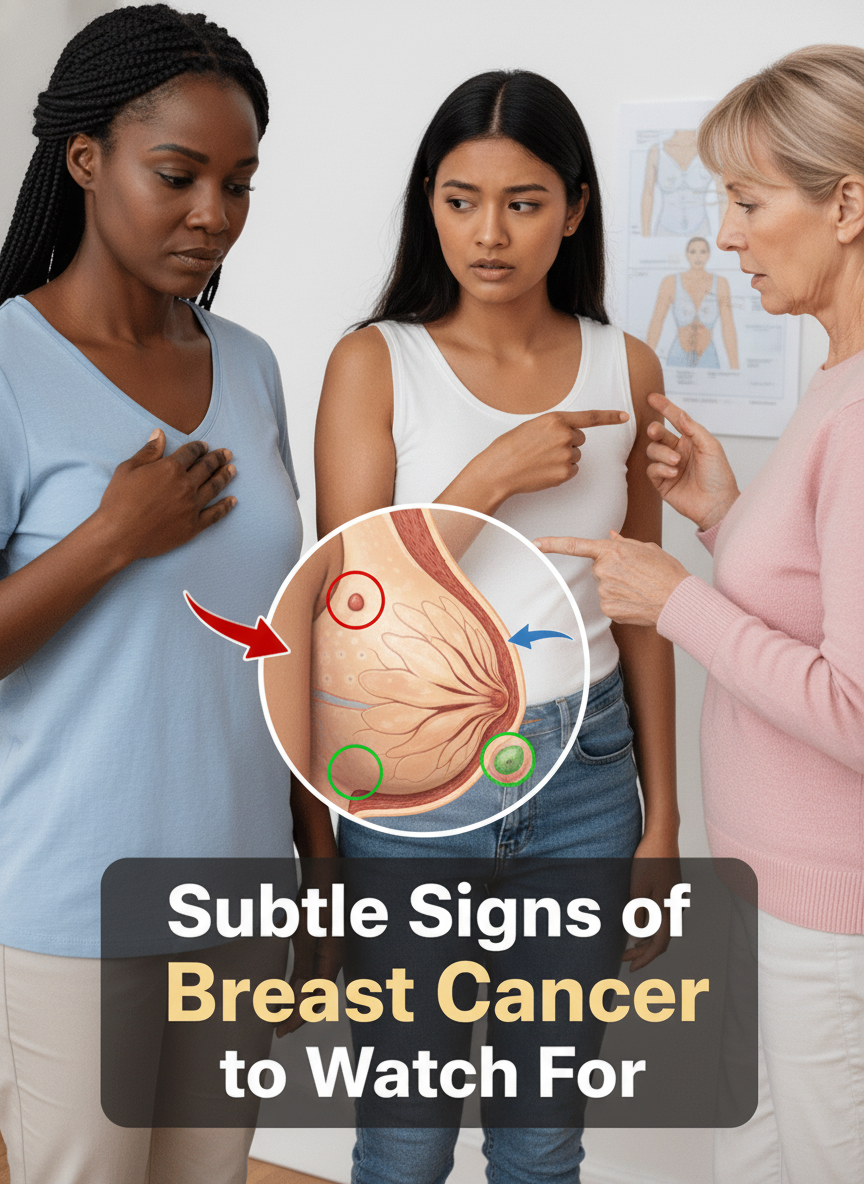
- A nipple that suddenly begins to turn inward (retraction).
- Unusual flattening or inversion of the nipple.
- Persistent dry, flaky, or scaly skin around the nipple or areola.
- Any unexpected nipple discharge that is not related to breastfeeding.
Numerous health studies indicate that nipple changes can be among the earliest physical signs of breast cancer. Unfortunately, they are frequently dismissed as normal age-related variations. If you notice a sudden, distinct change in one nipple, it’s always advisable to seek professional medical advice.
Persistent Pain in One Specific Area
While most breast pain is benign – often linked to hormonal fluctuations, muscle strain, or benign cysts – persistent pain in a single, specific spot warrants closer attention. The crucial differentiator is its unwavering nature.
Consider these patterns:
- A specific point that feels tender or painful repeatedly.
- Discomfort that lasts for several weeks without relief.
- Pain that does not fluctuate with your menstrual cycle or change with movement or posture.
It’s important to remember that pain alone is rarely the sole indicator of serious breast health issues. However, when persistent localized pain is accompanied by other signs, such as changes in skin texture or nipple appearance, doctors often recommend a thorough evaluation. Your body usually provides more than one signal.
Unilateral Swelling or Changes in Breast Shape
This sign can be particularly insidious to detect, as many women don’t routinely compare their breasts side-by-side. Small, gradual changes in size or shape can develop almost imperceptibly over time.
Look for differences such as:
- One breast becoming noticeably larger or fuller than the other.
- A subtle alteration in the overall contour or shape of one breast.
- One side appearing fuller, particularly near the armpit area.
- Clothing, especially bras, fitting unevenly on one side.
Heightened awareness during daily activities – like dressing or showering – can empower you to spot these subtle shifts early. If you notice any new or persistent asymmetry, particularly if it’s accompanied by other listed symptoms, consult your doctor. Early detection significantly improves outcomes.
Your Most Powerful Tool: Self-Awareness
The journey to early detection isn’t about constant anxiety, but about empowered self-awareness. The “surprisingly simple habit” doctors advocate is to become intimately familiar with your own breasts. This means not just monthly self-exams, but simply paying attention to how your breasts look and feel during your daily routine – while showering, dressing, or even just relaxing. Notice what’s normal for you. When you know your normal, you’re much more likely to spot the subtle “whispers” that signal a change.
Remember, while these signs can be concerning, they don’t automatically mean cancer. Many are benign. However, ignoring them can have serious consequences. If you observe any new, persistent, or unusual changes in your breasts, especially after age 50, do not hesitate to speak with your healthcare provider. Early detection is your best defense.