 By admin
 Is Your Hydration Harming More Than Helping? The Truth About Your Water Habits
Last week, an elderly patient shared a familiar struggle. He’d woken up four times to use the bathroom after downing a large bottle of water before bed, leaving him exhausted, dizzy, and the subject of family jokes at breakfast. Many believe you can’t go wrong with water, but certain habits can subtly strain your body over time. The good news? Small adjustments to how and when you drink can make a surprising difference, and one simple habit near the end often catches even seasoned health professionals off guard.
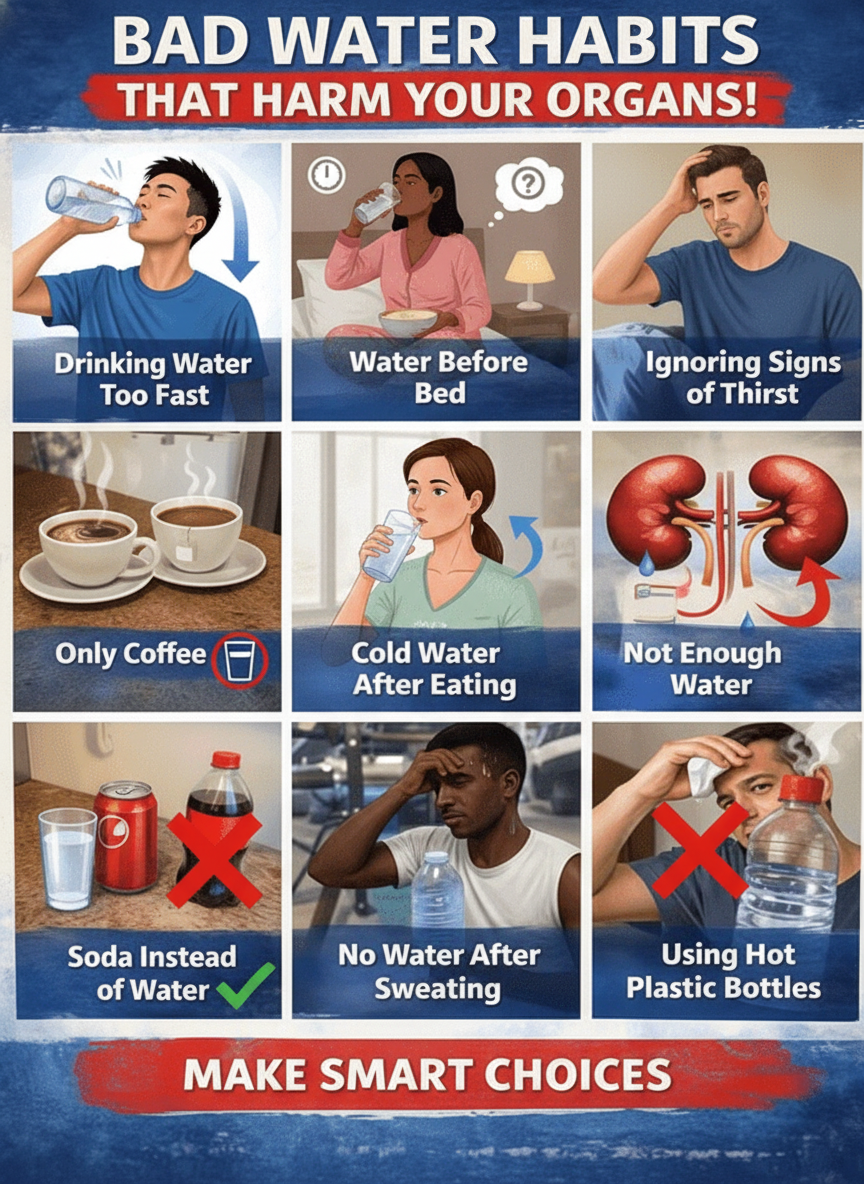
Drinking Too Much Water Too Fast
The urge to quickly finish a full bottle of water feels productive and disciplined. However, your body isn’t a bucket. When a large volume of water enters your system rapidly, it can temporarily dilute vital electrolytes like sodium in the blood – a condition researchers call hyponatremia. While rare in severe forms, even mild imbalances force your heart and kidneys to work harder to restore equilibrium.
Here’s the interesting part: Your body actually prefers slow, steady hydration. Instead of guzzling a large amount all at once, try spacing your water intake throughout the day.
Simple adjustments:
- Sip water every 20 to 30 minutes.
- Drink one glass slowly instead of chugging a bottle.
- Pay attention to natural thirst signals.
This gentle rhythm helps your body absorb water efficiently without sudden fluid shifts.
Drinking Large Amounts of Water Before Bed
This is a common habit, especially among older adults who realize late in the evening they haven’t drunk enough water. Unfortunately, the body often disagrees with this last-minute catch-up. Drinking a significant amount of water before sleep frequently leads to nighttime urination, interrupting crucial sleep cycles. Studies in sleep medicine show that repeated sleep disruptions can impact hormone balance, energy levels, overall recovery, increase fatigue, and reduce daytime concentration.
Instead, try this routine:
- Drink most of your water earlier in the day.
- Reduce fluid intake one to two hours before bedtime.
- Keep only a small sip of water nearby if absolutely needed.
Better sleep often follows surprisingly quickly, but that’s just one piece of the hydration puzzle.
Ignoring Thirst Signals
Some proudly declare they never feel thirsty. In reality, thirst is one of your body’s earliest warning signals. As we age, thirst sensitivity can slightly decrease, meaning dehydration might set in before obvious symptoms appear. Common subtle signs include:
- Mild fatigue
- Headaches
- Difficulty concentrating
- Dry mouth or lips
- Dark yellow urine
According to hydration research published in nutrition journals, even mild dehydration can affect circulation and energy levels. The truth is simple: If you wait until you feel extremely thirsty, your body may already be slightly dehydrated.
Helpful reminder habits:
- Keep a glass of water visible during the day.
- Drink a small amount when waking up.
- Sip water with meals.
Small, consistent habits often prove more effective than forcing large amounts.
Replacing Water With Coffee, Tea, or Soda
Many adults begin their day with coffee, switch to tea in the afternoon, and end with a soda at dinner. While enjoyable, relying solely on these beverages instead of plain water might not provide the hydration your body expects. Caffeine has a mild diuretic effect, meaning it can slightly increase urine output. Sugary drinks introduce another concern, as excess sugar places additional metabolic work on the liver and pancreas.
Here’s a simple comparison:
| Beverage | Hydration Benefit | Potential Concerns |
|---|---|---|
| Plain Water | Excellent hydration | None when consumed normally |
| Coffee | Moderate hydration | Caffeine may increase urination |
| Tea | Mild hydration | Some varieties contain caffeine |
| Soda | Low hydration value | High sugar and additives |
But here’s the key insight: You don’t need to eliminate these drinks completely. Just balance them.
Smart balance strategy:
- Drink a glass of water alongside coffee or tea.
- Limit sugary drinks during meals.
- Make water the default beverage between meals.
Your body will thank you for the consistency.
Cold Water Immediately After Meals
This topic often sparks debate at family dinners. Some believe cold water after meals is completely harmless, while others feel it causes bloating or discomfort. The reality is more nuanced. Very cold water may temporarily slow digestion for some individuals, leading to a feeling of fullness or mild discomfort. It’s often a matter of individual sensitivity and moderation.