 By admin
 Unmasking the Silent Killer: 12 Early Liver Failure Signs You Can’t Afford to Miss
You reach for your morning coffee, and a faint yellow tinge catches your eye on your palm. Later, you notice your breath has an odd, sweet scent. You’re constantly exhausted, but who isn’t? What if these seemingly minor details are your liver, a vital organ, desperately signaling for help?
Millions worldwide unknowingly live with liver damage. Often, by the time symptoms become undeniable, the condition is advanced, and treatment options are limited. This article reveals 12 subtle yet critical signs that could be the key to early detection, potentially reversing damage and preventing irreversible failure.
Why Your Liver Can Fail Without You Noticing
Your liver is a remarkable, resilient organ. It’s a master detoxifier, hormone regulator, energy storehouse, and possesses incredible regenerative capabilities. It can continue functioning and keep you feeling “okay” even after losing up to 70% of its capacity. This incredible resilience is precisely why liver disease is often dubbed the “silent killer”—symptoms frequently emerge only when 80-90% of the organ is already scarred, pushing it towards cirrhosis or complete failure.
However, by learning to interpret its early whispers, you can dramatically alter the outcome. Are you ready to listen to what your body is trying to tell you?
-
The Overarching Message: Listen to Your Body
While each of these signs individually might seem minor, their appearance, especially in combination, serves as a critical distress signal from your liver. This “12th sign” isn’t a single symptom, but the urgent call to action to recognize that your body is speaking to you. Don’t wait for severe pain or obvious jaundice. Early detection of liver issues is paramount for effective intervention and potentially reversing damage. If you notice any of these persistent signs, consult a healthcare professional immediately. Your liver’s silent whispers could be saving your life.
-
Pitting Edema: Swollen Legs and Ankles
Press your finger firmly into your shin for a few seconds. If the indentation remains visible after you remove your finger, this is “pitting edema.” This fluid retention occurs when a compromised liver can’t produce enough albumin, a protein vital for keeping fluid within your blood vessels. It frequently begins in the lower legs before progressing to abdominal swelling.
-
Chronic Exhaustion That Sleep Doesn’t Resolve
Despite getting eight, nine, or even ten hours of sleep, do you still feel perpetually drained and struggle through your day? The relentless burden of toxins, impaired nutrient processing, and chronic inflammation can deplete your energy at a cellular level. If caffeine barely touches your fatigue anymore, your liver might be struggling.
-
Dark Urine and Pale Stools
This classic, highly indicative combination occurs when bilirubin backs up into your urine, making it dark (often described as “cola-colored”), and simultaneously fails to reach your intestines, resulting in pale, clay-like stools. While often seen in advanced cases (70-90%), these changes can start much earlier. Check the color next time you use the restroom – your body is providing critical clues.
-
Unexplained Muscle Loss (Sarcopenia)
Are your arms and legs appearing noticeably thinner despite no changes to your diet or exercise routine? When the liver struggles to convert ammonia into urea, the body may begin breaking down muscle tissue as an alternative way to eliminate toxins. Sarcopenia is a real and often rapid consequence of liver disease.
-
Sudden Confusion or “Brain Fog”
Walking into a room and forgetting why, or finding conversations feel fuzzy and difficult to follow, can be alarming. When the liver can’t filter toxins like ammonia, these substances can cross into the brain, leading to hepatic encephalopathy. It can begin subtly and progress to severe disorientation. Have you experienced moments where your thinking feels unusually “glitchy”?
-
Swollen, Hard Abdomen (Ascites)
This isn’t just weight gain. If your belly feels uncomfortably full, hard, and is visibly swelling, it could be ascites – fluid accumulation caused by a scarred liver leaking protein and impeding blood flow. Research shows that 50% of cirrhosis patients develop ascites within 10 years of diagnosis. Gently press your abdomen – does it feel tight or fluid-filled?
-
Easy Bruising and Prolonged Bleeding
Bumping your shin and finding a massive, stubbornly purple bruise a week later, or a small paper cut that won’t stop oozing, are concerning signs. Your liver is essential for producing the proteins required for blood clotting. When its function declines, even minor injuries can lead to dramatic bruising and bleeding. How easily do you bruise these days?
-
Unusual Breath Odor: Sweet, Musty, or Bleach-Like
If your partner or family comments on an oddly sweet, musty, or ammonia-like smell on your breath, even after brushing, pay attention. Medically termed “fetor hepaticus,” this distinct odor is a hallmark of dying liver cells releasing unusual metabolic compounds. It’s not a hygiene issue; it’s your liver crying for help.
-
Unexpected Yellowing (Beyond the Eyes)
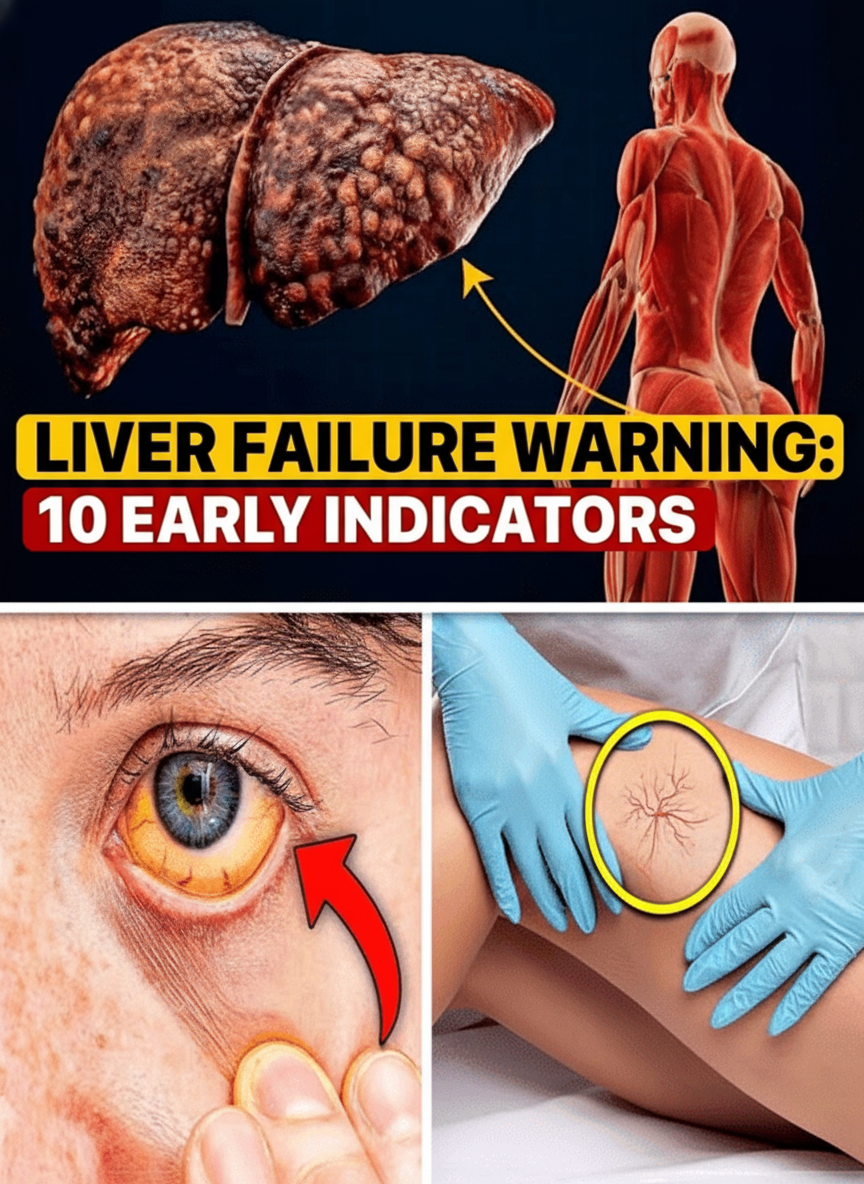
While jaundice is famous for yellowing the eyes, did you know that the palms of your hands, soles of your feet, and even the roof of your mouth can show a subtle golden tint first? This early bilirubin accumulation is a crucial, visible red flag. Take a moment to check your palms under bright light – any hint of yellow?
-
Spider-Like Blood Vessels (Spider Angiomas)
Those tiny, red, spider-shaped marks with radiating legs appearing on your chest or back aren’t just age spots. Known as spider angiomas, they result from elevated estrogen levels that a compromised liver can no longer effectively break down. Observing more than three such spots is strongly linked to liver dysfunction. Have you noticed new ones lately?
-
Persistent, Unexplained Itching (Especially at Night)
If you find yourself frantically scratching your arms and legs at 2 AM with no visible rash or allergic reaction, it could be a warning. Damaged liver cells struggle to clear bile salts, leading to their buildup under the skin. Studies indicate that up to 80% of individuals with advanced liver disease experience this maddening symptom. Don’t dismiss relentless itching.