 By admin
 10 Critical Breast Cancer Warning Signs No Woman Should Overlook
Breast health is vital for women, yet subtle signs are often missed. Early detection of breast cancer is key to better outcomes. Recognizing these warning signs and acting swiftly can make a significant difference. Pay attention to how your body feels and any new, persistent symptoms.
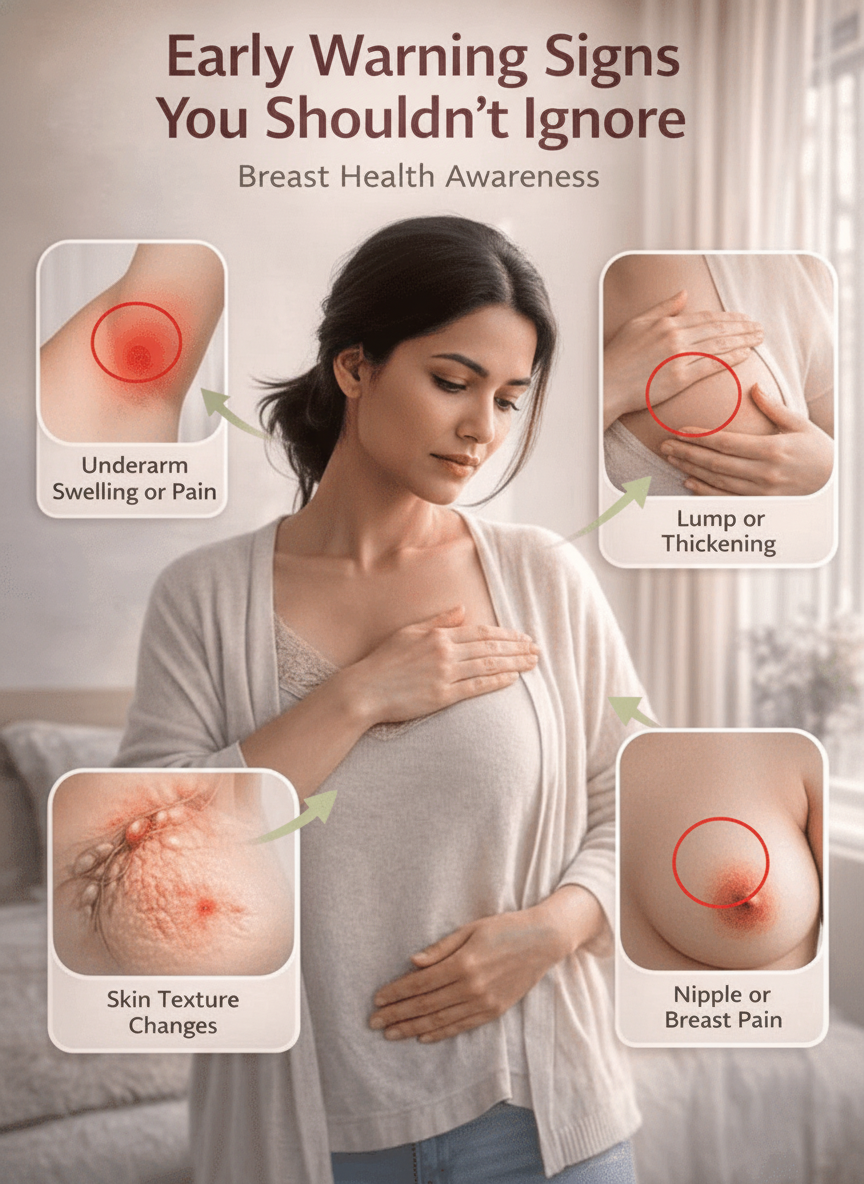
1. Unexplained Underarm Swelling or Pain
Persistent or unexplained swelling or discomfort in your underarm area could signal changes in breast tissue or lymph nodes. Lymph nodes swell when fighting illness, but if this swelling is unexplained or persistent, it needs attention.
- Why be concerned? Underarm lymph nodes are crucial. Cancer cells can spread here early, making swelling a potential initial warning sign.
2. A New Lump or Thickening in Your Breast
Most breast lumps are benign, but any new lump or thickening, especially if it feels distinct from surrounding tissue, must be evaluated by a doctor.
- What to look for:
- Hard and immovable: Cancerous lumps often feel firm and fixed.
- Changes in size/shape: A lump that grows or changes needs immediate attention.
- Irregular edges: Lumps with uneven borders are more concerning.
3. Skin Texture Changes
Noticeable alterations in breast skin can be a red flag. This includes redness, dimpling, puckering, or a thickened appearance, often like an orange peel (“peau d’orange”).
- What it could mean: These changes can indicate inflammatory breast cancer.
- How to spot them:
- Persistent redness or rash.
- Dimpling, pitting, or puckering.
- Dry, scaly, or flaking skin.
4. Persistent Nipple or Breast Pain
While menstrual tenderness is common, persistent or localized pain in your nipple or breast not linked to your period should be taken seriously. Cancer-related pain can be sharp, burning, or a dull ache in one spot.
- When to seek help: If pain is new, persistent, severe, or with other symptoms like a lump, consult your doctor.
5. Changes in Nipple Appearance or Discharge
Nipples can provide crucial clues. Any new or unusual changes require medical evaluation.
- Warning signs:
- Unexplained discharge: Clear, bloody, or without squeezing.
- Nipple inversion: If your nipple suddenly turns inward.
- Crusting, scaling, or ulceration: May indicate Paget’s disease.
- Changes in nipple size, shape, or direction.
6. Persistent Breast Infections or Redness
Breast infections (mastitis) are common, especially in nursing mothers. However, recurrent infections, or infection-like symptoms (swelling, heat, redness) when not breastfeeding, are concerning.
- Why it matters: These symptoms can mimic inflammatory breast cancer, requiring professional diagnosis.
7. Unexplained Weight Loss
Significant, unintentional weight loss without diet or exercise changes can be a general symptom of various health conditions, including some cancers. If you’ve lost weight without trying, investigate the cause.
- Action: Consult your doctor to rule out serious conditions.
8. Swelling of All or Part of a Breast
Beyond localized lumps, general swelling affecting an entire breast or a significant portion, making it appear larger or feel heavier, can be a warning sign. This may occur without a distinct lump.
- Key indicator: Noticeable asymmetry or a sudden increase in breast size without obvious cause.
9. Changes in Breast Size or Shape
Breasts vary naturally, but any new, noticeable alteration in the overall contour, size, or symmetry of one breast compared to the other should be evaluated. This includes a breast becoming unusually flattened, indented, or distorted.
- Look for: A breast that suddenly looks different from its usual appearance.
10. New Spot, Itchiness, or Rash on Breast Skin
Persistent itching, a new rash, or an unhealing sore on the breast skin (beyond the nipple) can be a warning sign. While often benign, these symptoms, especially if unresponsive to typical treatments, warrant investigation.
- When to be concerned: If a rash or itchiness persists for more than a few days/weeks, or a sore doesn’t heal.
The Bottom Line: Don’t Delay, Get Checked
Remember, these symptoms don’t automatically mean cancer; many benign conditions cause similar signs. However, never ignore them. Your body communicates; listen. If you notice any persistent or concerning changes, schedule an appointment with your healthcare provider promptly. Early detection remains your most powerful tool for breast health.