 By admin
 Angina Pectoris: Unmasking the Heart’s Hidden Warning Signals
Picture this: An older gentleman at a family dinner, discreetly pressing his chest for a fleeting moment, then laughing it off, blaming spicy food, avoiding eye contact because a deeper unease lingered. This scene plays out daily for countless adults. That brief, recurring chest discomfort could be a critical message your body is desperately trying to send. By the end of this article, you’ll understand why recognizing these signals early is vital.
What is Angina Pectoris and Why It Matters
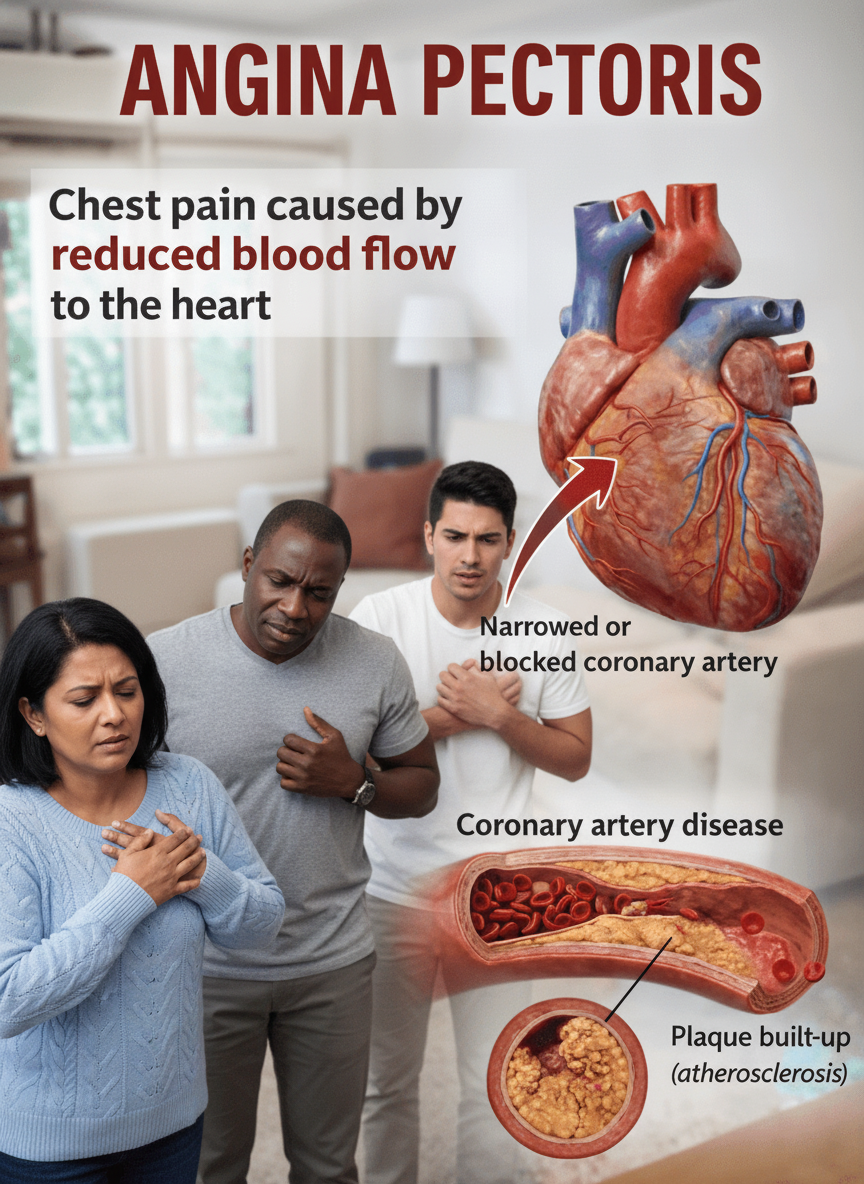
Angina pectoris is not a disease itself, but rather a warning signal—a type of chest discomfort that arises when your heart muscle isn’t receiving enough oxygen-rich blood. Think of your heart as a tireless pump; it also requires its own dedicated blood supply via tiny vessels called coronary arteries. When these arteries narrow or stiffen, often due to plaque buildup (a process known as atherosclerosis), blood flow can be restricted, especially during physical activity or stress.
This reduced blood flow manifests as pressure, tightness, or a heavy sensation in the chest. While atherosclerosis is a primary culprit, lifestyle factors like smoking, physical inactivity, high cholesterol, and unmanaged stress significantly contribute to the problem. The danger lies in dismissing these early symptoms, often because the discomfort temporarily subsides with rest, creating a deceptive sense of relief.
Subtle Angina Symptoms Often Dismissed
Angina doesn’t always present as dramatic, sharp pain. For many, particularly older adults, it’s a more subtle pressure or discomfort. Common sensations can include:
- A feeling of tightness or squeezing in the chest.
- Burning or pressure located behind the breastbone.
- Discomfort that radiates to the shoulder, arm, neck, or jaw.
- Unexplained shortness of breath during routine activities like walking or climbing stairs.
- Sudden, unusual fatigue during physical exertion.
Interestingly, some individuals experience this discomfort in the back or stomach, leading to confusion with indigestion or muscle strain. Consider these common misinterpretations:
- Chest pressure during walking: Often dismissed as “just getting older,” it could signal reduced blood flow to the heart.
- Burning chest feeling: Frequently mistaken for acid reflux, it might be an angina signal.
- Arm or shoulder discomfort: Commonly attributed to muscle strain, it could indicate a circulation issue.
- Sudden fatigue: While poor sleep is a factor, it can also be a sign of heart strain.
The crucial takeaway: if discomfort consistently appears during exertion and improves with rest, your body may be signaling an inadequate blood supply to your heart.
Key Risk Factors for Angina
Research consistently highlights the combined impact of lifestyle and aging on the narrowing of coronary arteries. While some factors like age or family history are beyond our control, many others stem directly from daily habits:
- Smoking or prolonged exposure to tobacco.
- High cholesterol levels.
- High blood pressure (hypertension).
- Diabetes.
- Excess body weight.
- Long periods of inactivity.
- Chronic stress and inadequate sleep.
It’s important to recognize that these factors rarely emerge overnight. They gradually develop over years through an accumulation of small daily choices. For instance, a sedentary lifestyle combined with a diet high in processed foods can quietly elevate cholesterol levels, leading to fatty deposits along artery walls and progressively impeding blood flow. The good news? Studies show that adopting healthier lifestyle habits can significantly improve cardiovascular health, even later in life.
Simple Habits for a Healthier Heart
Achieving better heart health doesn’t necessarily demand complex routines or extreme workouts. Often, it’s the small, consistent habits that yield the greatest benefits. Many cardiologists advocate for these practical actions to support healthy circulation:
- Move Your Body Daily: Walking is an incredibly accessible and effective activity for most adults. Aim for 20 to 30 minutes of comfortable walking on most days of the week. Even light movement enhances blood flow and strengthens cardiovascular fitness.
- Embrace a Heart-Healthy Diet: Focus on whole, unprocessed foods. Incorporate plenty of fruits, vegetables, lean proteins, and whole grains. Limit saturated and trans fats, added sugars, and excessive sodium.
- Manage Stress Effectively: Chronic stress can strain your heart. Find healthy ways to cope, such as meditation, deep breathing exercises, spending time in nature, or engaging in hobbies you enjoy.
- Prioritize Quality Sleep: Aim for 7-9 hours of quality sleep per night. Good sleep is crucial for overall cardiovascular health.
- Regular Check-ups: Don’t skip your annual physicals. Regular medical assessments allow for early detection and management of risk factors like high blood pressure or cholesterol.
By paying attention to your body’s signals and making conscious choices to support your heart, you can significantly reduce your risk and improve your quality of life. Don’t ignore the quiet warnings; listen to your heart.