 By admin
 Your ‘Second Heart’: Why Calf Raises Are Crucial for Circulation
You probably know the feeling: you finish your daily walk, feeling good, only to see someone effortlessly climb stairs while your legs feel stiff and heavy. Many older adults believe that simply “moving a little” is enough for heart health. However, a crucial muscle group supporting efficient circulation is often completely ignored.
Surprisingly, this vital habit takes only a few minutes a day, yet many cardiologists suggest it plays a significant role in maintaining healthy blood flow throughout the body. What is this overlooked movement that most routines forget? The answer might surprise you, and by the end of this article, you’ll understand why many heart specialists quietly advocate for it, especially for older adults.
Why Your Calf Muscles Are Your “Second Heart”
Most people associate the heart alone with circulating blood. But efficient circulation is truly a team effort. Deep within your lower legs are powerful muscles designed to help push blood back towards your heart with every step or ankle movement. Many physiologists refer to this critical mechanism as the calf muscle pump.
Here’s why it’s so important, particularly as we age:
- When you walk or lift your heels, the calf muscles contract.
- This action gently squeezes the veins in your lower legs.
- Blood is then pushed upward, against gravity, back towards the heart.
When these muscles remain inactive for extended periods, blood flow from the legs can significantly slow down. This is a primary reason why prolonged sitting can leave your legs feeling swollen or heavy. Research in cardiovascular physiology journals highlights that regular activation of the calf muscles can significantly support circulatory efficiency and overall vascular health. And here’s the crucial part many overlook: even those who walk daily might not activate their calf muscles sufficiently, especially if their stride is short or slow. But there’s a simple, direct movement that targets them.
The Overlooked Exercise Many Cardiologists Recommend: Calf Raises
The exercise is remarkably simple: calf raises. While you might associate them with athletes in the gym, they are equally invaluable for older adults because they directly activate the muscles responsible for assisting circulation in the lower legs.
This movement is so beneficial because it:
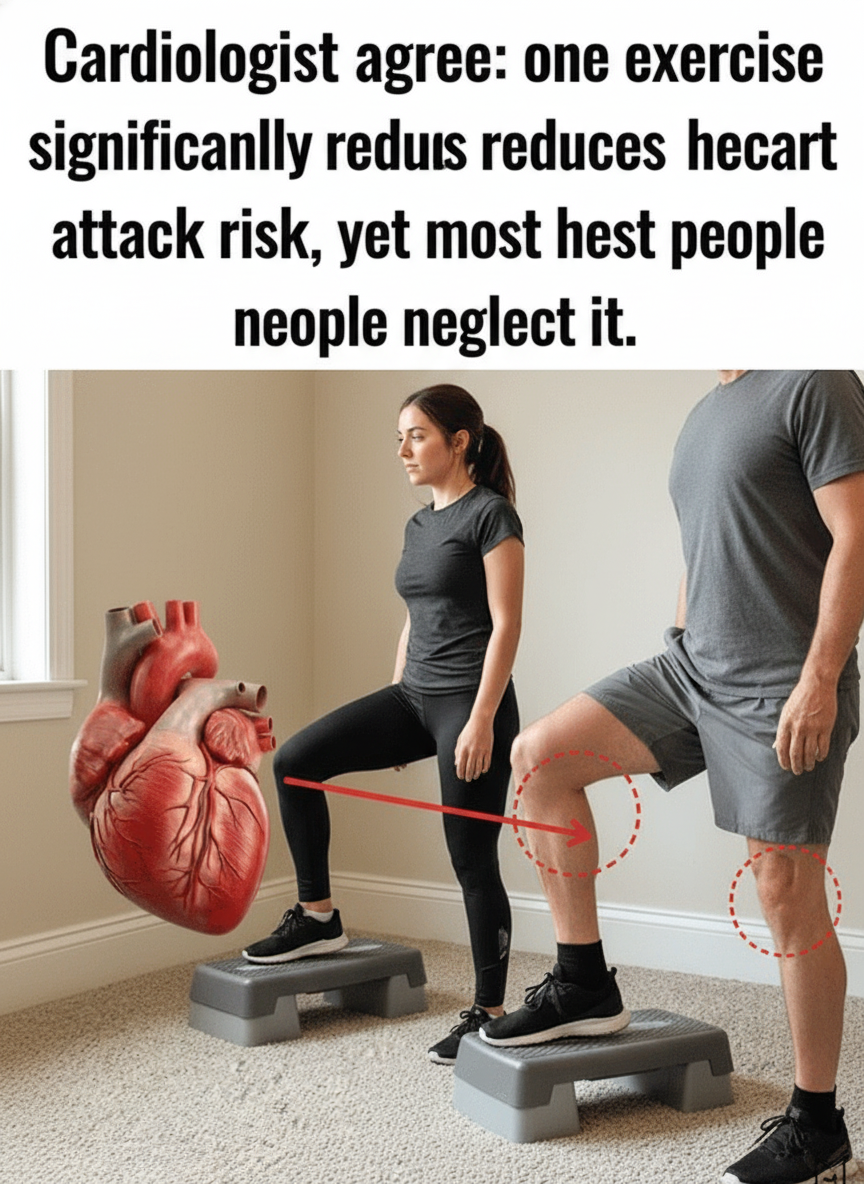
- Mimics the natural pumping action that occurs during brisk walking or stair climbing.
- Helps re-engage calf muscles that might be underutilized due to slow walking or prolonged sitting.
Simple Step-by-Step Guide:
You can safely try this at home:
- Stand behind a sturdy chair or near a wall for balance.
- Place your feet shoulder-width apart.
- Slowly lift your heels, rising onto the balls of your feet and toes.
- Hold this elevated position for two seconds.
- Gently lower your heels back to the floor.
- Repeat this movement 10 to 15 times for one set.
Many older adults begin with two sets per day and gradually increase to three or four as they gain strength. But the benefits extend beyond just this.
Why This Small Movement Supports Circulation as We Age
As we age, our circulation naturally undergoes changes. Muscle mass can decline, veins may become less elastic, and many of us spend more time sitting. This combination can impede the return of blood from the legs. Regular calf activation helps counteract these effects in several key ways:
- Encourages Natural Blood Flow: The rhythmic contraction of calf muscles actively assists venous return, much like gently squeezing a tube to help fluid move upward.
- Helps Reduce the “Heavy Leg” Feeling: Many older adults experience tight or tired legs after prolonged sitting. Regular calf activation can help alleviate this sluggish sensation.
- Supports Daily Mobility: Stronger lower leg muscles directly translate to easier walking, standing up, and climbing stairs, enhancing overall independence.
- Promotes Gentle Daily Movement: Often, the greatest health risk isn’t a lack of intense exercise, but prolonged periods of inactivity. Short movement breaks, like calf raises, keep the body engaged throughout the day.
Walking vs. Calf Raises: Why Both Work Best Together
Walking remains one of the best forms of movement for older adults, benefiting heart health, balance, and mood. However, walking alone may not fully activate the calf muscles for everyone. Here’s a simple comparison:
| Activity | Main Benefit | Calf Muscle Activation |
|---|---|---|
| Slow Walking | Gentle movement & mobility | Moderate |
| Brisk Walking | Cardiovascular stimulation | Higher |
| Stair Climbing | Leg strength & endurance | Strong |
| Calf Raises | Direct calf muscle pump activation | Very Strong & Targeted |
While walking is excellent, incorporating targeted calf raises ensures these vital “second heart” muscles are fully engaged, providing comprehensive support for your circulatory system. Together, they form a powerful duo for a healthier, more active you.