 By admin
 You probably feel good after a daily walk, proud of the effort. Yet, have you ever noticed younger individuals effortlessly tackling stairs while your own legs feel stiff or heavy? Many older adults believe “a little movement” is sufficient for heart health. However, a crucial muscle group vital for efficient circulation is often completely overlooked.
This simple habit takes just minutes a day, yet many cardiologists emphasize its significant role in maintaining healthy blood flow throughout the body. What is this forgotten movement? The answer might surprise you, and by the end of this article, you’ll understand why heart specialists quietly advocate for it, especially for older adults.
Your Calves: The Body’s “Second Heart”
While the heart is central to circulation, it’s a team effort. Deep within your lower legs are powerful muscles that actively pump blood back towards the heart with every ankle movement or step you take. Physiologists often refer to this vital mechanism as the calf muscle pump. Here’s how it works and why it becomes even more critical as we age:
- As you walk or lift your heels,
- Your calf muscles contract.
- This gently squeezes the veins in your lower legs.
- Blood is then efficiently pushed upward, back to the heart.
Prolonged inactivity of these muscles can significantly slow blood flow from the legs, explaining why sitting for hours often leads to swollen or heavy-feeling legs. Research published in cardiovascular physiology journals highlights that regular activation of the calf muscles can dramatically improve circulation efficiency and overall vascular health.
Crucially, even those who walk daily might not be fully engaging their calf muscles, especially if their stride is short or slow. But there’s a straightforward exercise that directly targets them.
The Overlooked Exercise Cardiologists Recommend: Calf Raises
The solution is surprisingly simple: Calf Raises. While often seen performed by athletes, this exercise is incredibly beneficial for older adults. It directly activates the muscles essential for assisting lower leg circulation.
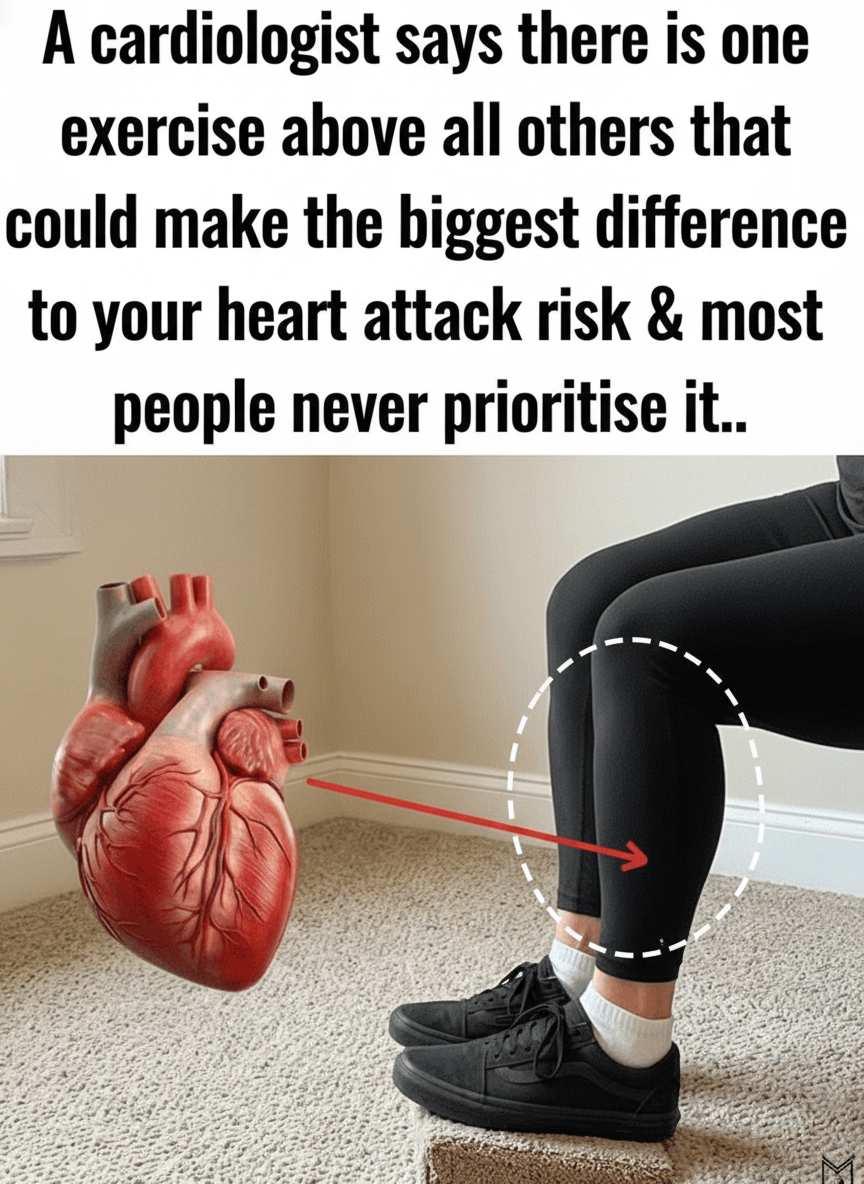
Calf raises effectively mimic the natural pumping action that occurs during brisk walking or climbing stairs. Since many people walk slowly or spend significant time sitting, their calf muscles rarely get fully engaged. Calf raises help restore this vital motion.
Simple Step-by-Step Guide to Calf Raises
- Stand behind a sturdy chair or near a wall for balance.
- Position your feet shoulder-width apart.
- Slowly lift your heels, rising onto the balls of your feet and toes.
- Hold this elevated position for two seconds.
- Gently lower your heels back to the floor.
- Repeat this movement 10 to 15 times. Rest, then perform another set. Many older adults begin with two sets daily, gradually increasing to three or four.
Why This Small Movement Boosts Circulation as You Age
As we age, our circulatory patterns naturally evolve. Muscle mass tends to decline, veins become less elastic, and many individuals spend more time sitting. This combination can impede blood return from the legs. Regular calf activation directly counteracts these effects, supporting healthy circulation in several key ways:
- Enhances Natural Blood Flow: The rhythmic contraction of your calf muscles actively aids venous return, much like gently squeezing a tube to help fluid move upwards.
- Alleviates “Heavy Leg” Sensation: Many older adults experience tight or tired legs after prolonged sitting. Consistent calf muscle activation can significantly reduce this sluggish feeling.
- Boosts Daily Mobility: Stronger lower leg muscles directly translate to easier walking, standing up from a seated position, and navigating stairs.
- Encourages Gentle Daily Activity: The greatest health risk often isn’t a lack of intense exercise, but rather extended periods of inactivity. Short, targeted movement breaks like calf raises keep the body engaged.
Is Walking Enough? Walking vs. Calf Raises
Walking is undoubtedly one of the best forms of exercise for older adults, promoting heart health, balance, and mood. However, walking alone may not always provide sufficient calf muscle activation for everyone. Here’s a brief look at how different activities engage your calves:
- Slow Walking: Offers gentle movement and mobility, with moderate calf muscle activation.
- Brisk Walking: Provides cardiovascular stimulation and higher calf engagement.
- Stair Climbing: Builds leg strength and endurance, leading to strong calf activation.
- Calf Raises: Directly targets and strongly activates the calf muscles, specifically enhancing the “calf muscle pump.”
For optimal circulatory health and lower body strength, combining regular walking with targeted calf raises offers a powerful, synergistic approach.