 By admin
 Many of us overlook our tongue, thinking it’s just for taste. Yet, this often-ignored organ can be a powerful mirror reflecting your inner health. Subtle changes in its color and texture can signal everything from minor lifestyle habits to more serious underlying conditions. Just like an older gentleman who dismissed his yellow tongue as just coffee stains, many miss these early warnings. Learning to “read” your tongue each morning can provide vital clues about your well-being, often before bigger issues arise.
What a Healthy Tongue Looks Like
A healthy tongue is typically light pink, adorned with tiny bumps called papillae, which aid in taste and texture perception. This appearance suggests good hydration, balanced nutrition, and effective oral hygiene. Key characteristics include:
- Light pink color
- Small, evenly distributed papillae
- Thin or no coating
- Absence of cracks, swelling, or unusual patches
Dentists often refer to the tongue as a daily health mirror, with changes sometimes hinting at diet, hydration, and oral bacteria balance.
1. White or Pale Tongue: More Than Just Buildup
A white or heavily coated tongue is a common observation. While it can simply indicate a buildup of bacteria and dead cells from skipped brushing or tongue cleaning, thicker, uneven white patches might suggest oral yeast overgrowth (oral thrush), particularly after antibiotic use. Other contributing factors include:
- Poor oral hygiene
- Dry mouth
- Weak immune system
- Smoking
- Recent antibiotic use
It’s important to note that this isn’t necessarily a sign of aging; often, improved oral care can resolve the coating within days.
2. Bright Red Tongue: Inflammation or Deficiency?
A bright red or inflamed tongue can feel sore and sensitive. While spicy foods or hot drinks can cause temporary redness, persistent vivid redness might signal allergic reactions to food or medication. You might also experience:
- Burning sensation
- Swelling
- Itching
- A smooth, shiny surface
Certain vitamin deficiencies can also lead to a red appearance due to shrinking papillae. Consider any new foods, supplements, or medications recently introduced.
3. Yellow Tongue: Bacterial Accumulation
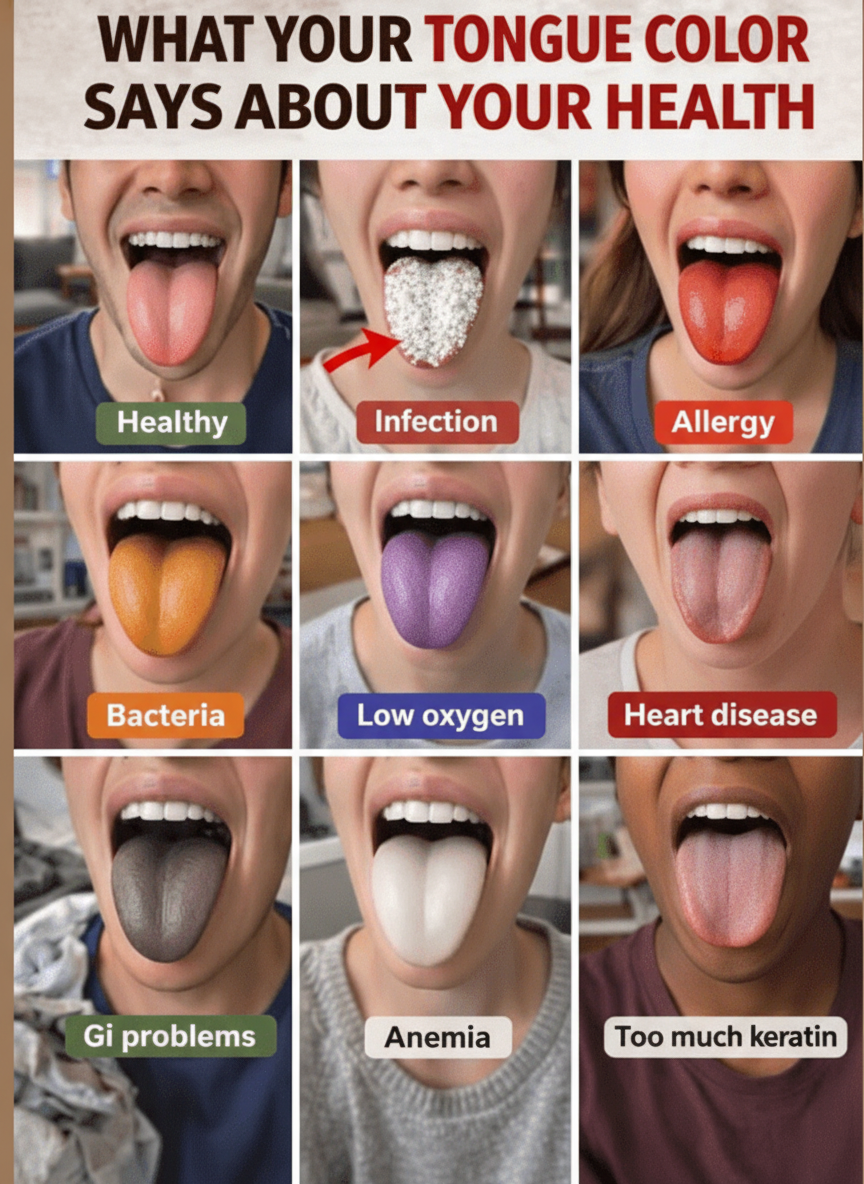
A yellow coating on the tongue typically develops gradually from bacterial accumulation on the tongue’s surface. Factors like smoking, dehydration, or dry mouth can make this more pronounced. Common habits contributing to a yellow tongue include:
- Skipping tongue cleaning
- Smoking cigarettes
- Excessive coffee or alcohol consumption
- Dehydration
- Poor digestion habits
Fortunately, this change often improves with adjustments to hygiene routines, such as regular tongue brushing or using a tongue scraper.
4. Blue or Purple Tongue: A Serious Warning
A bluish or purplish tongue is less common but signals a more urgent concern. This color can indicate lower-than-normal blood oxygen levels, often linked to breathing difficulties or circulation problems. Potential causes include:
- Respiratory conditions
- Poor circulation
- Severe cold exposure
- Certain heart conditions
If accompanied by shortness of breath, dizziness, or chest discomfort, seek immediate medical attention.
5. Dark Red Tongue: Stress and Inflammation
A dark red tongue can appear during periods of significant inflammation, fever, or circulatory stress. This suggests the body is under duress and may be fighting an infection or experiencing heightened internal activity.
Don’t Ignore Your Tongue’s Messages
Your tongue offers a simple, daily glimpse into your overall health. Regular self-checks can empower you to notice subtle changes and address potential issues early, keeping you proactive about your well-being.