 By admin
 Are you sitting at the dinner table, noticing your family’s energy while you quietly feel stiff joints, dull skin, or struggle with small print? It’s a common, yet uncomfortable, realization for many adults: our daily meals might be subtly missing something vital. The truth is, small nutritional gaps can gradually impact how we feel every day. But here’s the encouraging news: a few simple foods, likely already in your kitchen, can help support the vitamins your body needs. And by the end of this article, you’ll discover one surprisingly easy habit many older adults often overlook.
Why These 4 Vitamins Are Crucial After 50
As we age, our bodies naturally become less efficient at absorbing and utilizing certain nutrients. This isn’t a flaw, but a natural part of life. However, a common mistake is continuing to eat the same way we did twenty years ago, even though our bodies now require slightly different nutritional support.
Fat-soluble vitamins—Vitamin A, Vitamin D, Vitamin E, and Vitamin K—play pivotal roles in everyday bodily functions. According to nutrition research published in journals like Nutrients and The American Journal of Clinical Nutrition, these vitamins are frequently found to be lower in the diets of older adults.
Each vitamin contributes uniquely to your health:
- Vitamin A: Supports vision and immune balance.
- Vitamin D: Essential for strong bones and muscle strength.
- Vitamin E: Protects cells and supports skin health.
- Vitamin K: Key for normal blood clotting and bone structure.
Crucially, these vitamins often work synergistically. By including a variety of colorful foods in your diet, you provide your body with a more balanced nutritional foundation. But that’s not all; the following sections reveal everyday foods that can quietly supply these essential nutrients.
Vitamin A: For Sharp Vision and Strong Immunity
Many adults notice changes in night vision or difficulty reading in dim light as they age. Vitamin A is vital for maintaining normal vision and a healthy immune system. The good news is that Vitamin A-rich foods are often brightly colored and easy to incorporate into meals.
Common Vitamin A food sources include:
- Carrots
- Pumpkin
- Sweet potatoes
- Apricots
- Red bell peppers
- Liver (in small amounts)
Many plant foods contain beta-carotene, which your body can convert into Vitamin A as needed, making colorful vegetables a gentle and safe way to support your intake. Try adding shredded carrots to salads, roasting pumpkin cubes with olive oil, blending apricots into smoothies, or including red peppers in stir-fries. Remember, Vitamin A is best absorbed when eaten with a small amount of healthy fat, like olive oil or avocado.
Vitamin D: The Bone and Muscle Ally
If there’s one nutrient frequently discussed with older adults, it’s Vitamin D. Why? Because reduced time outdoors often means less natural sunlight exposure, which is crucial for the body’s Vitamin D production. Low Vitamin D intake has been consistently linked to reduced bone density and muscle weakness in older populations, as shown in numerous studies.
Food sources containing Vitamin D include:
- Fatty fish such as salmon and sardines (naturally high)
- Egg yolks (moderate)
- Fortified milk and plant beverages (added Vitamin D)
- Fortified spreads
- Mushrooms exposed to sunlight (moderate)
Practical tips for daily meals: add canned sardines to salads, enjoy eggs for breakfast, drink a glass of fortified milk with lunch, or include salmon once or twice per week.
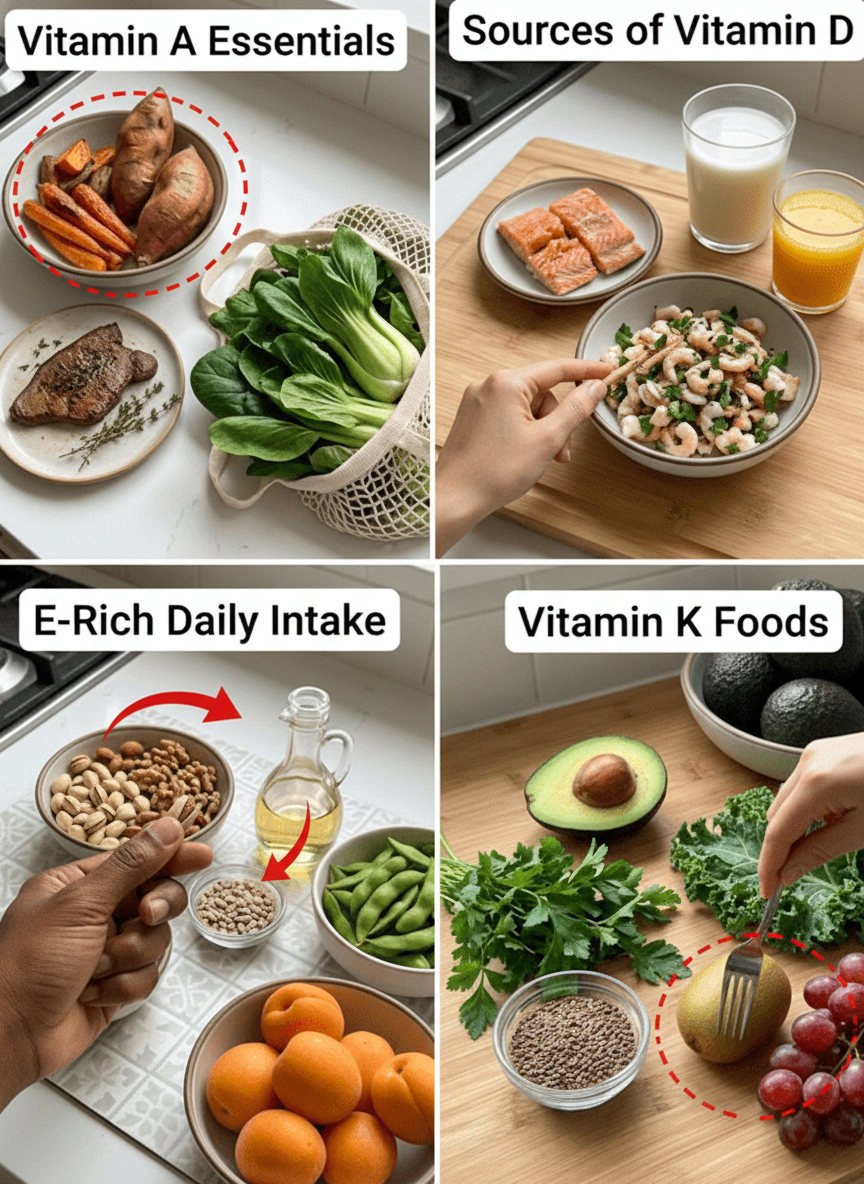
Vitamin E: Your Cellular Shield
While many associate Vitamin E primarily with skin health, its role is far more profound. Vitamin E acts as a powerful antioxidant, helping to protect your cells from the daily wear and tear caused by normal metabolism and environmental stress. Research suggests that diets rich in nuts and seeds are associated with better overall nutrient balance.
Foods naturally rich in Vitamin E include:
- Almonds
- Hazelnuts
- Sunflower seeds
- Pine nuts
- Kiwi fruit
- Vegetable oils (such as sunflower or olive oil)
Even small portions are beneficial, such as a handful of almonds or a sprinkle of sunflower seeds on your salad.
Vitamin K: Supporting Blood and Bones
Often overshadowed, Vitamin K is essential for normal blood clotting and plays a critical role in maintaining strong bone structure. It works in conjunction with Vitamin D to help regulate calcium in the body, directing it to where it’s needed in bones and preventing its buildup in arteries.
Foods naturally rich in Vitamin K include:
- Leafy green vegetables (kale, spinach, collard greens, Swiss chard)
- Broccoli
- Brussels sprouts
- Cabbage
- Parsley
- Certain fermented foods
Incorporating a variety of these greens into your diet through salads, stir-fries, or side dishes is an excellent way to boost your Vitamin K intake.
The Overlooked Habit: Embrace Variety and Consistency
Here’s the surprisingly easy habit many older adults overlook: consistently embracing dietary diversity. It’s easy to fall into a routine of eating the same few meals, but your body thrives on a wide array of nutrients found across different food groups. By consciously varying your food choices, you ensure a broader spectrum of vitamins, minerals, and antioxidants, allowing these four essential vitamins (A, D, E, K) to work together more effectively.
Simple Steps to a Brighter You
- Eat a Rainbow: Aim to include a variety of colorful fruits and vegetables in your meals every day. Each color often signifies different nutrients.
- Don’t Fear Healthy Fats: Remember that Vitamins A, D, E, and K are fat-soluble. Always pair these nutrient-rich foods with healthy fats like olive oil, avocado, or nuts for optimal absorption.
- Listen to Your Body: Pay attention to how different foods make you feel. Small changes can make a big difference.
- Consult a Professional: If you have concerns about your nutrient intake, talk to your doctor or a registered dietitian. They can offer personalized advice tailored to your specific needs.
By making these simple, consistent choices, you can proactively support your body’s nutritional needs after 50, helping you feel more energetic, sharper, and healthier every day.