 By admin
 A seemingly minor misstep – a rolled ankle while stepping off a curb – can often be brushed off as ‘just a twist.’ For many older adults, however, what begins as a fleeting moment of discomfort can quietly evolve into persistent weakness, stiffness, or instability, long after the initial pain subsides. This uncomfortable truth often leads to a cycle of re-injury or reduced mobility, simply because the initial sprain wasn’t given the attention it deserved. The good news? Understanding why this happens and adopting a few simple daily habits and gentle exercises can make a significant difference in maintaining ankle stability and preventing future issues.
Why Ankle Sprains Are So Common in Adults Over 50
An ankle sprain occurs when the ligaments, the tough bands of tissue holding bones together and stabilizing joints, are stretched beyond their normal capacity. As we age, these ligaments naturally lose some of their elasticity and strength. This means movements that once felt harmless, like stepping on uneven ground or quickly turning, can now easily lead to a twist.
Most sprains happen when the foot rolls inward, a common “inversion injury” that stresses the outer ankle ligaments. Less frequently, the foot rolls outward or the ankle twists during rapid movements. Regardless of the mechanism, a crucial point often overlooked is this: a sprain isn’t just a fleeting moment of pain. It’s a signal that the stabilizing structures of your joint have been compromised. If these structures don’t fully regain their strength and coordination, your ankle can feel unstable long after the initial swelling disappears.
Understanding Ankle Sprain Severity: Beyond the Pain
Ankle sprains are typically classified into three levels:
- Mild (Grade 1): Ligaments are stretched. Expect mild swelling, but walking is usually still possible.
- Moderate (Grade 2): A partial tear of the ligament. Noticeable swelling, bruising, and uncomfortable walking are common.
- Severe (Grade 3): A complete ligament tear. Significant swelling, severe pain, and difficulty bearing weight on the foot.
Here’s a critical insight: pain alone doesn’t always reflect the true severity. Many individuals with moderate injuries might feel manageable pain initially, leading them to skip proper rehabilitation. This decision, unfortunately, often results in ongoing weakness and a higher risk of future sprains. Studies consistently show that incomplete rehabilitation is a primary reason for recurrent ankle injuries later in life.
Symptoms Older Adults Should Never Ignore
When an ankle is twisted, your body sends clear signals. The challenge is recognizing and respecting them:
- Pain around the ankle joint
- Swelling that develops within hours
- Bruising or discoloration
- Difficulty walking normally or bearing weight
- A feeling that the ankle may “give way”
- Persistent stiffness, especially in the morning
Many attribute persistent stiffness or instability to “just getting older,” but it often indicates that the joint hasn’t fully recovered its normal movement patterns. This brings us to another vital concept: proprioception. Proprioception is your body’s ability to sense the position and movement of your joints. When ligaments are stretched or damaged, this system can become less responsive. Essentially, your brain receives slower or less accurate signals from your ankle, significantly increasing the risk of another misstep. This is why effective rehabilitation focuses not only on strength but crucially on balance and coordination.
Gentle Exercises to Restore Ankle Mobility and Stability
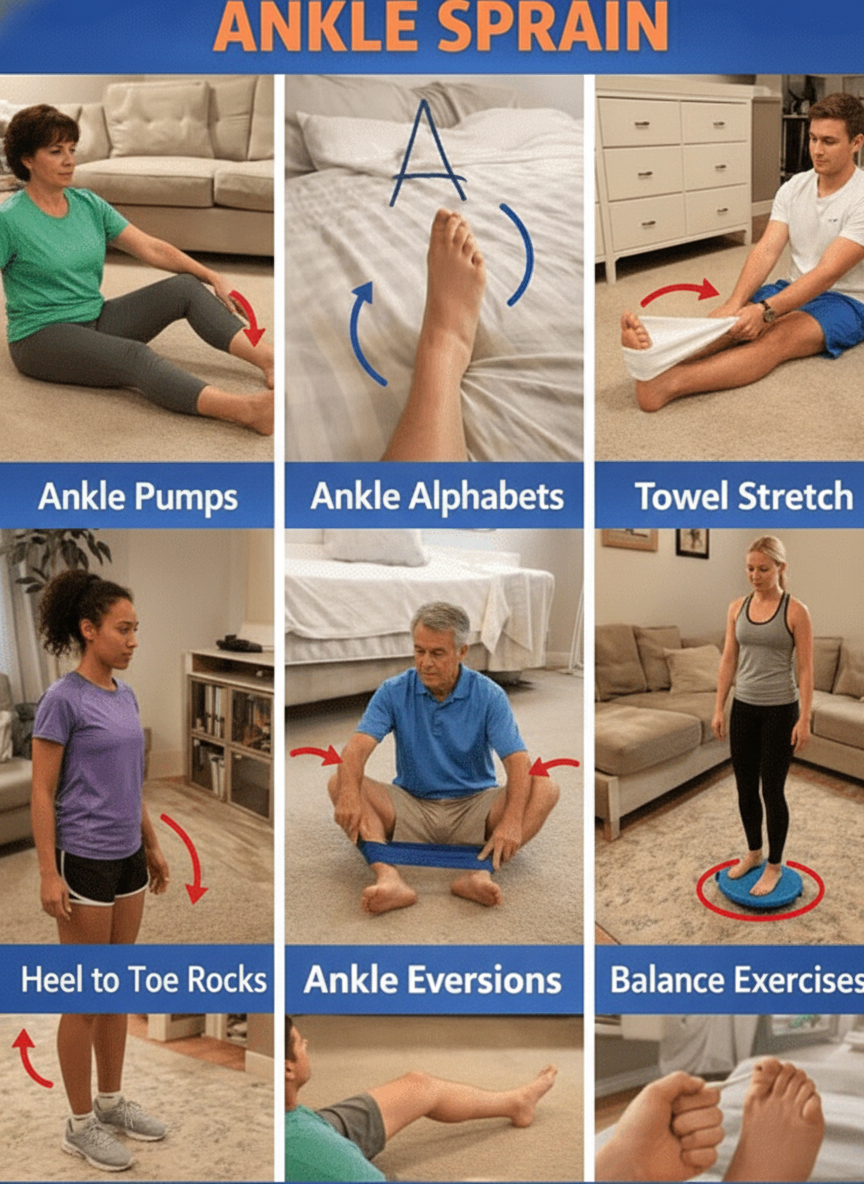
Once initial pain and swelling subside, incorporating gentle, movement-based exercises can significantly aid recovery, improve circulation, and restore coordination. These are commonly recommended by physical therapists:
- Ankle Pumps: Sit comfortably with your leg extended. Slowly move your foot up and down, pointing your toes away and then pulling them towards you. This encourages blood flow and reduces stiffness.
- Ankle Alphabet: Lift your foot slightly off the ground. Imagine writing each letter of the alphabet in the air using your toes. This gently activates multiple ankle muscles and improves range of motion.
- Heel-to-Toe Rocking: While standing near a stable support (like a chair or counter), gently rock your weight from your heels to your toes. This improves balance and ankle stability.
Consistency is key with these exercises. Remember, even a “simple twist” can have lasting implications if ignored. By understanding the risks and proactively engaging in gentle rehabilitation, older adults can significantly improve ankle stability, reduce the risk of re-injury, and maintain an active, pain-free lifestyle. Always consult with a healthcare professional or physical therapist before starting any new exercise program, especially after an injury.