 By admin
 Decoding Your Body’s Signals: Magnesium, Potassium, and Calcium Imbalance & How to Restore Harmony
Do you often feel a persistent drag, even after a full night’s sleep? Are you plagued by sudden, painful muscle cramps or unsettling heart palpitations that seem to come from nowhere? These frustrating symptoms might be more than just everyday annoyances; they could be your body’s urgent message that your essential magnesium, potassium, and calcium levels are out of balance. When these vital electrolytes dip too low, simple daily tasks become a struggle, and your overall quality of life diminishes in subtle yet significant ways. The constant worry about unexplained fatigue, unexpected cramps, or an irregular heartbeat can steal your peace of mind.
But here’s the empowering truth: by learning to recognize these early warning signs, you can take practical, natural steps to support healthier mineral levels. Rebalancing these crucial nutrients can reignite your energy, alleviate discomfort, and bring back the vitality you’ve been missing.
🌿 The Indispensable Trio: Magnesium, Potassium, and Calcium
Magnesium, potassium, and calcium are more than just minerals; they are the bedrock electrolytes that orchestrate countless bodily functions. Think of them as a highly interconnected team:
- Magnesium: A powerhouse for energy production, nerve function, and muscle relaxation.
- Potassium: Crucial for regulating heartbeat, maintaining fluid balance, and supporting nerve signals.
- Calcium: Essential for strong bones, muscle contractions, and nerve transmission.
These three work in profound synergy. A deficiency in one often impacts the others, creating a domino effect that influences everything from your energy levels and sleep quality to your mood and heart health. Modern research consistently highlights the deep connection between balanced magnesium, potassium, and calcium levels and overall well-being. If you’ve been feeling “off,” an electrolyte imbalance could be a key factor. The good news? Addressing these imbalances through diet and lifestyle often leads to remarkable improvements.
🌡️ Why Your Mineral Levels Might Be Out of Sync
Several common factors can deplete your magnesium, potassium, and calcium stores, often faster than you realize. Understanding these causes is the first step toward prevention:
- Intense Physical Activity & Heavy Sweating: Both lead to significant mineral loss.
- Digestive Issues: Conditions like chronic diarrhea or malabsorption can hinder nutrient uptake.
- Certain Medications: Some drugs can interfere with mineral absorption or increase excretion.
- High Stress Levels: Chronic stress can deplete magnesium, in particular.
- Processed Diets: Foods high in refined sugars and low in fresh produce lack essential minerals.
- Medical Conditions: Diabetes, kidney problems, and other health issues can disrupt electrolyte balance.
- Excessive Alcohol Intake: Alcohol acts as a diuretic, increasing mineral loss.
- Over-Hydration: Drinking too much plain water without replenishing electrolytes can dilute mineral concentrations.
These everyday culprits explain why so many people experience the frustrating symptoms associated with imbalanced mineral levels.
⚠️ 8 Key Warning Signs of Mineral Imbalance
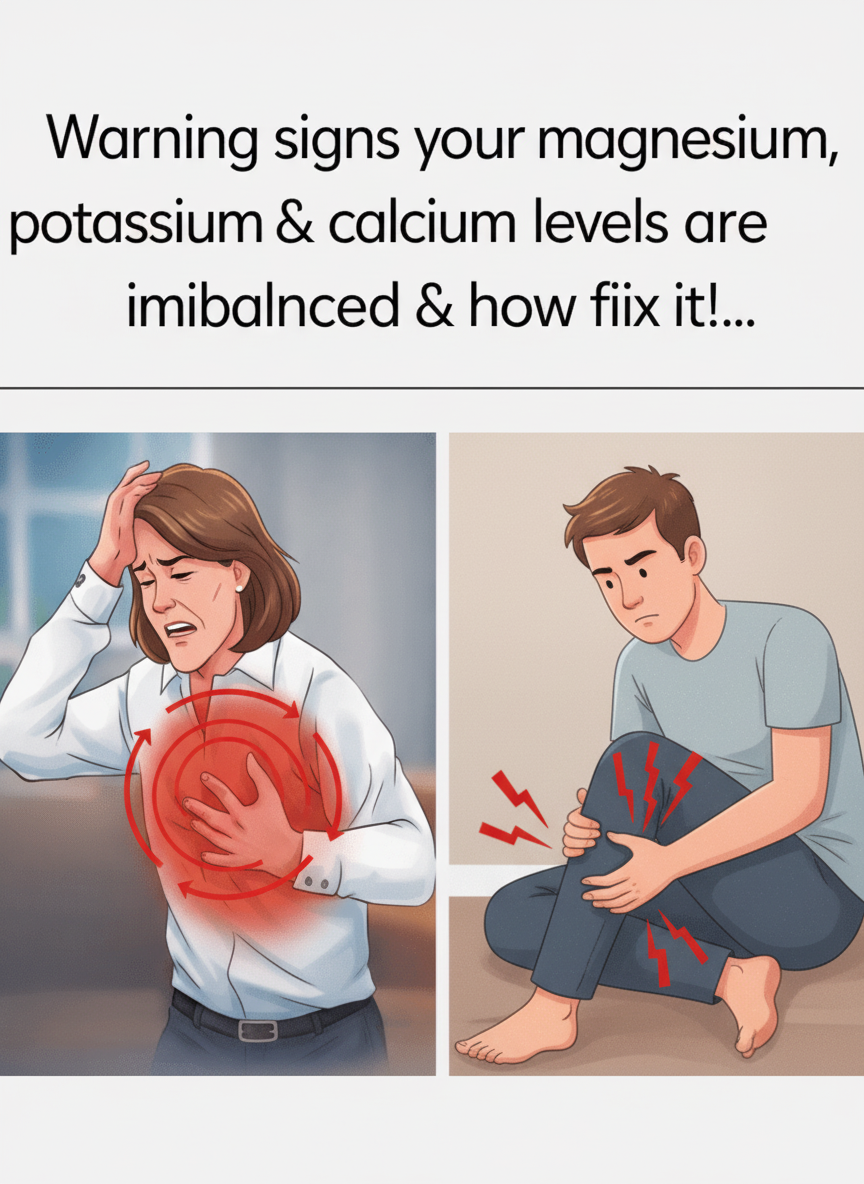
Your body is an expert communicator, sending clear signals when magnesium, potassium, and calcium levels are suboptimal. Pay close attention to these common indicators:
- Persistent Fatigue: Unrelenting tiredness that doesn’t improve with rest often signals insufficient magnesium, potassium, and calcium affecting cellular energy.
- Frequent Muscle Cramps & Spasms: Especially common at night, these are classic indicators that your magnesium and potassium levels need support.
- Heart Palpitations or Irregular Heartbeat: A concerning symptom that can arise when potassium and magnesium levels are low, impacting cardiac rhythm.
- Muscle Weakness or Twitching: Makes daily activities harder and is a strong signal of potential electrolyte imbalance.
- Tingling or Numbness (Paresthesia): Commonly felt in the hands and feet, often linked to low calcium and magnesium.
- Increased Anxiety or Mood Swings: Magnesium deficiency, in particular, can significantly impact emotional well-being and stress response.
- Difficulty Sleeping: Trouble falling asleep or staying asleep can result from suboptimal magnesium, potassium, and calcium levels, affecting nerve relaxation.
- Bone or Joint Discomfort: Over time, chronic low calcium, combined with magnesium and potassium deficiencies, can contribute to bone density issues and joint pain.
Recognizing these signs early empowers you to make proactive changes before symptoms escalate. Many individuals report significant improvements in their well-being after naturally focusing on supporting their magnesium, potassium, and calcium levels.
🥬 Nourishing Your Body: Top Foods for Mineral Balance
Diet remains one of the most effective and natural ways to restore and maintain healthy magnesium, potassium, and calcium levels. Integrate these power-packed foods into your daily meals:
Excellent Magnesium Sources:
- Pumpkin Seeds (among the richest sources)
- Spinach & Swiss Chard
- Almonds & Cashews
- Dark Chocolate (70% cocoa or higher)
- Avocados
- Legumes (black beans, lentils)
Potassium-Rich Foods:
- Bananas & Sweet Potatoes
- Beans, Lentils, & Chickpeas
- Coconut Water
- Salmon
- Leafy Greens (spinach, kale)
- Avocados
- Tomatoes
Vital Calcium Sources:
- Dairy Products (milk, yogurt, cheese)
- Fortified Plant Milks (almond, soy, oat)
- Leafy Greens (collard greens, kale, bok choy)
- Sardines & Canned Salmon (with bones)
- Tofu (calcium-set)
- Broccoli
- Fortified Cereals
By prioritizing a diet rich in these whole, unprocessed foods, you provide your body with the essential building blocks to maintain optimal mineral balance, fostering greater energy, comfort, and overall health.