 By admin
 You shift uncomfortably, a nagging ache in your knee. You tell yourself it’s “just aging,” but a persistent doubt lingers. This discomfort, sometimes sharp, sometimes dull, is more than just an inconvenience; it can disrupt sleep and daily life. Ignoring it is common, but here’s a critical truth: not all pain is the same, and misunderstanding its source can delay the right treatment. By the end of this guide, you’ll learn a remarkably simple method to differentiate between bone and muscle pain right at home.
🦴 Understanding Bone Pain: What Your Body Is Really Telling You
Bone pain isn’t merely intense discomfort; it possesses distinct characteristics that signal something more profound. Here’s how it’s typically described:
- Deep, Aching Sensation: It feels like it originates from deep within the bone.
- Persistent Discomfort: It doesn’t subside with rest.
- Specific Localisation: You can often pinpoint the exact spot with one finger.
Crucially, bone pain often remains unchanged by movement. Whether you sit, stand, or lie down, the sensation persists. Medical observations suggest bone-related discomfort can indicate structural issues, such as minor injuries, age-related bone thinning, or inflammation. Look out for these subtle indicators:
- Pain that wakes you up at night.
- Tenderness directly over a bone.
- Swelling in a localized area.
The takeaway: Persistent bone pain is stubborn and demands closer attention.
💪 Muscle Pain Explained: The Common Ache Most People Experience
Muscle pain is familiar to many, yet often misunderstood. Here’s what it typically feels like:
- Sore, Tight, or Cramp-like: A sensation of tightness or a “charley horse.”
- Widespread Area: Tends to spread across a broader region, less precise.
- Sensitive to Touch or Movement: Pressure or motion often aggravates or alleviates it.
A key differentiator is that muscle pain often changes with movement. Gentle stretching, walking, or massage might offer relief, or cause temporary discomfort that improves afterward. Common daily triggers include:
- Overexertion from physical activity.
- Sleeping in an awkward position.
- Stress and accumulated body tension.
- Mild dehydration.
The takeaway: Unlike bone pain, muscle discomfort typically improves within a few days with rest and gentle care.
⚖️ Bone Pain vs. Muscle Pain: A Quick Comparison
To simplify, here’s a side-by-side guide:
| Feature | Bone Pain 🦴 | Muscle Pain 💪 |
|---|---|---|
| Sensation | Deep, dull, throbbing | Achy, tight, cramping |
| Location | Very specific point | Broader, less precise |
| Movement | Little to no change | Worse or better with motion |
| Duration | Persistent | Temporary |
| Touch | Deep tenderness | Surface soreness |
The most telling clue often lies in how your pain reacts to movement.
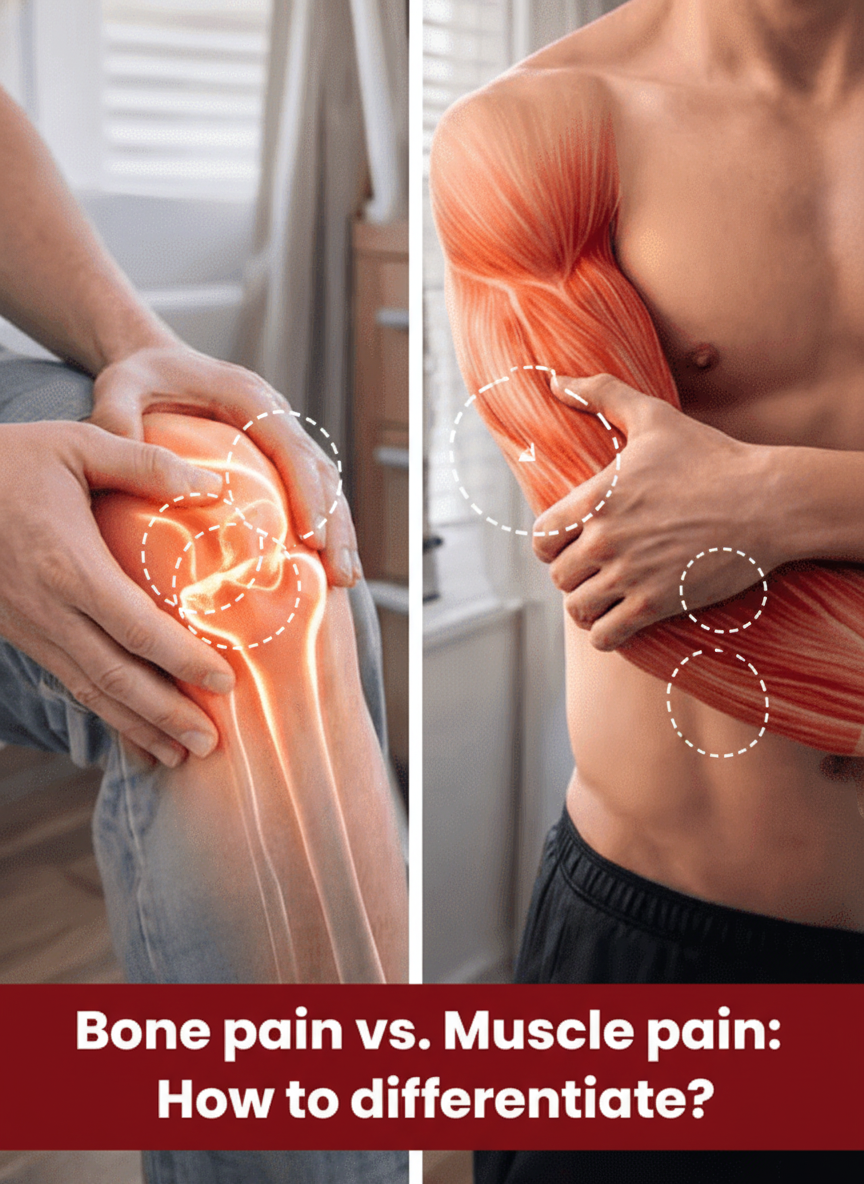
🚶 A Simple At-Home Check You Can Try
If you’re unsure about your pain’s origin, try this gentle self-assessment:
- Completely rest the affected area for a few minutes.
- Slowly move or gently stretch the area.
- Lightly press around the painful spot.
Now, observe:
- Does movement change the pain? → Likely muscle-related.
- Does it stay the same regardless of movement? → Could be deeper, possibly bone-related.
- Does pressing the surface hurt more? → Often muscle.
- Does it feel deep and unaffected by surface pressure? → Pay closer attention.
This exercise isn’t about self-diagnosis but enhancing your body awareness.
⚠️ When to Seek Professional Medical Advice
Some warning signs should never be ignored. Consult a healthcare professional if you experience:
- Pain lasting longer than a week without improvement.
- Pain that worsens instead of getting better.
- Difficulty moving or bearing weight.
- Swelling, redness, or warmth around the painful area.
- Pain following a fall or minor injury that doesn’t resolve.
Persistent pain, especially as we age, consistently warrants medical evaluation. Delaying can lead to regrets.
🧠 Simple Daily Habits to Keep Pain at Bay
Proactive care doesn’t require complex routines. Incorporate these habits into your daily life:
- Gentle stretching each morning.
- Staying well-hydrated throughout the day.
- Avoiding prolonged periods of sitting; take regular movement breaks.
- Maintaining good posture while sitting and sleeping.
- Engaging in light activity, like walking, to keep muscles active.
Remember, consistency is key to supporting your body’s long-term health.