 By admin
 Menopause typically arrives between ages 45 and 55, but for 5-10% of women, it can make an earlier, often unexpected appearance. Known as early menopause when it occurs before 45, or premature ovarian insufficiency (POI) if before 40, this shift can profoundly impact your well-being. The abrupt decline in hormones, particularly estrogen and progesterone, can disrupt everything from your energy levels and mood to sleep, sexual health, and even long-term bone and heart health.
Recognizing these early signals is crucial. Early detection empowers you to manage symptoms effectively, safeguard your future health, and explore appropriate interventions like hormone therapy, lifestyle adjustments, or specialist care. Here are the 10 most common early warning signs, along with additional clues often overlooked.
10 Key Signs of Early Menopause
1. Irregular Periods or Cycle Changes
Often the first indicator. Your once-predictable cycle might become shorter (<25 days), longer (>35 days), heavier, lighter, or skip months entirely. This shift from regularity to unpredictability is a significant red flag.
2. Hot Flashes & Night Sweats
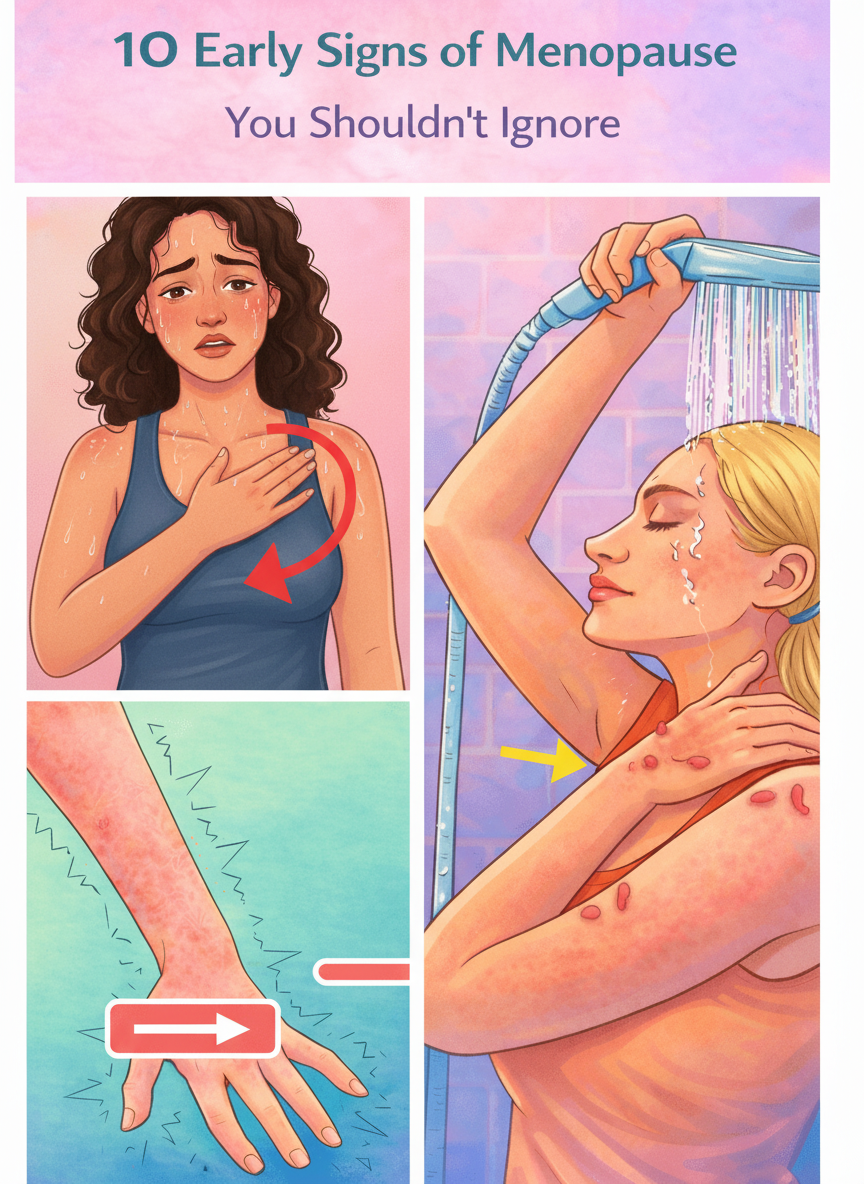
Sudden, intense waves of heat surge through your chest and face, frequently followed by chills. Night sweats can be severe enough to drench your sheets and disrupt sleep, even if you’re only in your late 30s or early 40s.
3. Vaginal Dryness & Discomfort During Sex
Thinning and drying of vaginal tissues (genitourinary syndrome of menopause) can begin early. This may lead to painful intercourse, increased urinary urgency, recurrent UTIs, or light spotting after sex.
4. Sleep Disturbances
Difficulty falling asleep, frequent awakenings, or waking too early without being able to return to sleep, often independent of night sweats. Poor sleep then exacerbates daytime fatigue, mood swings, and brain fog.
5. Mood Changes, Anxiety, or Irritability
Estrogen influences brain chemicals like serotonin. Rapid hormonal shifts can trigger new or worsening anxiety, low mood, tearfulness, heightened irritability, or even panic-like episodes.
6. Brain Fog & Memory Lapses
Struggling with concentration, forgetting names or words, feeling mentally “cloudy,” or taking longer to process information. Many describe it as “my brain isn’t working like it used to.”
7. Unexplained Weight Gain or Difficulty Losing Weight
A slower metabolism, combined with potential insulin resistance, disrupted sleep, and stress hormones, can lead to gradual fat gain (especially around the midsection) even if your diet and exercise habits haven’t changed.
8. Joint & Muscle Aches
Estrogen helps maintain joint lubrication and reduces inflammation. Declining levels can cause new or worsening stiffness, generalized achiness, or muscle soreness, particularly in the mornings or after periods of inactivity.
9. Hair Thinning or Dryness
Scalp hair may become finer, shed more, or noticeably thin at the part or crown. Conversely, body hair can thin, while facial hair (on the chin or upper lip) sometimes increases due to relative androgen dominance.
10. Reduced Libido & Sexual Changes
Lower estrogen and testosterone levels can decrease sexual desire, arousal, and orgasm intensity. Combined with vaginal dryness, sex may feel less enjoyable or even painful.
Additional Clues You Might Overlook
- Heart palpitations or a racing heart, particularly at night.
- Unexplained dry eyes, dry mouth, or dry skin.
- Increased urinary tract infections (UTIs), urgency, or leakage.
- New or worsening headaches and migraines.
- Bone or joint pain, potentially an early sign of declining bone density.
- “Brain zaps” – electric-shock sensations preceding a hot flash.
- Changes in taste/smell, or a persistent metallic taste.
- Itchy or crawling skin sensations (formication).
When to Consult Your Doctor
Seek prompt medical advice from a gynecologist or endocrinologist if you experience:
- Your periods cease before age 45.
- Severe hot flashes, mood swings, or sleep disruptions significantly impacting daily life.
- Any vaginal bleeding after 12 consecutive months without periods.
- Unusually heavy or prolonged menstrual bleeding.
- Symptoms that negatively affect your work, relationships, or mental well-being.
Diagnostic blood tests, including FSH, estradiol, and AMH, typically performed on day 2-3 of your cycle, can help confirm early ovarian decline, though FSH levels can fluctuate.
Beyond the Symptoms: Why Early Diagnosis Matters
Early menopause isn’t merely an accelerated version of normal aging; it carries increased lifetime risks for significant health issues, including osteoporosis, heart disease, cognitive changes, and genitourinary health concerns, especially if estrogen support is overlooked.
Fortunately, modern medicine offers various management strategies:
- Hormone Therapy (HT): When appropriate, HT can effectively alleviate symptoms and mitigate long-term risks.
- Non-Hormonal Options: Medications like SSRIs, gabapentin, or fezolinetant can help manage specific symptoms.
- Lifestyle Adjustments: Incorporating weight-bearing exercise, ensuring adequate calcium and Vitamin D intake, and exploring phytoestrogens can support overall health.
- Local Treatments: Vaginal moisturizers, lubricants, or low-dose local estrogen can address genitourinary symptoms.
The Bottom Line
If you’re in your 30s or early 40s and recognize several signs from this list, do not dismiss them as “just stress” or “getting older.” Listen to your body and consult a healthcare professional. Early intervention can make a profound difference in managing your symptoms and protecting your long-term health.
”
}
“`