 By admin
 The Ancient Beauty Secret: Rice Water for Radiant Hair and Skin
Imagine a natural, everyday ingredient from your kitchen, cherished for centuries by women in Asia for its power to transform hair and skin. Many of us unknowingly discard this cloudy liquid – rice water – missing out on a time-honored practice now experiencing a modern resurgence. This humble byproduct of rinsing or soaking rice holds roots in traditional beauty routines, with early studies and anecdotal evidence suggesting its potential for enhancing hair elasticity, shine, and skin hydration.
What Exactly Is Rice Water?
Simply put, rice water is the starchy liquid left after soaking or boiling rice. It’s packed with beneficial compounds including starch, amino acids, B vitamins, minerals, and inositol – a key ingredient often praised for its hair-strengthening properties. Historically, cultures like the Yao women of Huangluo village in China, renowned for their exceptionally long hair, have credited fermented rice water rinses. Similarly, ancient Japanese court rituals incorporated rice water for both hair and skin care, hinting at the powerful benefits fermentation can unlock.
Potential Benefits for Hair
Users frequently report that rice water rinses leave their hair feeling smoother, shinier, and less prone to frizz, with improved manageability and a subtle strengthening effect over time. What does science say?
- A 2010 study suggested that compounds in rice water might reduce surface friction on hair, potentially boosting elasticity.
- Inositol, found in rice water, has shown promise in lab settings for repairing damaged hair shafts and improving elasticity.
- Limited reviews indicate rice-derived products could support hair health by influencing growth factors, though most focus on rice bran rather than plain rice water.
Important Note: While promising, no large-scale clinical trials definitively prove rice water dramatically alters hair growth rates or reverses damage for everyone. Results vary, and overuse, especially for low-porosity or protein-sensitive hair, might lead to buildup or dryness. It’s best considered a supportive rinse, not a miracle cure.
Users often distinguish between:
- Plain Soaked Rice Water: Quick to make, offers mild starch content for basic shine and detangling.
- Fermented Rice Water: Left to sit for 1–2 days, developing a slightly sour smell. Many believe fermentation enhances nutrient release for superior conditioning.
How Rice Water Might Support Skin Care
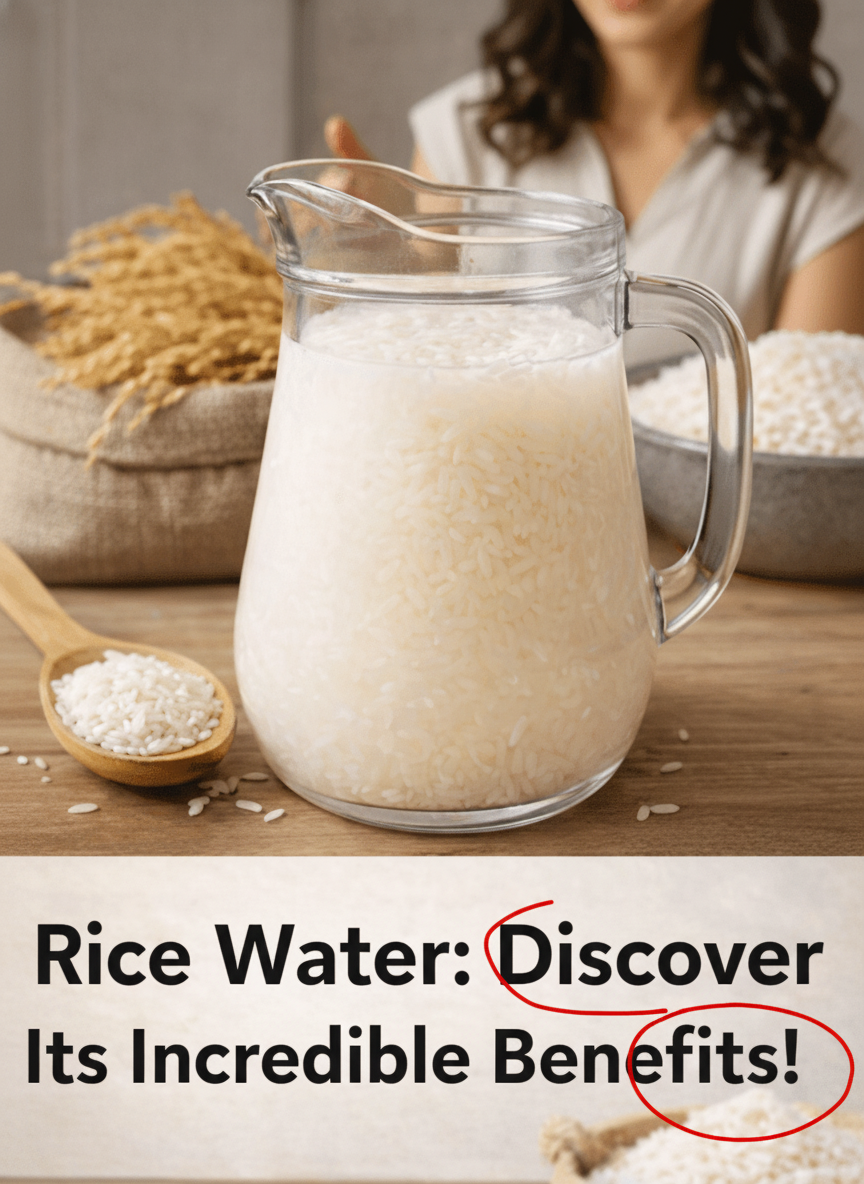
Beyond hair, rice water boasts a rich history in Asian skincare, traditionally used as a toner or soak for a brighter, more even complexion. Preliminary lab research on fermented rice products suggests antioxidant activity, potential hydration support, and mild soothing effects on the skin. One in vitro study even explored rice water gels for anti-aging properties, showing biocompatibility and possible elastase inhibition related to skin firmness.
As with hair, evidence is mostly from smaller studies or traditional use. While it won’t replace your established skincare regimen, many find it a gentle, natural addition to their daily routine.
Step-by-Step: How to Make and Use Rice Water at Home
Ready to explore this ancient ritual? Start small to observe how your hair and skin respond.
Method 1: Quick Soak (Plain Rice Water)
- Take ½ cup uncooked rice (white, brown, or jasmine – organic if possible).
- Rinse thoroughly under running water to remove debris.
- Place rice in a bowl and cover with 2–3 cups clean water. Stir and let soak for 30 minutes.
- Strain the water into a clean jar (discard or cook the rice as usual).
- Dilute if it feels too starchy (add more water).
Method 2: Fermented Version (More Traditional)
- Follow steps 1–5 from Method 1.
- Cover loosely and leave at room temperature for 12–48 hours (until a slightly sour smell develops; warmer climates may expedite this).