 By admin
 Our hands are incredible tools, but they can also be subtle messengers, often revealing early warnings about our overall health. Many people dismiss small changes in their nails, palms, or fingers as harmless or simply a sign of aging. However, these seemingly minor alterations can sometimes be vital clues to what’s happening deeper within your body. Learning to recognize these signals can empower you to seek medical advice sooner, potentially catching underlying conditions early. Let’s explore some common hand signs and what they might indicate.
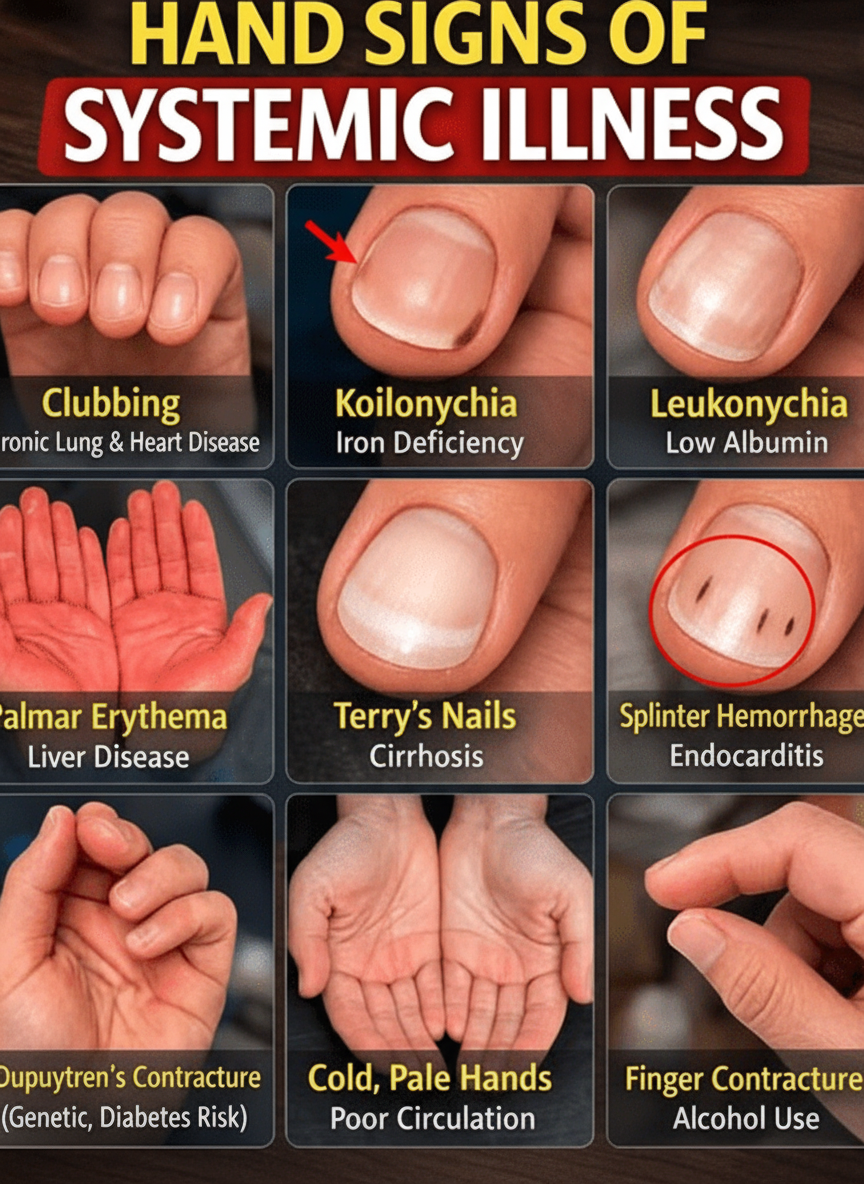
Clubbing Fingers: When Fingertips Become Round and Bulging
Have you ever noticed your fingertips gradually becoming rounder and thicker than usual? This condition, known as clubbing, involves the nails curving downward and the fingertips appearing slightly swollen. Medical experts, including the Cleveland Clinic and MedlinePlus, link clubbing to prolonged periods of low oxygen levels in the body.
Potential underlying causes for clubbing include:
- Long-term lung conditions
- Certain heart conditions
- Digestive or liver-related disorders
Clubbing often develops slowly, making it easy to overlook until a family member points it out. Here’s a quick self-check you can do at home:
A Simple Home Check for Clubbing (Schamroth Sign)
Press the nails of both index fingers together. Normally, a small, diamond-shaped gap should appear between the nails. If this gap disappears, it’s sometimes called the Schamroth sign, which may suggest clubbing. While this simple observation isn’t a diagnosis, it’s a helpful indicator that warrants a conversation with your doctor.
Spoon-Shaped Nails (Koilonychia)
Take a close look at your fingernails. Do they curve inward, resembling a small spoon, instead of arching outward? This pattern is medically termed koilonychia, commonly known as “spoon nails.”
In many instances, spoon nails are associated with:
- Low iron levels in the body (iron is crucial for healthy red blood cell production)
- Other nutritional deficiencies
- Certain digestive conditions
- Long-term exposure to harsh chemicals
It’s important to note that in older adults, spoon nails can also be a simple result of age-related changes in nail growth. Therefore, healthcare professionals always consider your complete health profile, not just the appearance of your nails in isolation.
White Spots on Nails (Leukonychia)
Many people assume the small white marks on their nails signify a calcium deficiency. However, the truth is usually different. These white spots, called leukonychia, are most commonly caused by:
- Minor nail injuries or trauma
- Frequent manicures or excessive pressure on the nails
- Small, temporary disruptions in nail growth
However, if white lines appear across multiple nails simultaneously or persist for a long time, doctors might investigate other possibilities, such as changes in blood protein levels. Research in dermatology highlights that nail color and texture can reflect overall health, which is why nail examination is often part of routine check-ups. If you notice sudden or persistent white spots on multiple nails, it’s worth mentioning at your next medical appointment.
Red Palms (Palmar Erythema)
Have you ever noticed your palms becoming noticeably red, particularly around the thumb and little finger areas? This condition is known as palmar erythema. It occurs when tiny blood vessels near the skin surface widen and can be associated with:
- Pregnancy
- Hormonal changes
- Certain liver-related conditions
It’s reassuring to know that palmar erythema doesn’t always signal a serious problem; it can sometimes be related to simple circulation changes or genetics. Nevertheless, any persistent redness that appears suddenly should be evaluated by a healthcare professional to rule out underlying issues.
Terry’s Nails: Mostly White Nails with a Distinct Tip
Another distinctive nail pattern is called Terry’s nails. In this presentation:
- Most of the nail appears white, often obscuring the lunula (the white crescent at the nail base).
- A narrow, darker band remains only at the very tip of the nail.
This pattern is sometimes observed in individuals with long-term health conditions, particularly liver or heart-related disorders. However, similar to spoon nails, aging alone can also alter nail color. Specialists emphasize that no single visual sign is diagnostic. Instead, they combine physical examination, blood tests, and a comprehensive medical history to understand the complete health picture.
Splinter Hemorrhages: Tiny Dark Lines Under the Nail
If you notice thin, reddish-brown lines beneath your nails that resemble wood splinters, these are known as splinter hemorrhages. They form when tiny blood vessels under the nail plate rupture. While often caused by minor trauma to the nail, they can sometimes be a sign of more serious underlying conditions, including:
- Infections (such as endocarditis, an infection of the heart’s inner lining)
- Psoriasis
- Vasculitis (inflammation of blood vessels)
- Certain medication side effects
If you observe splinter hemorrhages without a clear history of trauma, especially if they appear on multiple nails or are accompanied by other symptoms, it’s important to consult a doctor for a thorough evaluation.
Our hands offer a window into our health. While these signs provide valuable clues, they are never definitive diagnoses. Always remember to consult a healthcare professional for an accurate diagnosis and appropriate medical advice if you notice any persistent or concerning changes in your hands or overall health.