 By admin
 One morning, a new sparkle catches your eye in the mirror – a few more strands of white hair. It’s a subtle change that often sparks a quiet frustration, especially when well-meaning comments like “You look older lately” sting. For many, the thought of harsh, expensive, or chemical-laden hair dyes isn’t appealing. But what if a simple, traditional home routine, involving ingredients like charcoal and lemon, could offer a gentler alternative?
This article explores why our hair grays, delves into the resurgence of this natural remedy, and reveals a crucial insight: how you use these ingredients is often more important than the ingredients themselves.
Why Our Hair Changes Color with Age
The vibrant color of your hair comes from melanin, a pigment produced within hair follicles. As we age, our bodies naturally slow down melanin production, causing hair to gradually lose its color and appear gray or white. However, age isn’t the only factor at play. Research points to several influences on premature graying:
- Oxidative stress: Damage to hair follicles from free radicals.
- Nutrient deficiencies: Lacking essential vitamins like B12 or iron.
- Chronic stress & poor sleep: Impact overall body health, including hair.
- Genetics: Family history often dictates when graying begins.
- Chemical treatments & heat damage: Can weaken hair structure over time.
Fundamentally, once melanin production declines, hair will appear lighter. Yet, certain hair care practices can promote a healthier scalp and hair, making natural hair color look more vibrant and potentially deeper.
The Traditional Charcoal and Lemon Hair Care Habit
Charcoal has a long history in beauty rituals across cultures, and activated charcoal is now a popular ingredient in modern skincare and haircare. It’s prized for its natural cleansing properties. When combined with lemon juice, it forms a paste that some apply to their scalp and hair. Here’s what each ingredient is believed to do:
Charcoal: The Natural Cleanser
- Effectively absorbs excess oil and impurities from the scalp.
- Provides gentle cleansing, leaving the scalp feeling refreshed.
- Can make hair appear lighter and revitalized by removing buildup.
Lemon: The Brightening Boost
- Rich in Vitamin C and antioxidants, known for scalp health.
- Helps remove product buildup that can dull hair.
- Adds natural shine when used in a diluted form.
Important clarification: This combination does not magically dye white hair black. Instead, users often report that a cleaner, healthier scalp and hair can make their natural hair color appear richer, deeper, and more vibrant.
Natural vs. Chemical Dyes: A Key Distinction
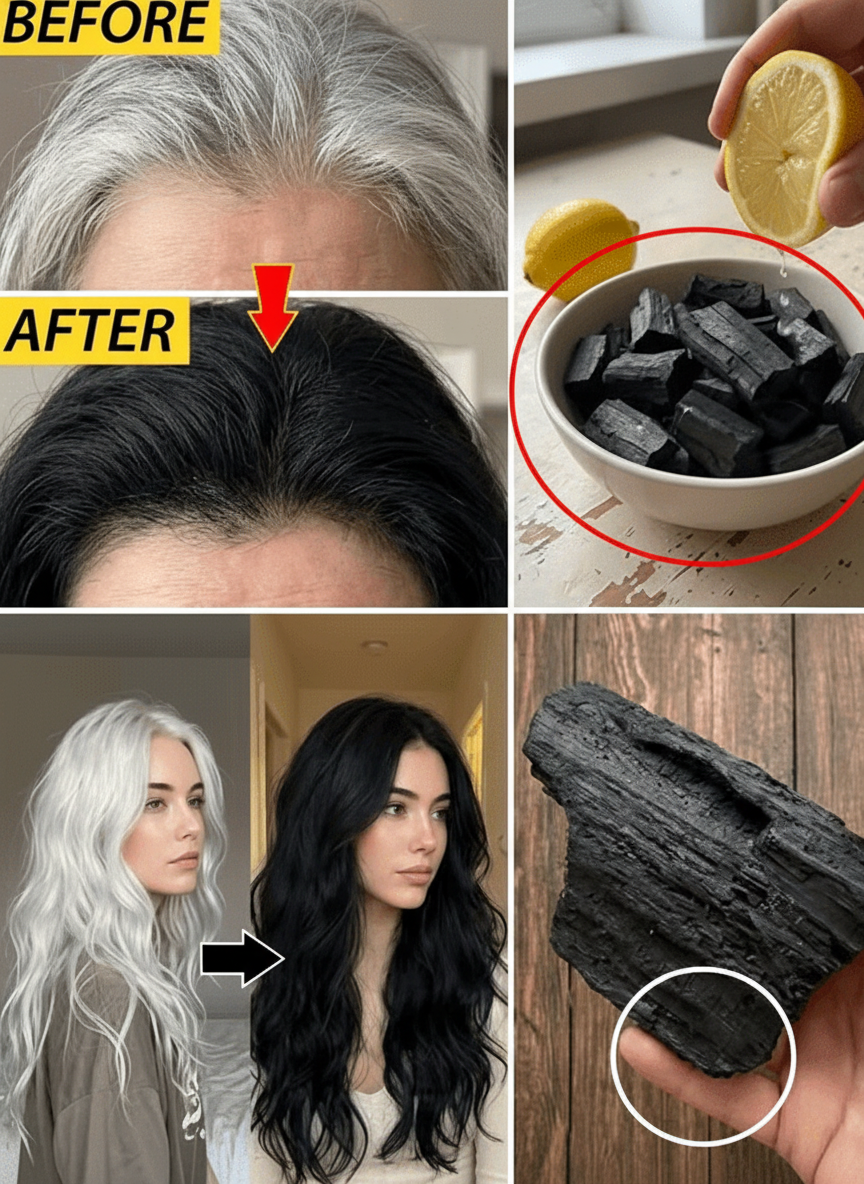
Many older adults are seeking gentler alternatives to aggressive chemical hair dyes. Let’s compare these two approaches:
- Purpose: Charcoal & Lemon focuses on scalp cleansing and hair health; Chemical Dyes aim for immediate color change.
- Ingredients: Charcoal & Lemon uses natural household items; Chemical Dyes rely on synthetic chemicals.
- Frequency: Charcoal & Lemon is an occasional routine (e.g., bi-weekly); Chemical Dyes are often applied every few weeks.
- Potential Irritation: Charcoal & Lemon is usually mild if properly diluted; Chemical Dyes can cause significant scalp sensitivity.
- Color Change: Charcoal & Lemon offers minimal, if any, direct color change; Chemical Dyes provide immediate and dramatic color alteration.
The perceived “darkening” effect from natural routines often stems from improved scalp health: oils distribute more evenly, hair strands reflect light better, and dulling product buildup is removed, revealing the hair’s true, healthier color.
How to Prepare and Use the Charcoal & Lemon Mixture
If you’re curious to try this routine, remember the key is gentle and occasional use. Misuse can actually damage hair.
- Mix: Combine 1 teaspoon of activated charcoal powder with 2 teaspoons of diluted lemon juice (e.g., 1 part lemon juice to 1 part water).
- Soften: Add a small amount of water or coconut oil to achieve a soft, workable paste consistency.
- Apply: Lightly apply the mixture to your scalp and hair roots.
- Massage: Gently massage for 1 to 2 minutes to distribute.
- Rest & Rinse: Leave on for approximately 5 minutes, then rinse thoroughly with lukewarm water.
- Cleanse: Follow with a mild shampoo to ensure all residue is removed.
Important Tips:
- Frequency: Use only once every 1 to 2 weeks to avoid over-drying or irritation.
- Caution: Do not use if you have any scalp irritation, cuts, or open wounds.
- Patch Test: Always test a small, inconspicuous area of your skin first to check for any adverse reactions.
Beyond Remedies: Nourishing Hair from Within
While external care matters, healthy hair color and vitality are deeply rooted in nutrition. A balanced diet provides the essential building blocks for strong, vibrant hair follicles. Key nutrients for hair health include:
- Vitamin B12: Crucial for red blood cell formation, which carries oxygen to hair follicles.
- Iron: Prevents anemia, a common cause of hair thinning and dullness.
- Zinc: Supports hair tissue growth and repair.
- Biotin: Known for strengthening hair and nails.
- Omega-3 Fatty Acids: Nourish hair follicles and promote shine.
Incorporate these helpful foods into your diet:
- Eggs
- Spinach
- Walnuts
- Salmon
- Avocados
By combining mindful external care with robust internal nutrition, you can support your hair’s natural beauty and health as you age.