 By admin
 Breast cancer often develops silently, with initial signs so subtle they’re easily dismissed as harmless. Yet, these seemingly minor changes can be crucial red flags. Early detection significantly improves outcomes, making vigilance and proactive health monitoring essential. This article will empower you with the knowledge of key early warning signs of breast cancer. Understanding these symptoms and acting promptly could be life-saving. Don’t wait – your proactive approach to breast health is more vital than ever.
1. A New or Unusual Breast Lump
While many lumps are benign, a new lump in the breast is the most commonly reported first sign of breast cancer. These lumps can vary – some are hard and painless, others might be tender or movable. It’s crucial to pay attention to:
- Any new lump or mass.
- Changes in the size or texture of an existing lump.
- Lumps that feel harder or distinctly different from surrounding breast tissue.
- Lumps that are stationary and don’t move easily.
Always consult your doctor if you discover any unusual changes in your breast tissue.
2. Skin Changes
Unexplained changes to the skin on your breast, such as dimpling that resembles an orange peel (known as “peau d’orange”), should never be ignored. This texture can indicate that cancer cells are blocking lymphatic drainage. Other concerning skin changes include:
- Persistent redness or irritation.
- Scaly skin around the nipple or breast.
- Thickening of the breast skin.
If you notice these changes, especially alongside redness or irritation, seek immediate medical attention as they could signal inflammatory breast cancer.
3. Persistent Breast Pain
Breast pain isn’t always a cancer symptom, but persistent or unusual pain warrants investigation. While cyclical tenderness around your period is common, localized pain in one area that occurs outside your menstrual cycle, or pain accompanied by other symptoms like redness or swelling, could be more serious. If breast pain persists or seems unrelated to your cycle, consult your doctor.
4. Swollen Lymph Nodes
Swelling in the lymph nodes, particularly those under the arm or around the collarbone, is an important warning sign. Lymph nodes are part of your immune system, and their enlargement can indicate that cancer has spread or is present in the area. Pay attention to any tender or swollen lumps in these regions, especially if they don’t resolve.
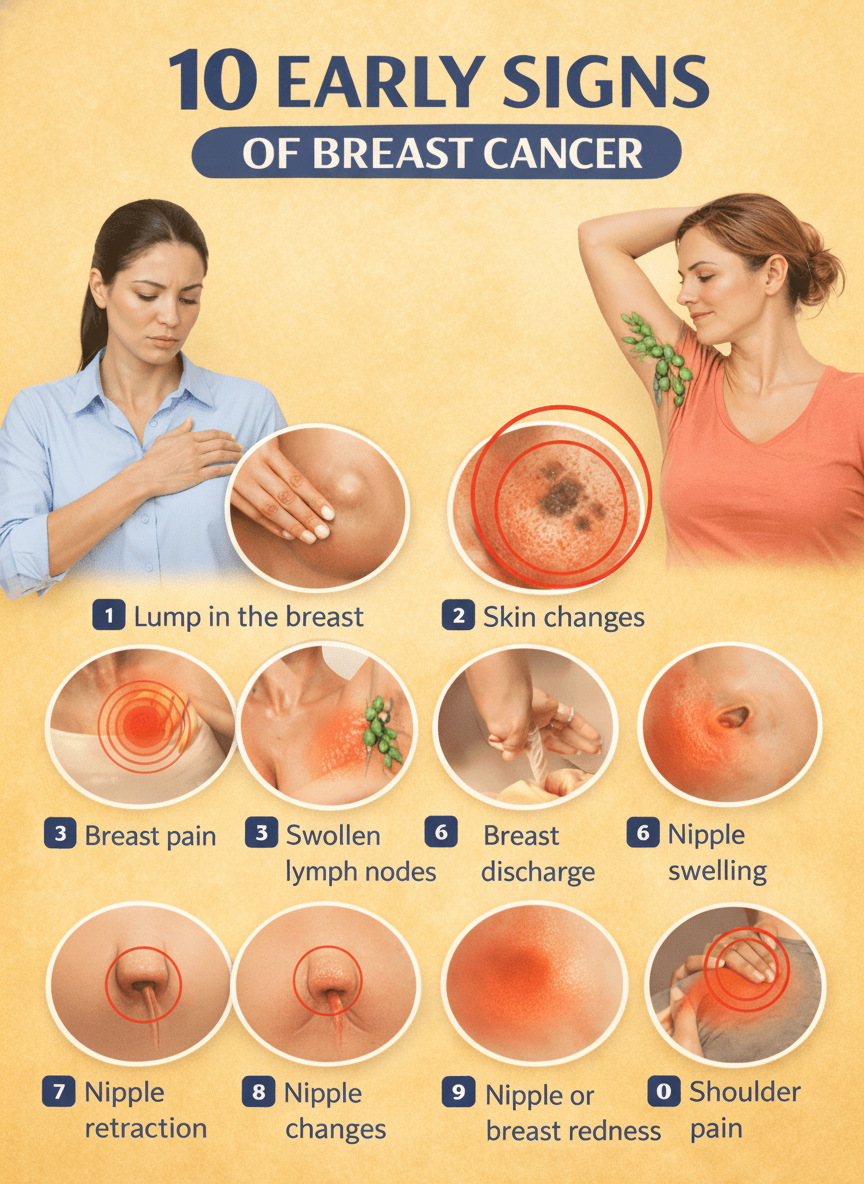
5. Nipple Discharge
Any discharge from the nipple, particularly if it’s bloody, clear, yellow, or occurs spontaneously (without squeezing), requires medical evaluation. While some women experience non-concerning discharge, any change in color, consistency, or the sudden onset of discharge should be checked by a healthcare provider, especially if accompanied by other changes like a lump or skin dimpling.
6. Nipple Swelling
While nipple swelling can have various causes, persistent or abnormal swelling, especially if it affects only one breast, should be examined by a doctor. This symptom may also be accompanied by pain, irritation, or other skin changes in the nipple area.
7. Nipple Retraction or Inversion
Nipple retraction or inversion, where the nipple turns inward, can sometimes indicate breast cancer, particularly if it’s a new development and doesn’t resolve. Although benign conditions can also cause this, any recent change in nipple appearance warrants a professional evaluation.
8. Redness, Warmth, or Swelling in the Breast or Nipple Area
Localized redness, warmth, or swelling in the breast can be a sign of infection, but it can also be a symptom of inflammatory breast cancer – a rare but aggressive form. If you experience these symptoms, particularly if they don’t respond to antibiotics or are accompanied by other changes, consult your doctor without delay.
Remember, early detection is your strongest defense against breast cancer. Knowing these signs empowers you to be proactive about your health. If you notice any of these symptoms or any other unusual changes in your breasts, don’t hesitate to seek medical advice. Your health is paramount.