 By admin
 As we age, the appearance of gray or silver hair is a common experience. While some embrace this natural shift, others seek gentle, at-home methods to add depth and darkness to their strands without resorting to harsh chemicals.
What if a simple, natural ingredient, often found in your kitchen, could offer a temporary solution? Activated charcoal, celebrated for its deep black pigment and detoxifying properties, has emerged as a popular DIY beauty ingredient. This guide explores how activated charcoal can be used in hair applications, its potential benefits for scalp health, and a safe, step-by-step approach to try at home.
Why Hair Grays and the Appeal of Natural Options
Gray hair occurs when melanocytes—cells responsible for producing pigment—slow down or cease functioning effectively. This process can be influenced by genetics, oxidative stress, nutrient deficiencies, and environmental factors. Many turn to commercial dyes for coverage, yet concerns about ammonia, peroxide, and long-term scalp irritation drive others towards gentler alternatives.
Activated charcoal, created by processing carbon-rich materials at high heat, boasts an intensely black, highly porous structure. This makes it an excellent adsorbent, capable of binding to oils, toxins, and buildup on the scalp and hair. While not a permanent dye, its dark hue makes it appealing for temporary DIY mixes to enrich lighter or graying strands. Beyond tinting, its clarifying effects can leave hair feeling cleaner and more voluminous.
Potential Benefits of Activated Charcoal for Hair
Activated charcoal isn’t new to wellness routines, commonly used in skincare to draw out impurities. Similar principles apply to hair care:
- Oil and Buildup Control: Its porous structure absorbs excess sebum, reducing greasiness and flatness.
- Scalp Detoxification: Binds to pollutants and styling product residue, promoting a fresher scalp.
- Temporary Darkening Effect: The natural black pigment can deposit on hair shafts, offering a subtle tint—especially on gray or light areas. Results are temporary and wash out.
- Gentle Exfoliation: In mask form, it can help slough off dead skin cells.
Research supports charcoal’s role in clarifying products, effectively reducing surface buildup. However, charcoal can be drying for some hair types, so always pair it with moisturizing ingredients.
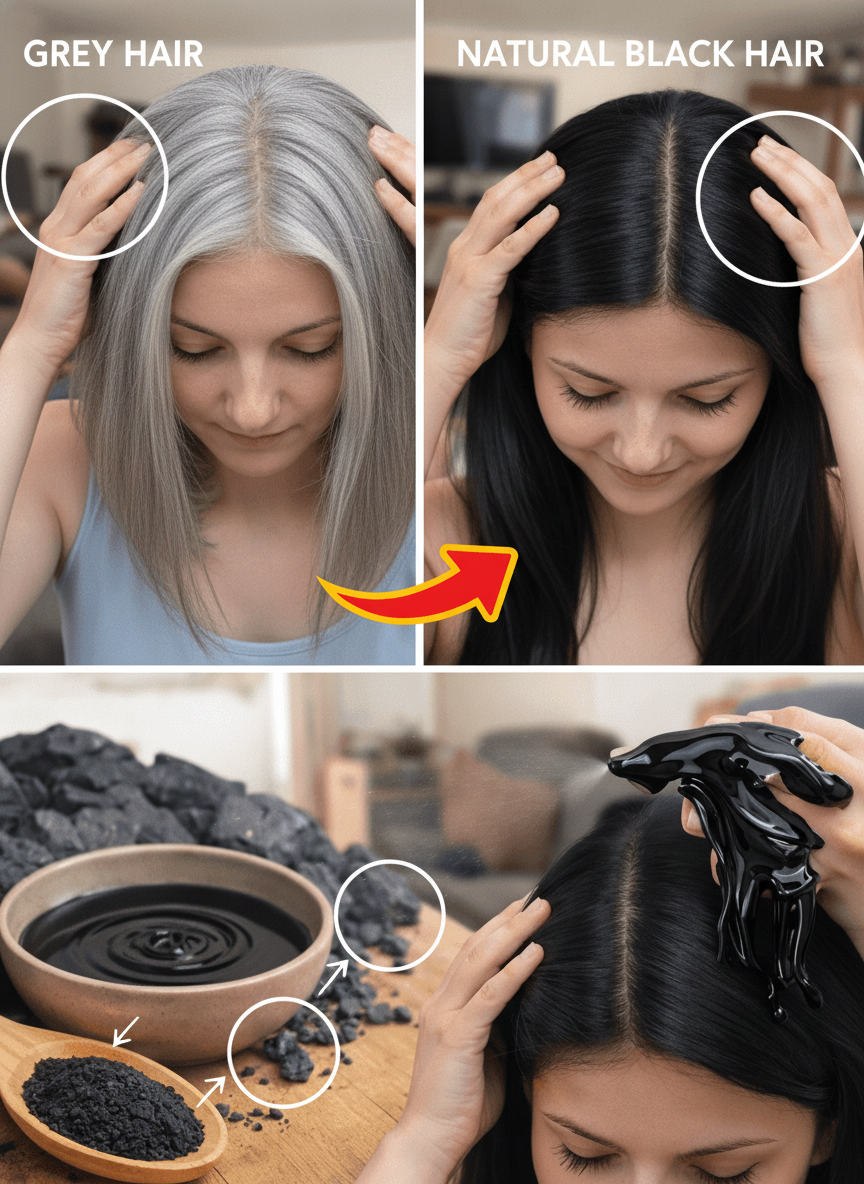
DIY Charcoal Hair Application at Home
Curious to try activated charcoal for a temporary darkening boost? Here’s a simple, beginner-friendly method. Always perform a patch-test first on a small skin area to check for irritation.
Ingredients You’ll Need:
- 2–3 tablespoons food-grade activated charcoal powder (ensure purity)
- 1–2 tablespoons carrier: coconut oil, olive oil, or yogurt (for moisture)
- Optional: A few drops of essential oil (e.g., tea tree for scalp soothing) or honey (for hydration)
Step-by-Step Guide:
- In a non-metallic bowl, mix the charcoal powder with your chosen moisturizer until it forms a smooth, thick paste. Aim for a consistency like thick yogurt; add liquid gradually.
- Section clean, dry hair. Apply the mixture, focusing on gray-prone areas or roots. Wear gloves to prevent hand staining.
- Gently massage into the scalp and strands, then cover with a shower cap.
- Leave on for 20–45 minutes (longer for deeper tint, but do not exceed an hour to minimize dryness).
- Rinse thoroughly with cool water, followed by your regular shampoo and conditioner. A second wash might be needed to remove all residue.
- Style as usual. Many observe a subtle, darker, ashier tone that fades gradually with washes.
This method offers a temporary, low-commitment way to experiment with darker hair tones.
Tips for Best Results and Safety
- Choose high-quality, food-grade activated charcoal to avoid unwanted additives.
- Always perform a patch test before full application.
- Pair charcoal with moisturizing ingredients to counteract potential dryness.
- Remember, this is a temporary solution and will wash out.
”
}
“`