 By admin
 As you embrace your 60s and beyond, you might notice subtle shifts in your body’s movement – perhaps a touch less steadiness, or a nagging discomfort in your lower back. These changes can make everyday tasks like rising from a chair or climbing stairs feel unexpectedly challenging. The good news? Targeted exercises can significantly address these issues by strengthening key muscle groups. Interestingly, some of the most effective moves can even be done while seated, offering a practical approach to building strength and confidence.
Understanding Glute Weakness with Age
Weak glutes (the muscles in your buttocks) are a common, yet often overlooked, issue in older adults. Modern lifestyles, particularly prolonged sitting, can lead to these muscles becoming underactive and elongated, while hip flexors tighten. This imbalance often contributes to feelings of instability and discomfort in the hips and lower back.
Aging itself plays a role. Natural muscle loss, known as sarcopenia, begins around age 30 and accelerates significantly after 60, impacting the glutes. Reduced physical activity further compounds this, leading to what’s sometimes called “gluteal amnesia” – where these crucial muscles effectively “forget” how to engage properly. Past injuries, surgeries, or years of poor posture can also weaken them, creating a cycle of reduced mobility and increased strain on other areas of the body.
Why Strong Glutes Are Essential for Seniors
Building stronger glutes isn’t just for aesthetics; it’s fundamental for functional independence and overall well-being as you age. Here’s why:
- Enhanced Stability & Posture: Strong glutes stabilize your pelvis, which supports your spine, leading to better posture and reduced lower back strain.
- Improved Balance: These muscles are critical for maintaining balance, preventing falls, and ensuring your knees track properly during movement. This means greater confidence on various surfaces.
- Effortless Mobility: Glutes power crucial movements like climbing stairs, getting up from a chair, and walking, making daily tasks smoother and less tiring.
- Joint Protection: They act as natural shock absorbers, easing pressure on joints like the knees and hips during everyday activities, potentially reducing discomfort.
- Back Health: By distributing workload more evenly, strong glutes prevent your lower back from taking on excessive strain, which can alleviate chronic back pain.
Preparing for Your Glute-Strengthening Routine
Before you begin, remember that consistency is key. Aim for 2-3 sessions per week.
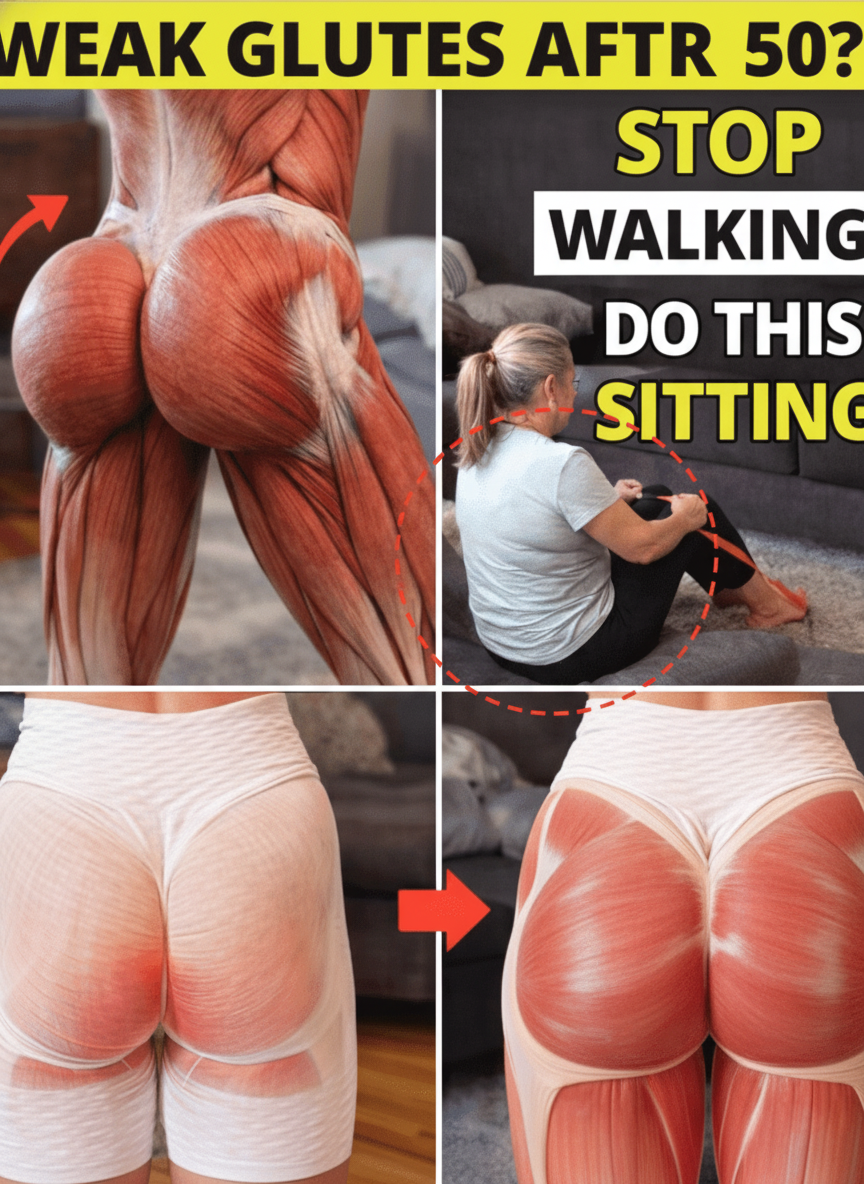
- Warm-Up: Start with 5 minutes of light activity, like marching in place or a gentle walk, to increase blood flow.
- Equipment: For seated exercises, use a sturdy chair without arms. A mat is useful for floor exercises.
- Progression: Begin with bodyweight. Once comfortable, you can add light resistance bands for an extra challenge.
- Reps: Perform 10-15 repetitions per exercise.
- Listen to Your Body: If you feel any sharp pain, stop immediately and consult a healthcare professional.
5 Essential Exercises to Strengthen Your Glutes
These exercises effectively target your gluteus maximus, medius, and minimus, offering a comprehensive approach to building strength. We’ve included a mix of seated, lying, and standing options.
-
Seated Glute Squeezes
This simple isometric move is perfect for beginners or those with limited mobility, activating the glutes without standing.
- How to: Sit tall in a chair with your feet flat on the floor, hip-width apart. Squeeze your buttocks together as if you’re trying to hold a pencil between them.
- Hold: Maintain the squeeze for 5 seconds, focusing on the contraction, then release slowly.
- Reps: Repeat 10-15 times.
- Tip: Imagine gently lifting your seat off the chair as you squeeze.
-
Glute Bridges
An excellent exercise for strengthening the glutes and lower back, improving hip extension.
- How to: Lie on your back with knees bent, feet flat on the floor (hip-width apart), and arms resting at your sides. Press through your heels to lift your hips off the floor towards the ceiling, squeezing your glutes at the top.
- Hold: Hold for 2-3 seconds, then slowly lower your hips back down.
- Reps: Perform 10-12 repetitions.
- Tip: Keep your core engaged to prevent arching your lower back.
-
Clamshells
Targets the gluteus medius and minimus, crucial for hip stability and preventing knee pain.
- How to: Lie on your side with knees bent at a 45-degree angle, one leg stacked directly on top of the other. Keep your feet together. Engage your core and lift your top knee towards the ceiling, keeping your feet touching and pelvis stable.
- Hold: Hold briefly at the top, feeling the squeeze in your outer glute.
- Reps: Slowly lower your knee. Repeat 10-15 times on each side.
- Tip: Ensure your hips don’t roll backward as you lift your knee.
-
Standing Hip Extension
Improves glute strength for walking and standing balance.
- How to: Stand tall behind a sturdy chair or counter for support. Shift your weight slightly to one leg. Keeping your standing leg slightly bent and your back straight, slowly extend the other leg straight backward, squeezing your glute.
- Hold: Lift only as high as comfortable without arching your lower back.
- Reps: Slowly return to the starting position. Repeat 10-15 times on each leg.
- Tip: Focus on engaging the glute to lift the leg, rather than swinging it.
-
Chair Squats
A functional exercise that mimics daily movements like sitting and standing, building overall lower body strength.
- How to: Stand in front of a sturdy chair with your feet hip-width apart. Extend your arms forward for balance. Slowly lower your hips back and down as if you’re going to sit in the chair. Lightly tap the chair with your glutes (or sit fully if needed), then push through your heels to stand back up.
- Hold: Keep your chest up and back straight throughout the movement.
- Reps: Perform 10-15 repetitions.
- Tip: Ensure your knees track over your toes, not caving inward.
”
}
“`