 By admin
 Don’t Ignore Your Tongue: Vital Health Clues Its Color Reveals
You brush your teeth, glance in the mirror, and something’s off – your tongue looks different. Perhaps it’s unusually pale, coated in a strange film, or a surprising shade. Most of us quickly dismiss these minor changes, hoping they’re nothing serious. However, your tongue is a powerful, often overlooked, indicator of your overall health, offering early clues about hydration, nutrition, and wellness.
Understanding these signals can empower you to make better daily choices and address potential issues before they escalate. Let’s explore why your tongue is such a vital health mirror and what its various appearances might be telling you.
Your Tongue: A Window to Your Health
More than just a tool for taste and speech, your tongue is rich with blood vessels and covered in thousands of tiny structures called papillae. This extensive blood supply means even subtle shifts within your body can manifest on its surface. Oral health researchers often liken the tongue to a “mirror” reflecting lifestyle habits, including hydration levels, nutrient balance, oral hygiene, and even sleep patterns.
A healthy tongue typically exhibits these characteristics:
- A light pink color
- Small, evenly distributed bumps (papillae)
- A thin or barely visible coating
Significant changes in color or texture warrant attention. It’s crucial to remember that while tongue changes rarely confirm a medical diagnosis on their own, they serve as valuable clues, suggesting that something in your routine or health deserves a closer look.
Deciphering Your Tongue’s Messages: 9 Colors and Their Potential Meanings
Various everyday factors can influence your tongue’s appearance. Here’s what different shades might suggest:
1. Normal Light Pink Tongue
What it means: Generally indicates good circulation and adequate hydration.
- Healthy signs: Moist surface, visible small papillae, no thick coating or unusual discoloration.
- Maintain it: Consistent oral care and balanced nutrition are key.
2. White or Coated Tongue
What it means: A thick white film often results from the accumulation of bacteria, food debris, and dead cells.
- Possible factors: Poor oral hygiene, dehydration, temporary shifts in the oral microbiome, recent antibiotic use.
- Note: Patchy white areas can sometimes signal oral thrush (yeast imbalance).
3. Bright Red or Inflamed Tongue
What it means: May indicate inflammatory reactions or underlying issues.
- Potential associations: Food sensitivities, irritating foods (e.g., spicy dishes), vitamin deficiencies, certain medications.
- Also consider: Viral illnesses or other inflammatory conditions.
4. Yellow Coated Tongue
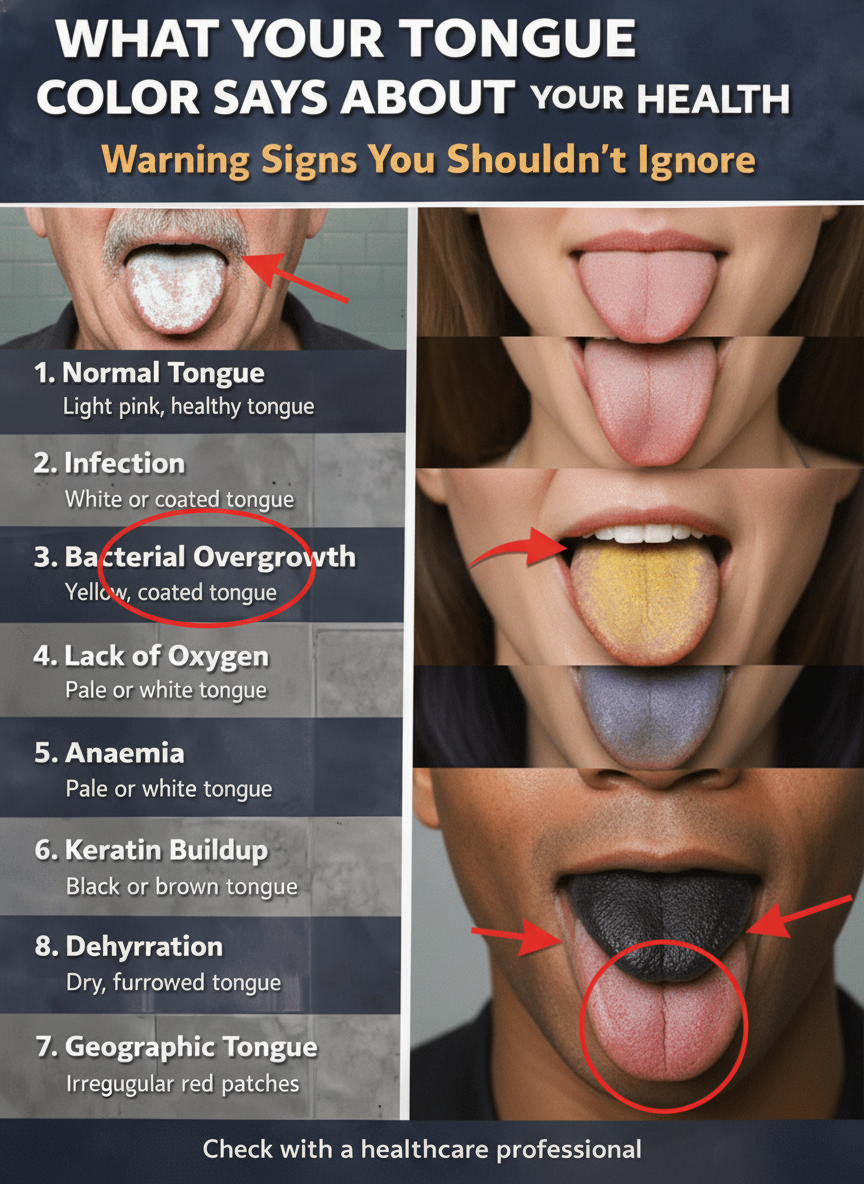
What it means: A yellowish film often develops due to bacterial overgrowth on the tongue’s surface.
- Lifestyle links: Smoking, dry mouth, infrequent tongue cleaning, digestive discomfort.
- Improvement: Enhanced oral hygiene practices can usually reduce this coating.
5. Bluish or Purple Tongue
What it means: This uncommon but significant color may suggest reduced oxygen delivery to tissues.
- Action: If accompanied by symptoms like breathing difficulty or chest discomfort, seek immediate professional medical evaluation.
6. Dark Red or Deep Purple Tongue
What it means: Some traditional health systems link deep red tones to circulation stress. Modern views suggest darker coloration can be associated with:
- Potential causes: Circulation changes, inflammation, fever, or dehydration.
- Action: Persistent changes warrant professional medical attention.
7. Gray or Thickly Coated Tongue
What it means: A grayish coating can occur when plaque accumulates over time.
- Possible causes: Digestive discomfort, chronic dry mouth, smoking, or alcohol use.
- Improvement: Good oral hygiene habits often enhance its appearance.
8. Pale or Very Light Tongue
What it means: May indicate a lack of certain nutrients, particularly iron.
- Accompanying symptoms: Fatigue, dizziness, low energy levels.
- Support: A balanced diet rich in iron and essential vitamins supports healthy circulation.
9. Black or Brown Tongue
What it means: While alarming in appearance, this is usually related to a harmless, temporary condition often called “black hairy tongue.”
- Causes: Accumulation of dead skin cells and bacteria on the papillae, making them appear elongated and discolored. Often linked to poor oral hygiene, smoking, certain medications (e.g., antibiotics), or dry mouth.
- Action: Usually resolves with improved oral hygiene and addressing contributing factors.
When to Consult a Professional
While most tongue changes are temporary and benign, don’t hesitate to consult a doctor or dentist if you experience:
- Persistent or worsening discoloration
- Pain, burning, or discomfort on your tongue
- Difficulty eating, speaking, or swallowing
- Any tongue change accompanied by other concerning symptoms (e.g., fever, rash, breathing issues)
Your tongue is a small but mighty messenger. By paying attention to its cues, you can gain valuable insights into your body’s well-being and take proactive steps towards better health.