 By admin
 Baking Soda: A Natural Approach to Household Pest Deterrence
Discovering pests like cockroaches scurrying across your kitchen counter or ants marching in endless lines can quickly turn your home into a source of constant frustration and unease. Many homeowners seek simple, natural solutions to combat these invaders without immediately resorting to harsh chemicals. That familiar orange box of baking soda in your pantry often emerges as a popular, low-cost option in home remedy discussions.
While baking soda isn’t a guaranteed fix for every pest situation, it offers an accessible way to experiment with natural deterrence for certain common household pests. This guide will explore practical methods people try, the limited evidence suggesting its potential, and important steps to take for better results.
Why Baking Soda Appeals as a Home Pest Solution
Baking soda (sodium bicarbonate) is highly appealing for several reasons:
- Inexpensive & Readily Available: It’s a common pantry staple, making it a budget-friendly choice.
- Non-Toxic (in small amounts): Generally considered safe for humans and pets in small quantities, offering a safer alternative to chemical pesticides.
- Natural Reaction: The theory behind its effectiveness stems from its reaction with acids and moisture. When ingested by certain pests, it’s believed to produce gas in their digestive systems, leading to discomfort or worse. Lab studies on related compounds have shown that pH changes can disrupt insects in controlled settings.
It’s crucial to understand that baking soda works best as a supplementary approach, complementing good sanitation and exclusion methods, rather than serving as a standalone solution for significant infestations.
Common Pests Targeted with Baking Soda
Homeowners frequently mention trying baking soda against:
- Cockroaches: Resilient insects often found in dark, damp areas.
- Ants: Appearing in trails, especially near sweet spills.
- Mice: Indicated by droppings and gnaw marks.
- Bed Bugs: (Though its effectiveness against these is highly debated and often minimal.)
The degree of effectiveness can differ widely among various pest species.
How Baking Soda Might Work on Pests (The Science Basics)
Research on sodium bicarbonate indicates it can alter internal pH or cause dehydration through direct contact for certain soft-bodied creatures. For insects that ingest it, the reaction with stomach acids may create carbon dioxide buildup. While some lab observations on ants and similar species noted higher mortality with prolonged exposure, household trials often yield mixed results—some pests avoid it, or the amounts consumed are too low to have a significant impact.
Experts emphasize that baking soda rarely eliminates entire colonies or infestations on its own. It may temporarily reduce visible activity in minor cases, serving more as a deterrent than an exterminator.
Step-by-Step Ways to Try Baking Soda for Common Pests
Always start by ensuring areas are clean and dry, and remove competing food sources. Test small, inconspicuous spots first to avoid mess.
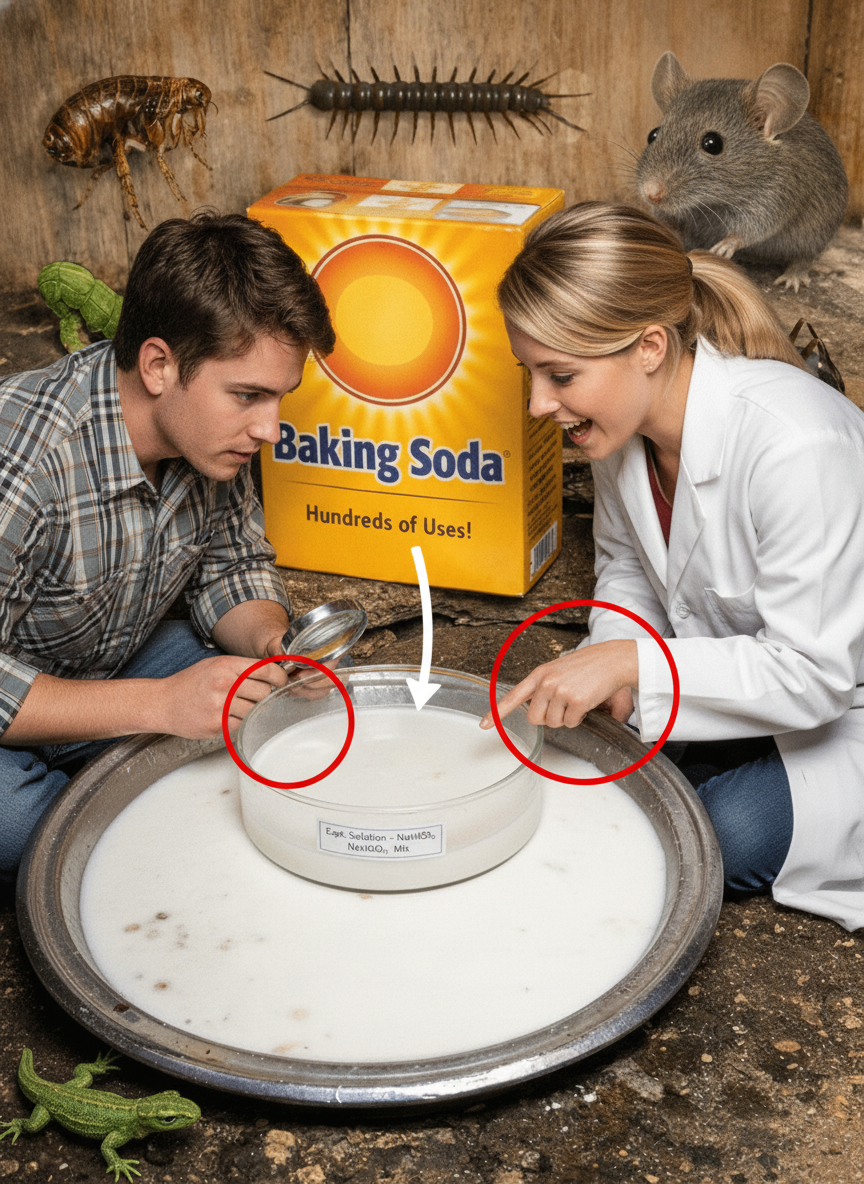
1. For Ants: The Classic Sweet Bait Mix
Ants are attracted to sweets, making this a popular method:
- Mix equal parts baking soda and powdered sugar (or regular granulated sugar).
- Place small amounts in jar lids or on paper near ant trails, ensuring they are out of reach of pets and children.
- Refresh the bait every few days. Ants may carry the mixture back to their colony.
Many users report seeing fewer ants over a week or two, though complete colony control often requires additional steps.
2. For Cockroaches: Starchy or Sweet Lure Variations
Roaches seek starchy or sweet foods:
- Combine equal parts baking soda with powdered sugar, flour, or onion powder.
- Sprinkle lightly in corners, under appliances, or along baseboards where you’ve observed activity.
- Leave undisturbed for several days; check and replenish as needed.
Anecdotal accounts suggest slower activity after 1-2 weeks, but patience is key—results are not instant.
3. For Mice and Rodents: A Simple Scatter Method
Rodents explore new items cautiously:
- Sprinkle plain baking soda in areas with droppings or near entry points.
- Important: Never mix baking soda with bait that could harm pets or children.
- Some people add a tiny bit of peanut butter or seeds to encourage nibbling, but this should be done with extreme caution if pets are in the home.
Monitor closely; this approach sees limited success compared to traps or professional help. Rodents need substantial amounts for any effect, and they often avoid unfamiliar powders.
Important Considerations for Best Results
While baking soda can be a valuable part of your pest management strategy, it’s not a miracle cure. For persistent or severe infestations, professional pest management is always recommended. Consistent hygiene, sealing entry points, and eliminating food and water sources remain the most effective long-term strategies for a pest-free home. Baking soda offers a gentle, natural first line of defense within a broader, integrated pest management plan.