 By admin
 Tonsil Stones: Uncovering Their Causes, Odor, and Effective Solutions
Those tiny, often foul-smelling white lumps in your throat, known as tonsil stones or tonsilloliths, can be both embarrassing and uncomfortable. While common and generally harmless, their distinct odor can lead to awkward social moments. Many people are unaware they even have them, but once discovered, understanding them is key. This guide will demystify tonsil stones: what they are, why they form, why they smell so bad, and how you can effectively manage or remove them for a fresher mouth.
What Are Tonsil Stones?
Tonsil stones, or tonsilloliths, are small, hard, pebble-like formations within the tonsils. Your tonsils, crucial for fighting infection, contain natural folds and pockets called crypts. Here, debris like food particles, dead skin cells, bacteria, and mucus can become trapped. Over time, these materials harden and calcify, forming stones that vary from rice-grain size to small peas. Some are unnoticed, while others cause discomfort or are visibly irritating when coughed up.
Why Do Tonsil Stones Form?
Tonsil stones arise from debris accumulation within tonsillar crypts. Food, mucus, bacteria, and dead cells get trapped. If you have deep tonsillar crypts, the chances of developing tonsil stones increase because the debris is harder to clear. Minerals, especially calcium, then deposit around this trapped matter, hardening it into solid stones.
Factors that elevate your risk include:
- Frequent tonsil infections (tonsillitis)
- Poor oral hygiene
- Chronic sinus issues leading to post-nasal drip
- Dehydration, which reduces saliva flow
People with larger or more irregular tonsils are also more prone to developing these stones. While bothersome, tonsil stones are generally not dangerous.
Why Do Tonsil Stones Smell So Bad?
The notorious foul odor of tonsil stones, often likened to rotten eggs or cheese, originates from anaerobic bacteria. These oxygen-averse bacteria thrive on the trapped debris, breaking down proteins and releasing volatile sulfur compounds (VSCs). These are the very same gases responsible for severe bad breath (halitosis).
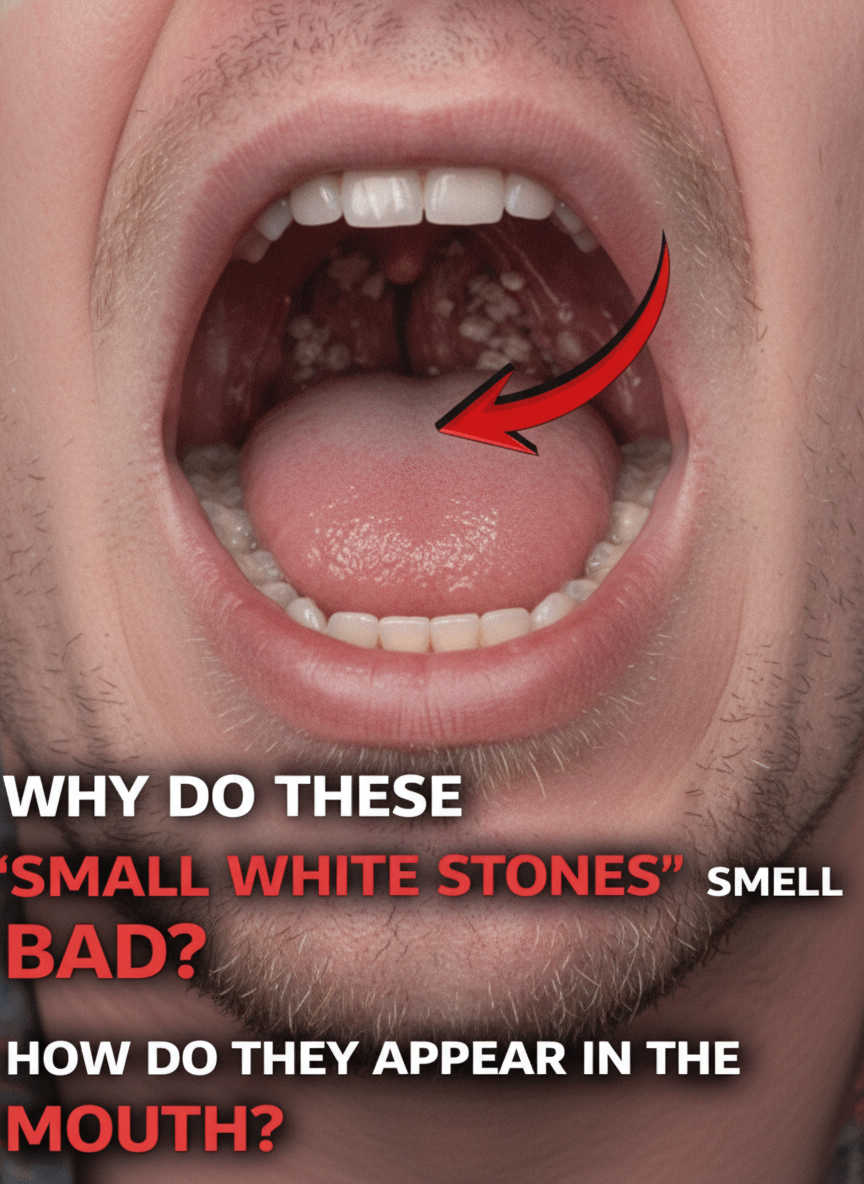
Within the warm, moist tonsil environment, bacteria multiply, forming a biofilm on the stone’s surface. The more bacteria, the worse the odor. Even small stones can cause significant halitosis as the trapped smell is released during speech, breathing, or coughing.
Symptoms Beyond the Stones
While often asymptomatic, tonsil stones can manifest through several signs:
- Persistent bad breath (halitosis) that doesn’t improve with brushing
- A metallic taste in the mouth
- A feeling of something stuck in the throat (globus sensation)
- Mild sore throat or irritation
- Occasional ear pain, due to connected nerve pathways
- A chronic cough from throat irritation
Larger stones might cause more discomfort, but serious complications are rare.
How to Manage or Remove Tonsil Stones at Home
Fortunately, most tonsil stones don’t require medical intervention and often dislodge on their own. If you’re dealing with tonsil stones, here are some safe and effective at-home strategies:
- Gargle with Warm Salt Water: Gargling several times a day with warm salt water can help loosen small stones and reduce bacteria buildup.
- Cough or Clear Your Throat: A strong cough can help dislodge small stones, especially if they are not deeply embedded.
- Use a Water Flosser: A low-pressure water flosser can be used to gently flush out the tonsils and clear debris from the crypts. Always use the device carefully and on a low setting.
- Gentle Manual Removal: If you can clearly see the tonsil stones and they appear loose, you can use a clean cotton swab to gently dislodge them. Do not force it or risk injury by pushing too hard.
- Maintain Excellent Oral Hygiene: This is crucial. Brush your teeth twice a day, floss regularly, scrape your tongue, and use an alcohol-free mouthwash to fight bacteria.
- Stay Hydrated: Drinking plenty of water keeps your mouth moist, helping to naturally wash away food particles and bacteria before they can form stones.
When Should You See a Doctor?
While home remedies are often effective, you should consult a healthcare provider (such as an ENT specialist) if:
- Tonsil stones are very large, painful, or frequently recurrent.
- You experience frequent tonsil infections or chronic sore throat.
- Home remedies prove ineffective, or your symptoms worsen.