 By admin
 One morning, as you go through your routine, you might catch a glimpse of your tongue in the mirror and notice something unusual. Perhaps it’s a shade paler, a bit yellow, or sporting an unfamiliar coating. Most of us tend to brush it off, hoping it’s nothing serious. Yet, these seemingly minor shifts can often be your body’s subtle way of signaling underlying health issues before they escalate.
Your tongue isn’t just for tasting and talking; it’s a remarkable early warning system, offering invaluable clues about your hydration, nutrition, and overall well-being. By understanding these signals, you empower yourself to make better daily choices. This article will help you decode what your tongue is trying to tell you.
Why Your Tongue Reveals Hidden Health Clues
The tongue is a highly vascularized muscle, covered in thousands of tiny structures called papillae, which house taste buds and a rich network of blood vessels. This extensive blood supply makes it an incredibly sensitive indicator of your body’s internal state. Oral health researchers often refer to the tongue as a “mirror” reflecting various lifestyle habits and physiological changes.
Factors such as hydration levels, nutrient balance, oral hygiene practices, and even sleep patterns can significantly influence your tongue’s appearance. A healthy tongue typically exhibits these characteristics:
- Light pink color
- Small, evenly distributed bumps (papillae)
- A thin, almost invisible coating
Significant changes in its color or texture warrant attention. It’s crucial to remember that while tongue changes are rarely definitive diagnoses, they serve as powerful clues, prompting you to take a closer look at your routine or consult a healthcare professional.
Decoding Your Tongue’s Colors: What They May Suggest
Dentists and healthcare professionals often observe these patterns during routine examinations. Here’s a guide to common tongue appearances and their potential associations:
1. Normal Light Pink Tongue
A light pink tongue is generally a sign of balanced circulation and adequate hydration. A healthy tongue is moist, has visible small papillae, and lacks any thick coating or unusual discoloration. Maintaining this healthy appearance largely depends on consistent oral care and a balanced diet.
2. White or Coated Tongue
A thick white coating can form when bacteria, food debris, and dead cells accumulate on the tongue’s surface. Common contributing factors include:
- Poor oral hygiene
- Dehydration
- Temporary shifts in the oral microbiome
- Recent antibiotic use
A patchy white appearance, sometimes resembling cottage cheese, may also indicate an oral yeast imbalance, commonly known as oral thrush.
3. Bright Red or Inflamed Tongue
A tongue that appears unusually red or swollen often points to inflammatory reactions. This can be associated with:
- Food sensitivities
- Irritating foods (e.g., very spicy dishes)
- Vitamin deficiencies (particularly B vitamins)
- Certain medications
Additionally, a bright red tongue can sometimes be a symptom of viral illnesses or systemic inflammatory conditions.
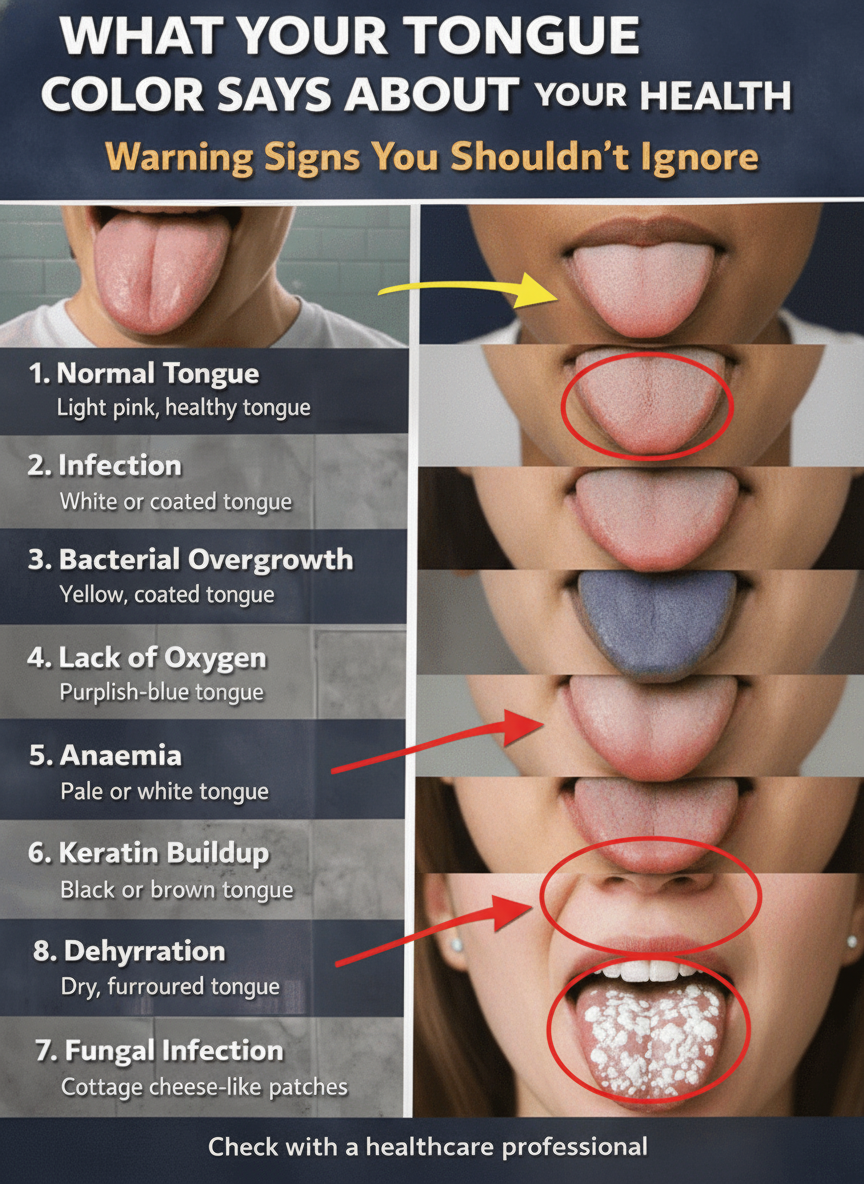
4. Yellow Coated Tongue
A yellowish film typically develops when bacteria proliferate on the tongue’s surface. Lifestyle habits often play a significant role:
- Smoking
- Dry mouth
- Infrequent tongue cleaning
- Digestive discomfort
Improving oral hygiene practices, especially regular tongue cleaning, can often reduce this coating over time.
5. Bluish or Purple Tongue
A bluish or purplish tone is an uncommon but important sign, potentially indicating reduced oxygen delivery to the body’s tissues. If this color appears alongside symptoms like breathing difficulty, chest discomfort, or dizziness, it is crucial to seek immediate professional medical evaluation.
6. Dark Red or Deep Purple Tongue
While some traditional health systems link deep red tones to circulatory stress, modern medicine suggests darker coloration may sometimes be associated with:
- Circulation changes
- Inflammation
- Fever or significant dehydration
Persistent changes of this nature warrant professional medical attention.
7. Gray or Thickly Coated Tongue
A grayish tongue coating can occur due to plaque accumulation over time. Potential causes include:
- Digestive discomfort
- Chronic dry mouth
- Smoking or alcohol consumption
Consistent good oral hygiene habits, including tongue scraping, can often improve its appearance.
8. Pale or Very Light Tongue
A pale or unusually light tongue may occasionally signal that the body lacks certain essential nutrients, particularly iron. This appearance is sometimes accompanied by symptoms such as:
- Fatigue
- Dizziness
- Low energy levels
A balanced diet rich in iron and other vital vitamins is essential for supporting healthy circulation and overall well-being.
9. Black or Brown Tongue
A dark, often alarming-looking tongue is usually related to a harmless, temporary condition known as “black hairy tongue.” This occurs when the papillae on the tongue’s surface become elongated and trap bacteria, food debris, and sometimes even stains from coffee or tobacco. Common causes include:
- Poor oral hygiene
- Smoking
- Certain medications (e.g., antibiotics)
- Dry mouth
It typically resolves with improved oral hygiene, including regular tongue cleaning.