 By admin
 Frankincense Oil and Bladder Cancer: Re-examining a Promising 2009 Lab Study
Bladder cancer impacts countless lives annually, bringing with it a cascade of uncertainties, frequent medical appointments, and legitimate concerns about treatment side effects that can significantly disrupt daily routines. Many individuals seek complementary strategies rooted in natural remedies, hoping for options that might eventually complement conventional therapies without imposing additional burdens. A fascinating laboratory investigation from 2009 delved into the effects of frankincense essential oil, extracted from Boswellia carteri resin, on bladder cells within a controlled environment. What if this ancient, aromatic substance could pave the way for more targeted approaches to managing cancerous cells? Stay with us, as we’ll conclude by offering practical considerations if you’re exploring frankincense for your personal wellness journey—and underscore why patience and expert medical advice are always paramount.
What Is Frankincense Oil, and Why the Scientific Interest?
Frankincense oil is sourced from the gummy resin of Boswellia trees, typically harvested in arid regions such as Somalia and parts of the Middle East. This resin hardens into fragrant “tears,” which have been revered for millennia in traditional practices for their soothing and restorative properties. Today, the essential oil, obtained through steam distillation, garners considerable attention in holistic wellness circles for its potential anti-inflammatory benefits. However, the aspect that truly captivates researchers lies in preliminary laboratory studies exploring whether specific compounds within frankincense, such as boswellic acids, could uniquely influence cellular behavior. The 2009 study we are highlighting, published in the esteemed journal BMC Complementary and Alternative Medicine, specifically tested a commercially available frankincense oil on human bladder cells.
Key Insights from the Groundbreaking 2009 Laboratory Study
Researchers meticulously compared two distinct types of cells in their investigation:
- J82 cells: A human bladder transitional cell carcinoma line, representing cancerous cells.
- UROtsa cells: Immortalized normal human bladder urothelial cells, serving as non-cancerous controls.
Both cell types were exposed to varying concentrations of frankincense oil, and their cell viability was assessed using standard laboratory assays. The findings were notable: at specific concentrations, the oil significantly reduced the viability of the cancerous J82 cells in a dose-dependent manner—meaning higher quantities led to a greater reduction. Crucially, these same concentrations demonstrated minimal to no impact on the normal UROtsa cells, indicating a degree of selective action.
But the revelations didn’t stop there. Further microarray analysis coupled with bioinformatics unveiled significant alterations in gene expression. The oil appeared to activate pathways associated with cell cycle arrest and the suppression of cell proliferation within the cancerous cells. Intriguingly, it did not trigger classic markers of apoptosis, such as DNA fragmentation, suggesting that other unique mechanisms were at play. These compelling results led the study authors to propose that frankincense oil possesses the ability to differentiate between malignant and normal bladder cells in this in vitro model. They further suggested it could warrant additional exploration as a potential intravesical agent (administered directly into the bladder)—though this concept remains firmly within the realm of research.
The Critical Importance of Selectivity in Cancer Research
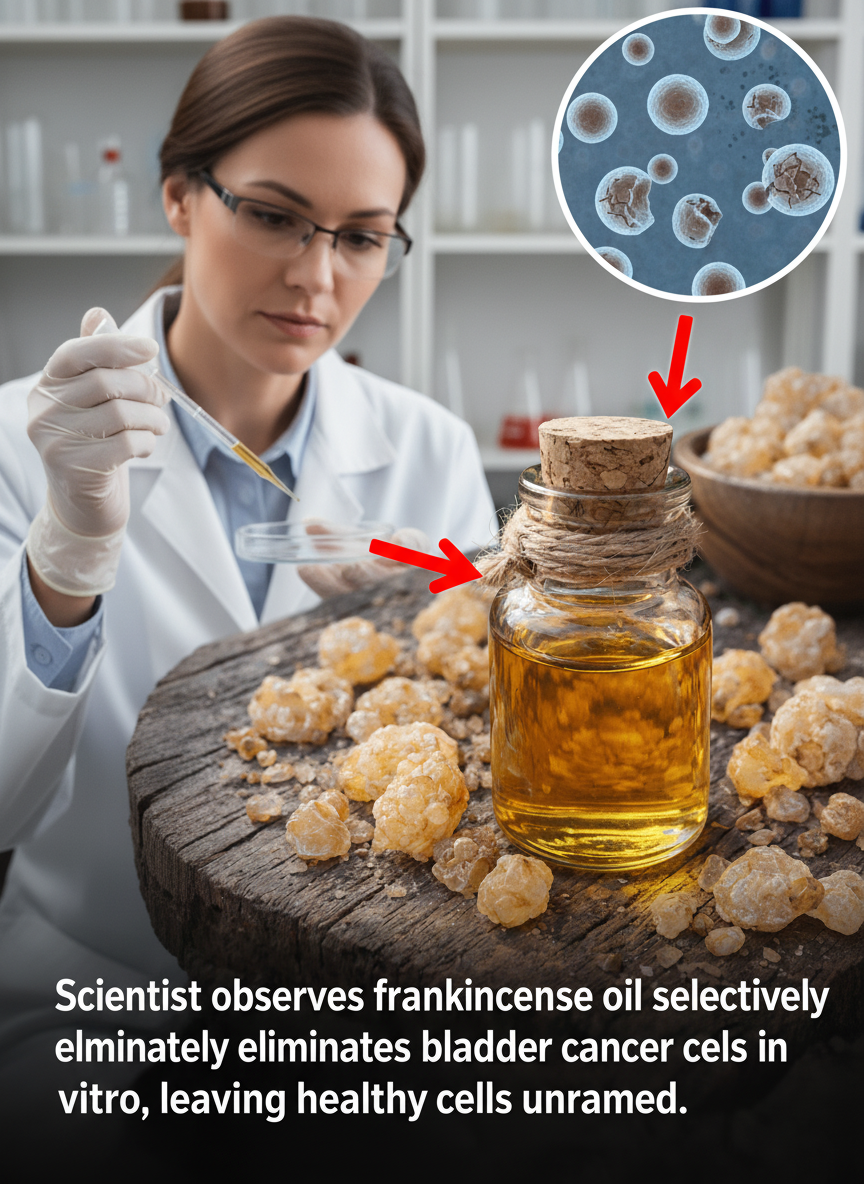
One of the most formidable challenges in oncology is the development of treatments that specifically target cancer cells while preserving healthy tissues. Conventional therapies, like chemotherapy, frequently affect both, leading to undesirable side effects. Here’s a concise summary of the study’s observations regarding selectivity:
- Cancer cells (J82): Exhibited a substantial decrease in viability; gene pathways shifted towards inhibiting growth.
- Normal cells (UROtsa): Largely maintained their viability; showed negligible changes in gene expression.
- Dose-response: The observed effects were directly dependent on concentration, emphasizing the necessity of precise dosing in any prospective therapeutic applications.
This kind of differential response is highly encouraging to scientists because it hints at future possibilities for developing more precise and less toxic therapeutic strategies.
Broader Context: Frankincense in Ongoing Scientific Inquiry
The 2009 bladder cancer study is not an isolated discovery. Numerous other laboratory investigations have explored Boswellia extracts or oils against various cancer cell lines, including those from breast and other organs, frequently observing similar patterns of selective cytotoxicity. While a few limited human trials have investigated Boswellia extracts for inflammation-related conditions or as supplementary treatments, robust evidence specifically supporting its use for bladder cancer in humans remains scarce.
Important Note: It is crucial to understand that these findings are predominantly preclinical (derived from laboratory or animal studies). No large-scale human clinical trials have yet validated frankincense oil as a standalone or supportive treatment option for bladder cancer. Reputable organizations like the American Cancer Society consistently emphasize that while certain natural compounds show promise in early-stage research, they are not currently proven treatments and should not replace conventional medical care.
Practical Steps: How to Explore Frankincense Safely Today
If you find the potential of frankincense intriguing and are considering incorporating it into your wellness regimen, it is absolutely essential to proceed with caution and informed decision-making. Always consult with a qualified healthcare professional, such as your doctor or an oncologist, before adding any new supplement or essential oil, especially if you have a health condition like cancer or are undergoing treatment. They can provide personalized advice, discuss potential interactions with medications, and ensure your choices align with your overall health plan. Remember, while research like the 2009 study offers exciting avenues for future exploration, it is foundational research, and further clinical investigation is needed before any definitive medical claims can be made.