 By admin
 Dense Breasts: Navigating Your Screening Options Beyond a Standard Mammogram for Enhanced Detection
Discovering you have dense breast tissue can naturally bring a sense of worry, but rest assured, you’re not alone. Over 40% of women share this characteristic. While standard mammograms are crucial, dense breasts can obscure potential abnormalities, making early detection more challenging. Furthermore, dense breast tissue is associated with a slightly elevated risk of breast cancer compared to less dense tissue. The encouraging news is that advancements in medical understanding and imaging technologies are providing clearer pathways for enhanced screening. This article will demystify what having dense breasts means for your health and introduce you to cutting-edge supplemental screening options, like abbreviated MRI and contrast-enhanced mammography, that can offer greater peace of mind. By the end, you’ll be equipped with actionable insights and questions to discuss confidently with your healthcare provider.
What Exactly Is Dense Breast Tissue—and Why Does It Matter for Your Health?
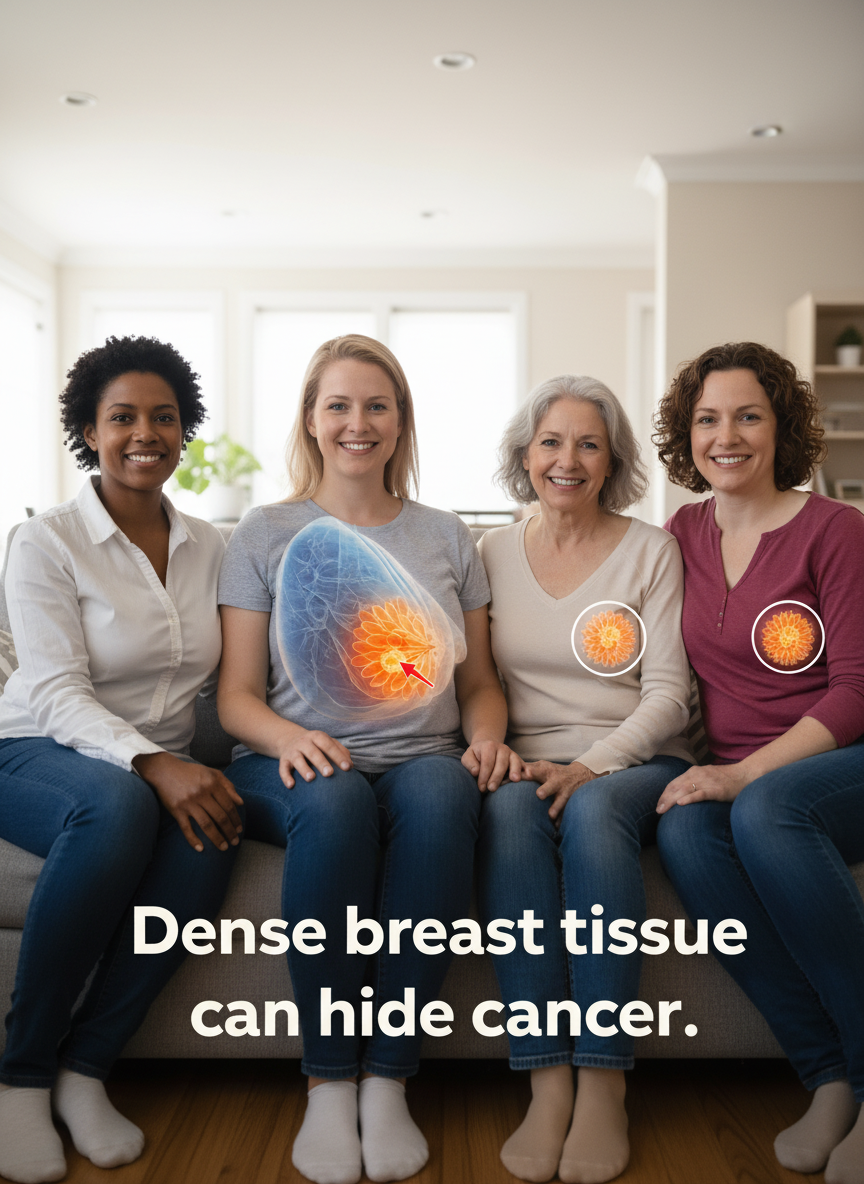
Breast density refers to the proportion of fibrous and glandular tissue compared to fatty tissue within your breasts. On a mammogram, both dense tissue and potential cancerous growths appear white. This creates a “masking effect,” where suspicious areas can be hidden by the dense tissue, making them difficult to detect. This phenomenon is a primary reason why women with dense breasts often seek additional screening methods.
Research consistently indicates that women with dense breasts face a higher relative risk of developing breast cancer. For instance, individuals with extremely dense breasts may experience approximately a twofold increased risk compared to those with scattered density, according to comprehensive meta-analyses and large cohort studies. It’s vital to remember, however, that this is a modest elevation. Having dense breasts alone does not guarantee breast cancer development, as numerous other factors—such as family history, age, and lifestyle choices—also play significant roles.
A crucial statistic highlights the prevalence: roughly 40-50% of women over 40 are classified as having dense breasts (categorized as heterogeneously dense or extremely dense on the BI-RADS scale used by radiologists). This means millions of women receive this notification following their routine mammograms, underscoring the widespread relevance of understanding this topic.
How Breast Density Can Impact Your Mammogram Experience
Standard 2D mammograms remain a cornerstone of breast cancer screening, unequivocally proven to reduce mortality rates. However, for women with dense breasts, the effectiveness of these mammograms can be reduced. This diminished sensitivity means that some cancers might not be as readily visible or detectable.
Recent legislative updates, including federal mandates for breast density reporting in mammogram results, ensure that you are informed about your breast density. This transparency empowers women to ask the critical question: “Is a mammogram enough for me, or do I need more?”
Increasing evidence supports the consideration of supplemental screening for specific women with dense breasts, especially when other risk factors are present. Two notable recent studies offer valuable insights:
- One significant randomized trial, often cited in discussions about advanced imaging, compared options such as abbreviated breast MRI, contrast-enhanced mammography, and automated breast ultrasound in women with dense breasts who had a negative mammogram. This study revealed that contrast-enhanced techniques were more effective at detecting early-stage cancers than ultrasound alone.
- Another study underscored the benefits of combining molecular breast imaging with 3D mammography (tomosynthesis), demonstrating that this dual approach nearly doubled cancer detection rates in dense tissue compared to either method used in isolation.
These findings collectively suggest that for some women, incorporating an additional layer of screening could significantly improve early cancer detection. However, it’s important to recognize that a “one-size-fits-all” approach does not apply; personalized assessment is key.
Understanding Your Personal Risk Profile: Dense Breasts Plus Other Factors
Breast density is an important piece, but only one component of your overall breast cancer risk assessment. Here’s a quick overview of how density categories relate to screening considerations:
- Low density (mostly fatty): Minimal masking effect; mammograms are highly effective.
- Scattered density: Quite common; presents a modest impact on detection.
- Heterogeneously dense: More tissue overlap; often warrants a discussion about supplemental screening options.
- Extremely dense: Highest masking effect and relative risk increase; typically where advanced supplemental options are most strongly considered.
Beyond breast density, several other elements significantly influence your risk:
- Family history or genetic factors: A strong family history of breast cancer or known genetic mutations (e.g., BRCA1/2).
- Age: Risk generally increases with age.
- Reproductive history: Age at first period, timing of menopause, and history of pregnancies.
- Lifestyle choices: Factors such as maintaining a healthy weight, limiting alcohol consumption, and physical activity.
To gain a clearer understanding of your individual lifetime risk, tools like the Breast Cancer Risk Assessment Tool (from the National Cancer Institute) or the Tyrer-Cuzick model can be incredibly helpful. Make sure to ask your doctor to review these assessments with you.
Empowering Action: Practical Steps You Can Take Now
Feeling empowered about your health begins with taking proactive steps. Here’s a practical guide to help you move forward:
- Carefully review your latest mammogram report: Locate your breast density category (often labeled A-D) and any specific notifications regarding dense tissue.
- Schedule an informed discussion with your doctor: Be prepared to talk about your breast density results, your personal risk factors (including family history), and whether supplemental screening options like an abbreviated MRI, contrast-enhanced mammography, or molecular breast imaging are appropriate for you.
- Consider a risk assessment: Discuss with your physician the possibility of using a formal risk assessment tool to quantify your lifetime breast cancer risk.
- Stay informed and advocate for yourself: Keep up-to-date with the latest research and guidelines. Don’t hesitate to seek a second opinion if you feel your concerns are not fully addressed.
Ultimately, understanding your breast density is a crucial step in personalizing your breast cancer screening strategy. By engaging in open dialogue with your healthcare provider and exploring all available options, you can make informed decisions that enhance early detection and provide greater peace of mind. Your health is a priority, and being proactive is your best defense.