 By admin
 Do you ever hesitate to flash a full smile, perhaps covering your mouth in photos because your teeth appear discolored? Many adults quietly experience this embarrassment, especially after years of enjoying coffee, tea, or even smoking. The frustration of persistent stains that regular brushing can’t tackle is a common sentiment. But what if we told you that the secret to a naturally brighter smile might be found right in your kitchen?
While certain everyday foods can indeed support whiter teeth when used judiciously, it’s crucial to understand the right approach. The popular carrot and lemon “trick” often discussed online, for instance, comes with important caveats. Before you dive into DIY solutions, let’s explore the science behind tooth discoloration and how to safely leverage natural methods without risking damage to your precious enamel.
Why Teeth Discolor Over Time
Contrary to a common misconception, yellowing teeth don’t always signify poor oral hygiene. While dental care plays a significant role, the reality of tooth discoloration is often more complex. Our teeth naturally undergo changes as we age, and even diligent brushers can observe stains or a duller enamel appearance. Several factors contribute to this gradual darkening:
- Persistent stains from beverages like coffee, tea, and red wine.
- The use of tobacco products.
- Natural thinning of tooth enamel over time.
- Accumulation of plaque and tartar.
- Side effects from specific medications or underlying health conditions.
- Erosion of enamel due to highly acidic foods and drinks.
Beyond these external factors, dental science explains that enamel, the tooth’s robust outer protective layer, gradually erodes. As this protective shield diminishes, the underlying dentin, which naturally has a yellowish hue, becomes more prominent. This crucial insight reveals that effective teeth whitening isn’t solely about removing surface stains; it’s equally about safeguarding and strengthening your enamel. This is precisely where thoughtful, natural strategies can offer valuable support.
The Carrot and Lemon Method: Understanding the Hype
Online, you might encounter numerous claims about carrots and lemons offering instant tooth whitening. Let’s delve into the reality behind this popular, yet often misunderstood, natural approach. Carrots are rich in natural fiber and possess a mild abrasive quality. When chewed or lightly applied to teeth, they can assist in dislodging surface debris. Lemons, on the other hand, contain citric acid, known for its ability to break down certain types of surface stains.
However, the critical detail frequently omitted in viral videos is the potential danger: excessive or improper use of lemon’s citric acid can severely erode tooth enamel. Dental professionals consistently caution against aggressive DIY acidic whitening methods, stressing that they should be employed with extreme care and very infrequently. Nevertheless, when applied thoughtfully and sparingly, this combination might contribute to a cleaner, brighter-looking smile. Here’s a widely adopted and safe method:
Simple Kitchen Whitening Routine:
- Prepare: Wash and peel one fresh carrot.
- Grate: Finely grate a small portion of the carrot into a clean bowl.
- Mix: Add just a few drops of fresh lemon juice to the grated carrot.
- Apply & Rub: Gently apply and rub the mixture onto your teeth for approximately one minute.
- Rinse & Brush: Thoroughly rinse your mouth with water, then brush your teeth with your regular toothpaste.
Important Safety Note: This routine should NOT be performed daily. Dentists generally recommend a maximum frequency of once or twice per week for methods involving acidic ingredients to protect your enamel.
Everyday Foods That Naturally Support a Cleaner, Brighter Smile
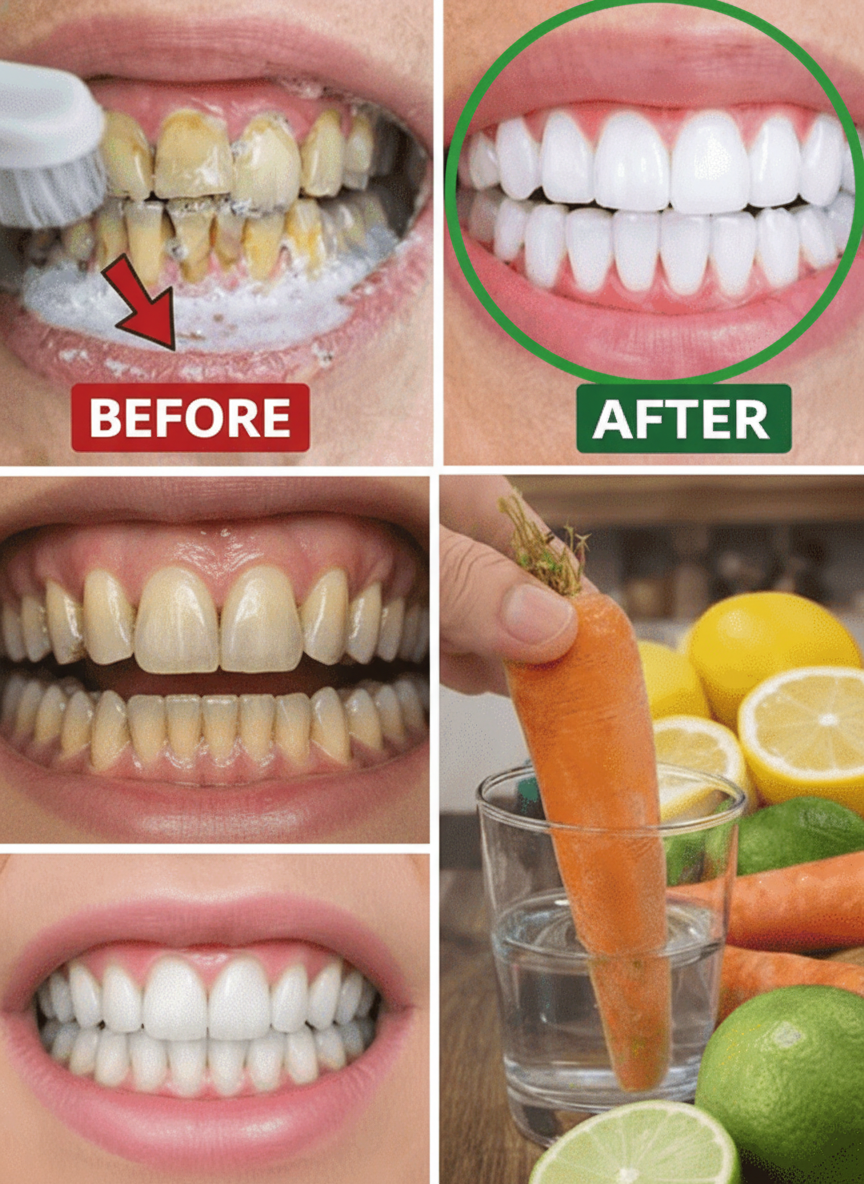
Beyond specific applications, there’s an often-overlooked habit that significantly contributes to oral health and a brighter smile: incorporating certain everyday foods into your diet. These foods function like natural toothbrushes, actively stimulating saliva production. Saliva, in turn, is a powerful ally, helping to wash away bacteria and food particles that contribute to stains and decay.
Consider adding these “dental-friendly” foods to your daily intake:
- Apples
- Carrots
- Celery
- Cucumbers
- Leafy Greens (e.g., spinach, kale)
The role of saliva in maintaining optimal oral health is truly remarkable. Research indicates that saliva effectively neutralizes harmful acids in the mouth and forms a protective barrier, safeguarding your enamel from damage. Furthermore, the act of chewing crunchy vegetables provides a gentle, natural scrubbing action on tooth surfaces, helping to remove minor debris. It’s crucial to remember, however, that while these foods are excellent for supporting dental hygiene, they are not substitutes for your regular brushing, flossing, or professional dental cleanings. Nevertheless, integrating them into your routine can yield a noticeable and positive difference in your smile over time.
Natural Methods vs. Professional Whitening: A Quick Comparison
Understanding the various options for achieving a brighter smile can be incredibly helpful. Here’s a concise comparison to guide your choices, considering cost, speed, and safety:
| Method | Cost | Speed | Safety |
|---|---|---|---|
| Natural Food Methods | Very Low | Gradual | Generally safe if used gently and sparingly |
| Whitening Toothpaste | Low | Moderate | Safe for daily use |
| Dental Whitening Strips | Moderate | Faster | Usually safe if instructions are strictly followed |
| Professional Dental Whitening | Higher | Fastest | Performed under expert dental supervision |
Each of these options presents distinct advantages, catering to different needs, budgets, and desired outcomes. Many individuals find success by combining several approaches. However, one fundamental truth often gets overlooked: your consistent daily habits hold far more sway over your smile’s brightness than any single whitening method.
Habits That Stealthily Dim Your Smile
Let’s be candid for a moment. It’s common for people to seek out quick whitening fixes while simultaneously engaging in habits that are actively contributing to tooth discoloration. Addressing these underlying causes is paramount for long-term brightness. Here are some of the primary culprits:
- Consuming coffee or tea frequently throughout the day.
- Using cigarettes or other tobacco products.
- Neglecting daily flossing.
- Regularly drinking dark-colored sodas or sugary beverages.
- Brushing too vigorously, which can erode precious enamel.
Here’s a simple yet highly effective tip endorsed by many dental professionals: after enjoying coffee or tea, make it a habit to rinse your mouth thoroughly with water. This seemingly minor act can make a significant difference in reducing stain accumulation over time, helping to preserve your natural sparkle.