 By admin
 Every trip to the restroom offers a quick, free health check-up. Have you ever paused to consider what the color of your urine might be telling you? While often overlooked, changes in urine color are frequently your body’s most direct signal about your hydration status and overall well-being. Dismissing these subtle shifts could mean missing crucial insights into your health. Medical professionals and health organizations consistently emphasize that monitoring your urine’s appearance is a simple yet powerful way to support optimal wellness. The good news is, deciphering these color cues is straightforward, empowering you to make timely adjustments to your fluid intake. By the end of this comprehensive guide, you’ll not only understand what each shade signifies but also discover an unexpected everyday influence on its hue that most people aren’t aware of.
The Science Behind Urine Color Changes
Understanding why urine changes color begins with a natural pigment called urochrome, also known as urobilin. This pigment is a byproduct of the body’s natural process of breaking down old red blood cells. The intensity of your urine’s color directly correlates with its concentration: the less water present, the more concentrated the urochrome, leading to a darker hue. Leading health institutions, such as the Mayo Clinic, confirm that your hydration level is the predominant factor influencing these variations in healthy individuals. When your body is adequately hydrated, your kidneys efficiently filter waste products with an ample supply of fluid, resulting in lighter, less concentrated urine. Conversely, dehydration prompts your body to conserve water, which in turn concentrates these pigments and darkens your urine. However, it’s important to note that diet, certain medications, vitamin supplements, and even physical activity can also contribute to temporary color shifts. Ultimately, observing your urine’s color offers an accessible and cost-free method for assessing your hydration status, no specialized equipment required.
Your Personal Hydration Guide: Decoding Each Urine Shade
Let’s delve into a clear, actionable guide to understanding what various urine colors typically signify. Consider this your essential reference for assessing your body’s hydration needs.
Clear or Transparent Urine
Urine that appears very light, almost entirely transparent, usually suggests you’ve consumed more fluids than your body presently requires. Your kidneys are effectively working to expel this surplus water. While generally benign, consistently clear urine, especially if extreme, could potentially lead to the dilution of vital electrolytes over an extended period.
Pale Yellow Urine
This particular shade represents the optimal standard for proper hydration. It indicates a healthy equilibrium of fluids within your body, sufficient to support bodily functions without excessive intake. Health professionals widely consider pale yellow as the benchmark for consistent daily wellness.
Light Yellow Urine
Falling comfortably within the healthy spectrum, light yellow urine is a slightly more discernible hue than pale yellow. It signifies robust hydration and efficient water utilization by your body. It’s quite common to observe this shade first thing in the morning, following a night’s rest.
Dark Yellow Urine
When your urine appears dark yellow, it’s a clear signal to increase your fluid intake. This deeper shade indicates higher concentration, as your body is actively conserving water. While not immediately a cause for alarm, it serves as a gentle yet firm reminder to boost your hydration throughout the day.
Amber or Honey-Colored Urine
An amber or honey-like color suggests a more significant level of dehydration. Your body is intensely conserving water, leading to a much higher concentration of waste products. It’s crucial to begin rehydrating steadily over the next several hours and prioritize consistent fluid consumption going forward.
Brown or Dark Brown Urine: When to Worry
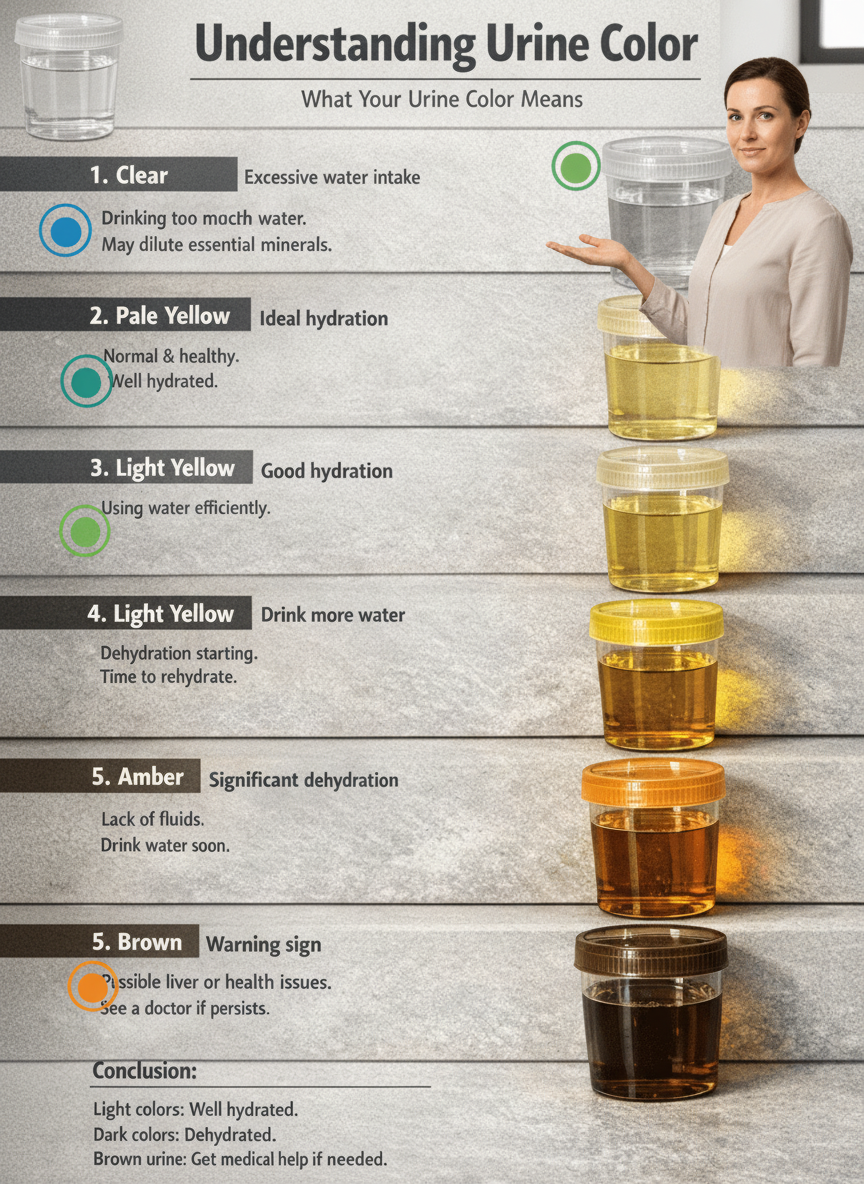
Brown or dark brown urine represents a more serious indicator that warrants attention. While extreme dehydration can indeed be a cause, other underlying factors, such as specific foods, certain medications, or even liver and kidney conditions, could also be at play. If this color change is accompanied by concerning symptoms like abdominal discomfort, unusual fatigue, or a yellowing of the skin or eyes (jaundice), it is imperative to seek immediate medical advice from a healthcare professional. For a clearer visual understanding, numerous reputable health resources provide detailed charts illustrating the spectrum of urine colors and their implications.
To help you quickly assess your hydration, here’s a concise table summarizing the key indicators:
| Urine Color | Hydration Status | Action Needed |
|---|---|---|
| Clear | Possibly overhydrated | Maintain, but watch electrolytes |
| Pale Yellow | Ideal | Keep up your routine |
| Light Yellow | Good | You’re on track |
| Dark Yellow | Mild dehydration | Drink more water soon |
| Amber | Significant dehydration | Rehydrate gradually |
| Brown | Potential concern | Monitor symptoms, seek advice if needed |
While this table provides a quick reference, remember that your body’s overall well-being and any accompanying symptoms should always guide your actions.
Beyond Hydration: Surprising Factors Influencing Urine Color
While your fluid intake is undeniably the primary determinant of urine color, several everyday choices and external factors can temporarily alter its appearance in unexpected ways.
Foods:
Certain dietary choices can dramatically affect your urine’s hue. For instance, consuming foods like beets, blackberries, or fava beans might temporarily give your urine a reddish or darker tint, which can be alarming if you’re not expecting it.
Vitamins:
Taking vitamin supplements, particularly high doses of B vitamins (especially Riboflavin, or B2), frequently results in urine that appears unusually bright or fluorescent yellow. This effect is completely harmless, though it can certainly be surprising.
Medications:
Various prescription and over-the-counter medications can also influence urine color. For example, certain antibiotics or laxatives are known to cause urine to darken, while other drugs might produce different shades.
Exercise:
Vigorous physical activity, especially when not coupled with adequate fluid replenishment, leads to increased sweating and water loss. This can result in more concentrated urine, making it appear darker than usual, even if you started your workout well-hydrated. It underscores the importance of hydrating before, during, and after exercise.
Conclusion
Your urine color is a powerful, immediate feedback system from your body. By paying attention to these subtle daily changes, you gain a simple yet effective tool for monitoring your hydration and overall health. Most variations are easily addressed by adjusting your fluid intake. However, persistent unusual colors, especially when accompanied by other symptoms, should always prompt a conversation with a healthcare provider. Stay hydrated, stay informed, and listen to what your body is telling you!